During World War II, dog lovers asked American families to lend their pets to the military. Owners signed up more than 40,000 dogs. Over 10,000 of them served as sentries, scouts and messengers. When the war ended, the military retrained the survivors to be family pets again. Many came home with honorable discharge papers.
Americans Lent Their Dogs to WWII. They Came Home Veterans
When the United States entered World War II, the Army had few dogs. So a group of civilian dog lovers asked American families to lend theirs, and more than 40,000 pets were signed up. The survivors came home as veterans, many of them carrying honorable discharge papers.
A Call for the Family Dog
In January 1942, members of the American Kennel Club and other dog lovers formed a civilian group called Dogs for Defense. Its job was to find dogs the military could train.
The Army had been skeptical that dogs had any wartime value. Dogs for Defense went on to gather dogs for the armed forces until March 1945.
Owners responded in huge numbers. According to the National Park Service, they volunteered more than 40,000 pet dogs, spurred in part by the 1942 movie War Dogs.
Families were promised their dogs back if the dogs survived the war.
From the Backyard to the Front
Not every pet made the cut. About 18,000 passed a first check and were sent to Army training centers, and almost 8,000 of those failed the exams there on temperament, size or health.
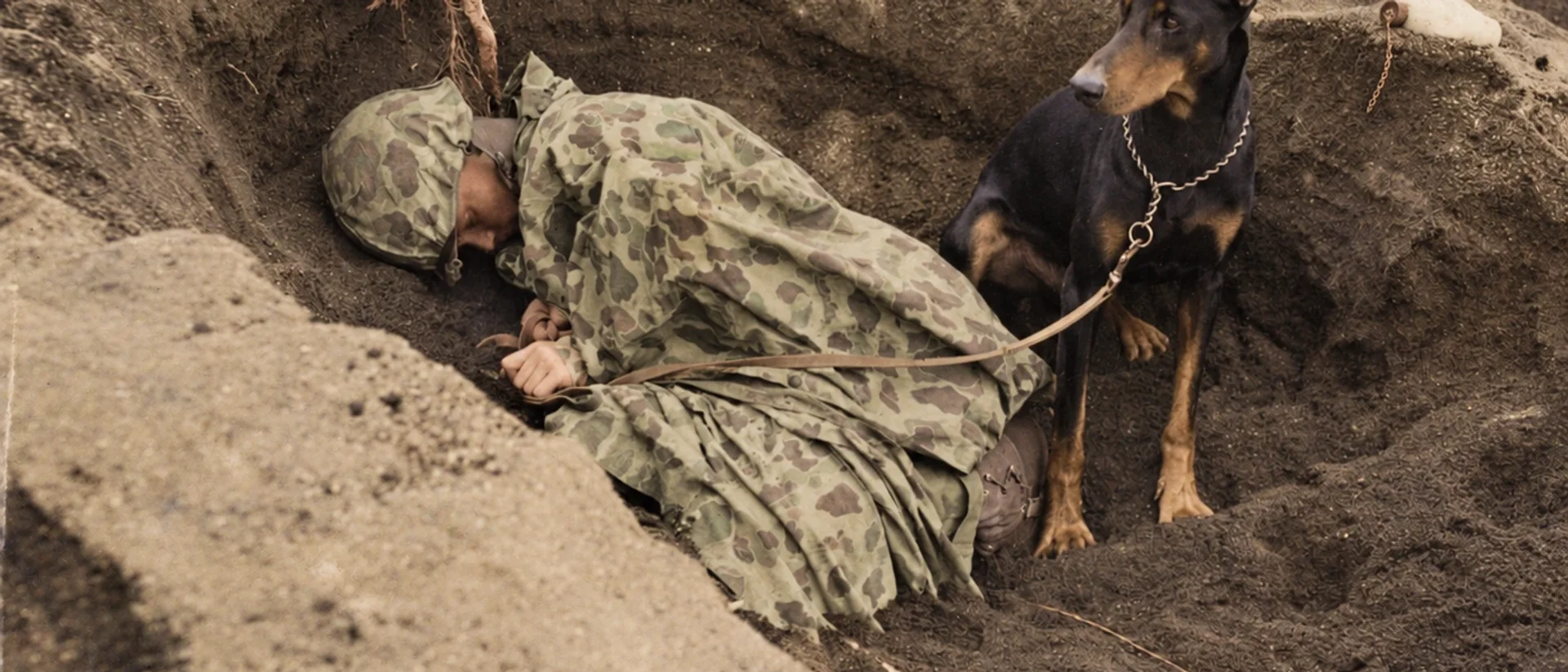
In the end, 10,368 war dogs went into active service. They worked as sentries and guard dogs, as silent scouts on patrols and as messengers carrying information and supplies.
About 3,000 served with the Coast Guard, patrolling America's own shoreline.
Teaching Soldiers to Be Pets Again
When the war ended, the military faced a problem it had never planned for. Its dogs had been trained for combat, and they were going back to living rooms.
So trainers retrained the surviving dogs for civilian life, and dogs went back to their owners wherever possible. Owners taking a Marine dog back had to sign a form warning that its training might make it unsuitable for family life.
The fears did not come true. According to the National WWII Museum, there were no reports of a demilitarized war dog attacking or injuring anyone after coming home.
Dogs that went back to their original owners all recognized their families, even after up to three years away.
Of the 559 Marine Corps war dogs alive at the end of the war, 540 returned to civilian life, adopted out or kept by their handlers. Dogs for Defense received more than 15,000 applications from people hoping to adopt a K-9 veteran.
Discharged With Honors
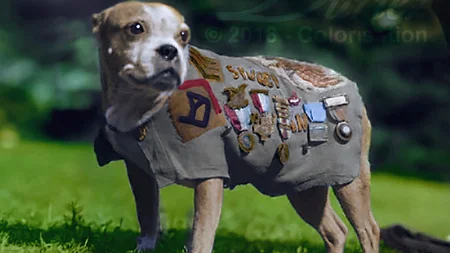
The dogs left the service with paperwork. The Army issued a discharge certificate to its war dogs as they returned to civilian life. An Iowa newspaper reported that a Dalmatian named Tim had received a certificate of faithful service and an honorable discharge from the Quartermaster Corps.
The Marine Corps kept a small record book for every dog, with a discharge certificate printed in the back. According to the National Archives, the vast majority received an honorable discharge, with a character rating of excellent.
A random review of the record books turned up just one dishonorable discharge, for a dog named Skipper, whose character was rated unsatisfactory.
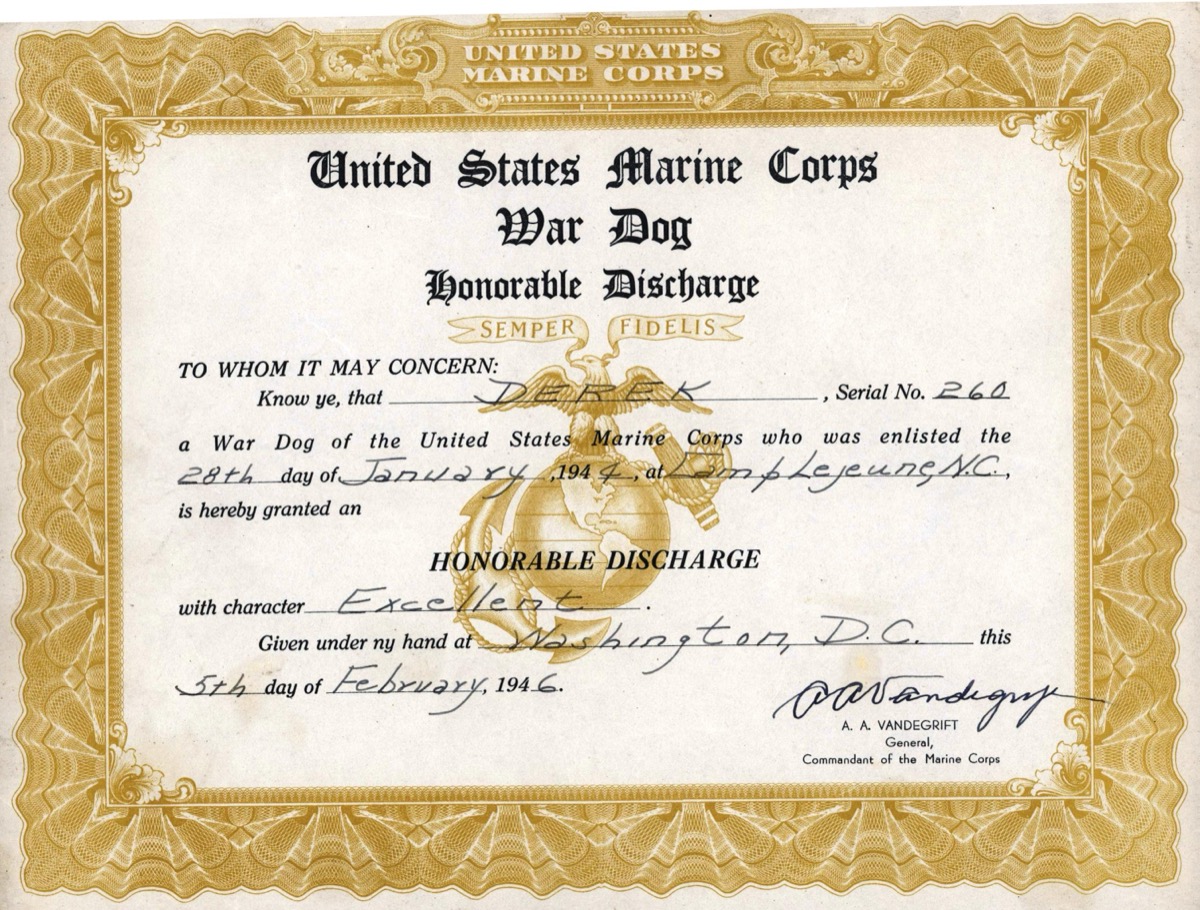
One Marine dog who came home with an honorable discharge was Lucky, a German Shepherd his owner, Donald Walton, had loaned to the Marine Corps for the duration of the war. Lucky served as a scout dog in the Pacific.
After the war, Lucky's handler wrote to the Waltons several times asking to keep him. Walton said no. Just as the soldier was going home to his family, Lucky needed to come home to his.
Lucky lived out his life at home and died there at 14. His honorable discharge certificate, dated 1946, is now in the Library of Congress Veterans History Project.
Source:National Park Service
Enjoyed this fact?
1 person loved this
Get a new fact every morning.
A fascinating fact in your inbox every morning. Free. Unsubscribe anytime.
Frequently Asked Questions
What was Dogs for Defense in World War II?
How many pet dogs did Americans volunteer for World War II?
What jobs did dogs do in World War II?
Did war dogs get honorable discharges?
What happened to World War II military dogs after the war?
Verified Fact
Verified Oct 14, 2026 · 7 sources checked
Source: National Park ServiceShow verification details
Claims checked
- A civilian group, Dogs for Defense, asked Americans to lend their pet dogs to the military
- Owners volunteered more than 40,000 dogs and more than 10,000 went into active service
- After the war the military retrained surviving dogs and returned them to owners where possible
- Returning dogs still recognized their families after years away
- Dogs with honorable discharge papers corrected to many (was most)
Sources: National Park Service, National Archives, U.S. Army, National WWII Museum, Library of Congress, U.S. War Dogs Association
Related Topics
More from History & Culture
View all History & Culture →