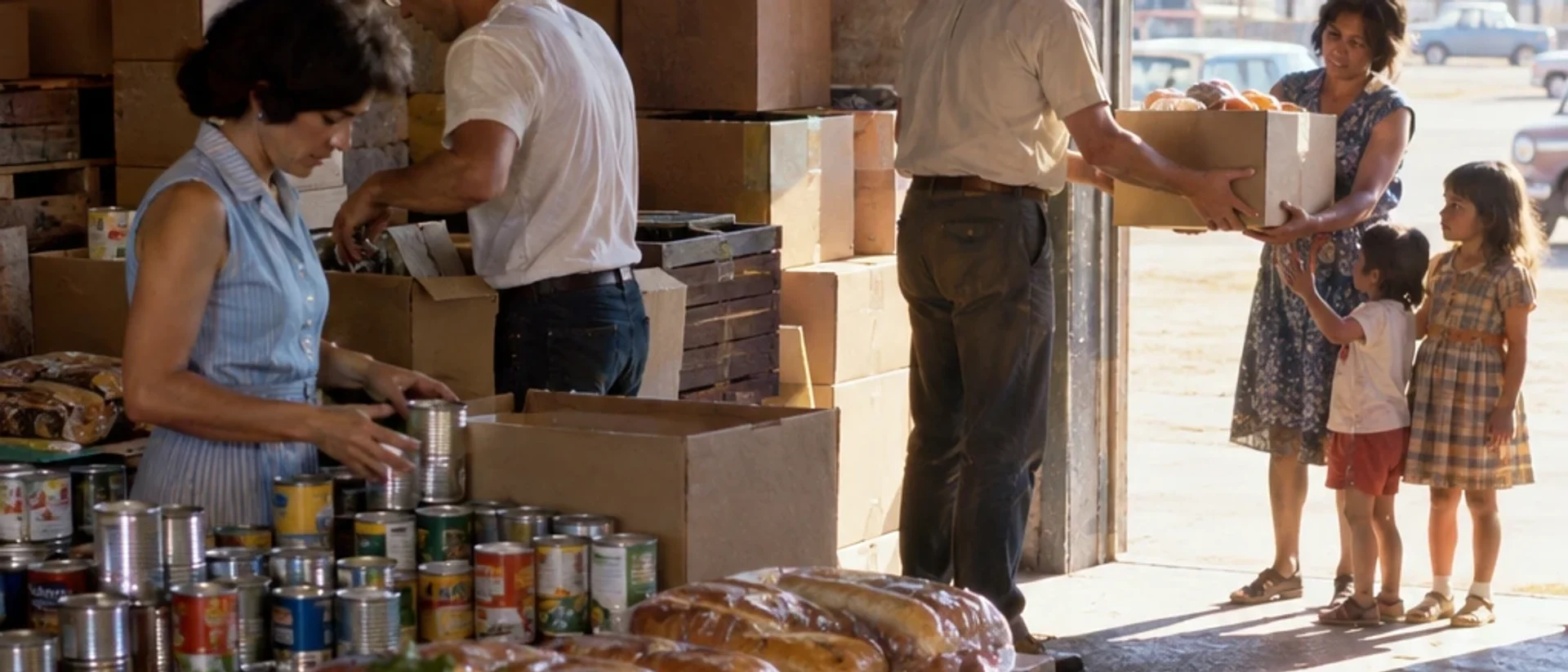
The first food bank began with a mother of ten in Phoenix who was feeding her kids from the trash bins behind a grocery store. Soup kitchen volunteer John van Hengel went to look and found food that was still edible. In 1967 a church lent him an old bakery to store it in, and it moved 250,000 pounds of food in the first year. The network he later founded, now Feeding America, helps provide about 5.9 billion meals a year.
The Mom Who Called a Dumpster Her Bank of Food
In the mid-1960s, a Phoenix mother of ten was feeding her family from the trash bins behind grocery stores. John van Hengel, a volunteer at a local soup kitchen, went to look, and the first food bank grew out of what he found there.
A Mother With Ten Mouths to Feed
Van Hengel was a devout Catholic who lived under a vow of poverty. He was volunteering at a soup kitchen, trying to find enough food to serve, when he met the woman.
She told him she fed her ten children from what grocery stores discarded. When van Hengel checked the bins himself, he found food that was frozen but still edible, loose vegetables and stale bread. Inside the stores he found dented cans and bags leaking rice and sugar.
Deposits and Withdrawals
Van Hengel went to the source and asked grocers to hand over their surplus before it was thrown away. The words "bank of food" are credited in different tellings to the mother and to a volunteer who drew a cartoon of food being deposited and withdrawn. Either way, the picture stuck: good food goes in, and people in need take it out.
The food needed somewhere to go. In 1967 St. Mary's Church lent him $3,000 and an inherited bakery building near skid row. He named the place St. Mary's Food Bank.
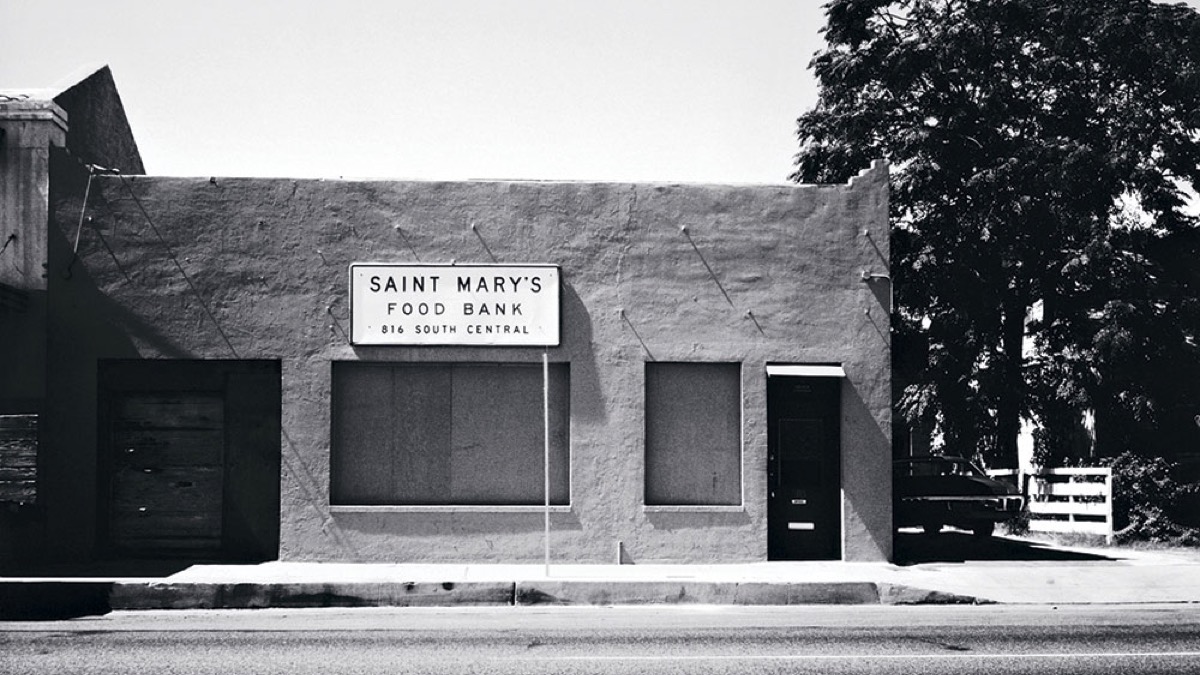
In its first year, volunteers moved about 250,000 pounds of food to 36 charities. He took no salary for his first decade, wore secondhand clothes and lived in a donated room above a garage.
From One Warehouse to a National Network
The idea spread. In 1975 van Hengel accepted a $50,000 federal grant to help set up 18 more food banks. In 1979 he founded a national network, then called America's Second Harvest, to link them.
He left the organization in 1983 and went on to advise food banking efforts around the world. He died in Phoenix on October 5, 2005.
What It Looks Like Now
America's Second Harvest is now Feeding America. Its 2025 annual report says the network helped provide 5.9 billion meals in fiscal year 2025, which ran from July 2024 to June 2025. Feeding America counts a meal as 1.2 pounds of food, and its total includes meals it helped people get through SNAP application assistance.
St. Mary's Food Bank is still in Phoenix, and food banks that collect surplus to hand out follow the model he worked out with a few grocery bins and a borrowed bakery.
Source:Wikipedia
Enjoyed this fact?
Be the first to love this
Get a new fact every morning.
A fascinating fact in your inbox every morning. Free. Unsubscribe anytime.
Frequently Asked Questions
Who started the first food bank?
How did the food bank get its name?
How much food did the first food bank collect?
What is Feeding America?
Verified Fact
Verified Oct 18, 2026 · 5 sources checked
Source: WikipediaShow verification details
Claims checked
- A Phoenix mother of ten fed her children from grocery store trash bins
- John van Hengel, a soup kitchen volunteer, started the first food bank in 1967 in an old bakery lent by a church
- About 250,000 pounds of food moved to 36 charities in the first year
- Who first said "bank of food" differs between accounts, so the copy does not credit it
- Feeding America reports 5.9 billion meals helped provide in fiscal year 2025
Sources: Los Angeles Times, Congressional Record, Wikipedia, Feeding America
Related Topics
More from History & Culture
View all History & Culture →