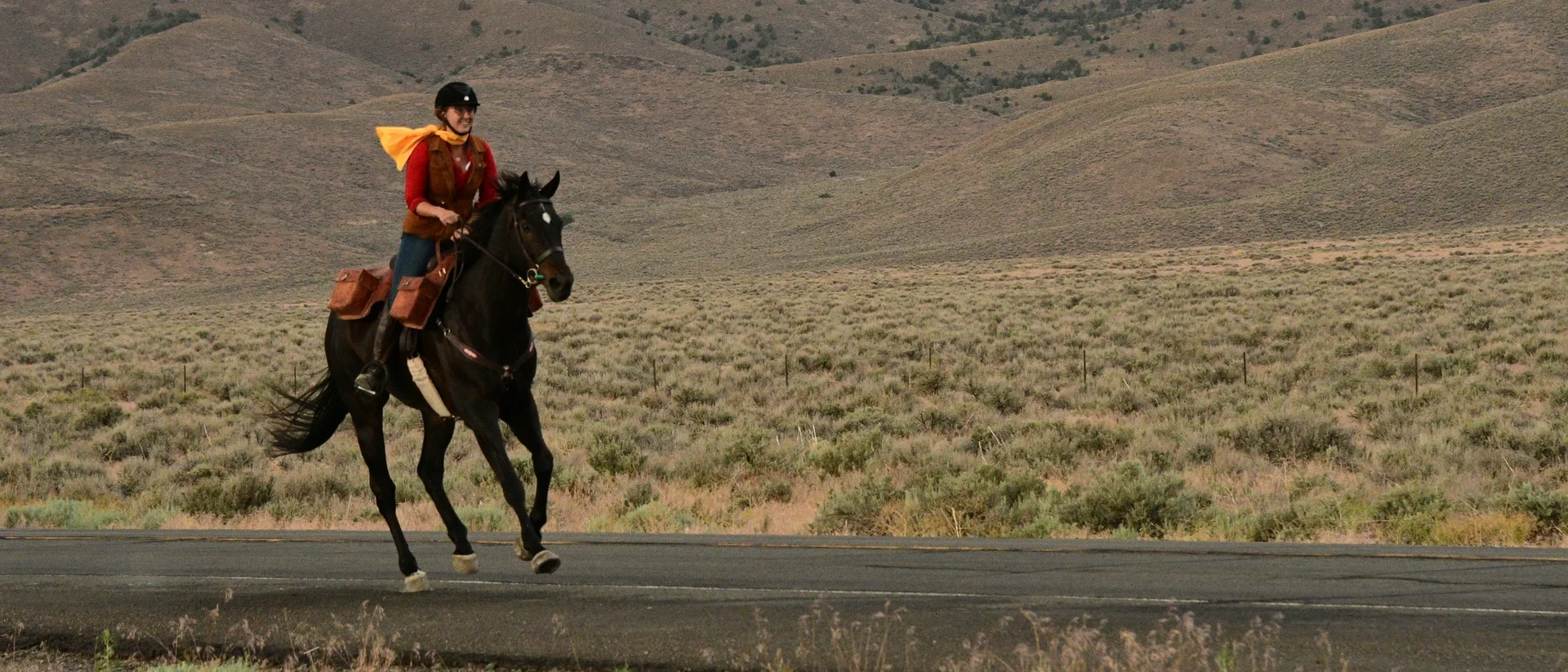
The Pony Express lasted only 18 months before the telegraph replaced it in 1861. But volunteers never let it end. Every June, more than 750 riders saddle up for the Pony Express Re-Ride, carrying real, postmarked mail 1,966 miles across eight states from Missouri to California in ten days, day and night. Riders still gallop the trail, passing the mail pouch horse to horse, just like 1860.
The Pony Express Rides Again Every June
Every June, without fanfare or a government budget, a chain of horses gallops out of St. Joseph, Missouri, carrying real United States mail toward California. It is not a reenactment staged for tourists. For more than 45 years, volunteer riders have kept a business that shut its doors in 1861 running like it never stopped.
A Business That Lasted 18 Months
The original Pony Express began in April 1860, promising to carry mail between Missouri and California in about ten days on horseback.
It worked. Riders changed horses every ten to fifteen miles and rode in relays day and night, cutting delivery time from weeks to roughly ten days.
Then the transcontinental telegraph was finished in October 1861, and instant messages made a ten-day horse relay obsolete overnight. The company folded after just eighteen months.
Volunteers Never Let It End
The Pony Express stayed dead for over a century, until a group of history-minded horse riders formed the National Pony Express Association in the late 1970s.
They set out to identify, mark, and preserve the original trail through all eight states it once crossed: Missouri, Kansas, Nebraska, Colorado, Wyoming, Utah, Nevada, and California.
In 1978, members rode portions of the trail as a tribute. The full Missouri-to-California relay began in 1980, and it has run nearly every June since (the 2020 ride was cancelled for COVID-19). By 2026, volunteers had kept it going for more than 45 years.
1,966 Miles, Eight States, Ten Days
The modern relay covers the same 1,966-mile route as the original, crossing all eight historic states in exactly ten days.
More than 750 volunteer riders take part each year, working in a leap-frog pattern so mail keeps moving 24 hours a day.
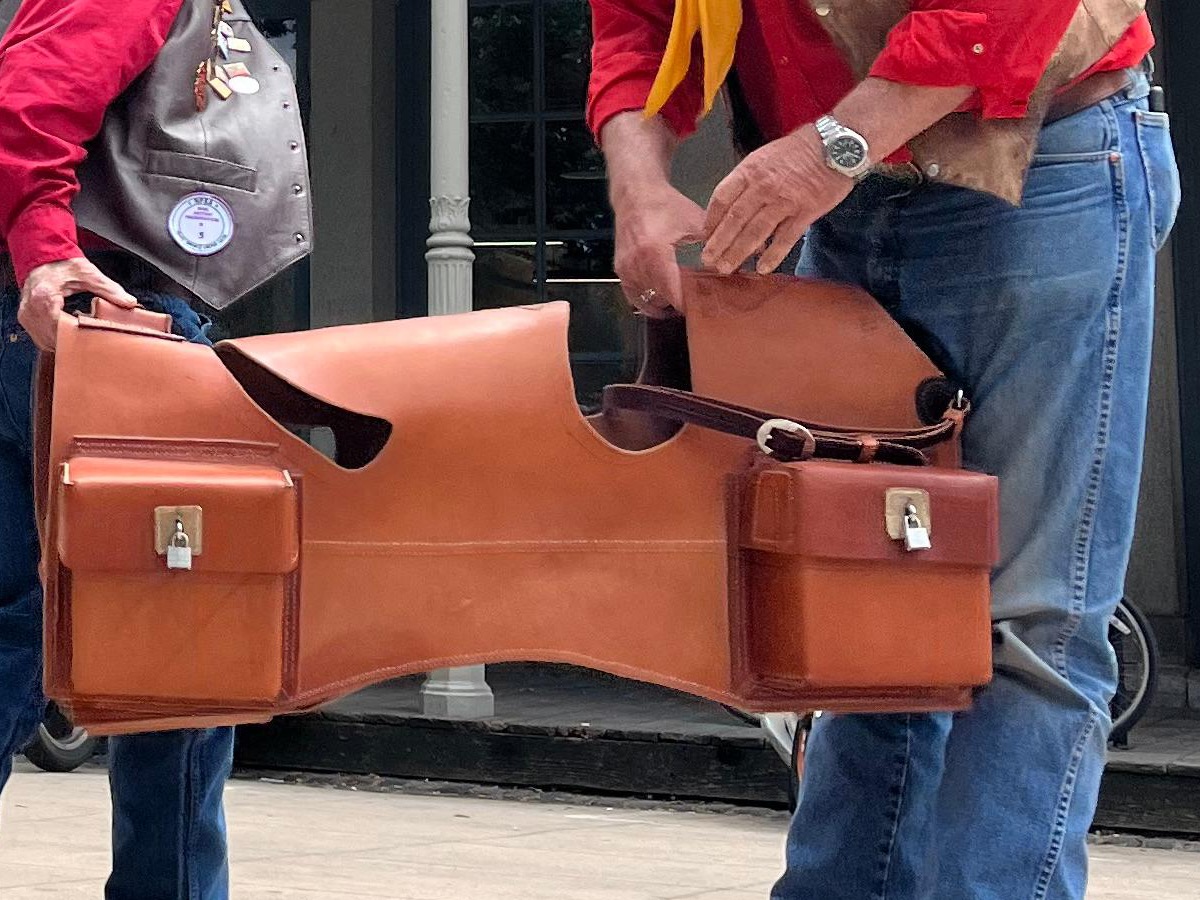
At each of the roughly 900 exchange points along the trail, an incoming rider reins in, lifts a leather mochila from the saddle, and hands it to the next rider and horse. The organization asks riders to average about 10 miles per hour, the same pace the original 1860 couriers kept.
You Can Still Send a Letter By Horse
The mochila is not carrying props. Each year the relay carries around 1,000 pieces of real, postmarked mail, sent by members of the public who mail a letter specifically to ride the trail.
Every letter travels the full route and picks up a Pony Express postmark along the way, the same kind of proof-of-passage the original riders' mail once carried.
No company runs it. No government agency funds it. Every June, a few hundred people saddle up on their own horses, on their own time, and keep a promise made in 1860 moving across the American West.
Frequently Asked Questions
What is the Pony Express Re-Ride?
How long is the Pony Express Re-Ride and how long does it take?
How many riders take part in the Pony Express Re-Ride each year?
Can you actually send mail through the Pony Express Re-Ride?
When did the annual Pony Express Re-Ride start?
Verified Fact
Verified Sep 4, 2026 · 4 sources checked
Source: National Pony Express AssociationShow verification details
Claims checked
- The original Pony Express ran about 18 months in 1860-1861, ending when the transcontinental telegraph opened
- Volunteers with the National Pony Express Association have run a full-route annual re-ride since 1980 (partial-trail rides began in 1978); an exact ordinal for 2026 corrected to "more than 45 years" (was "49th annual")
- The modern re-ride covers 1,966 miles across eight states in ten days, with more than 750 volunteer riders and about 900 mail-pouch exchange points
- The relay carries real, postmarked mail from the public, around 1,000 pieces a year (was stated as "1,000 to 1,200")
Sources: National Pony Express Association, Wikipedia, KNEB TV
Related Topics
More from History & Culture
View all History & Culture →