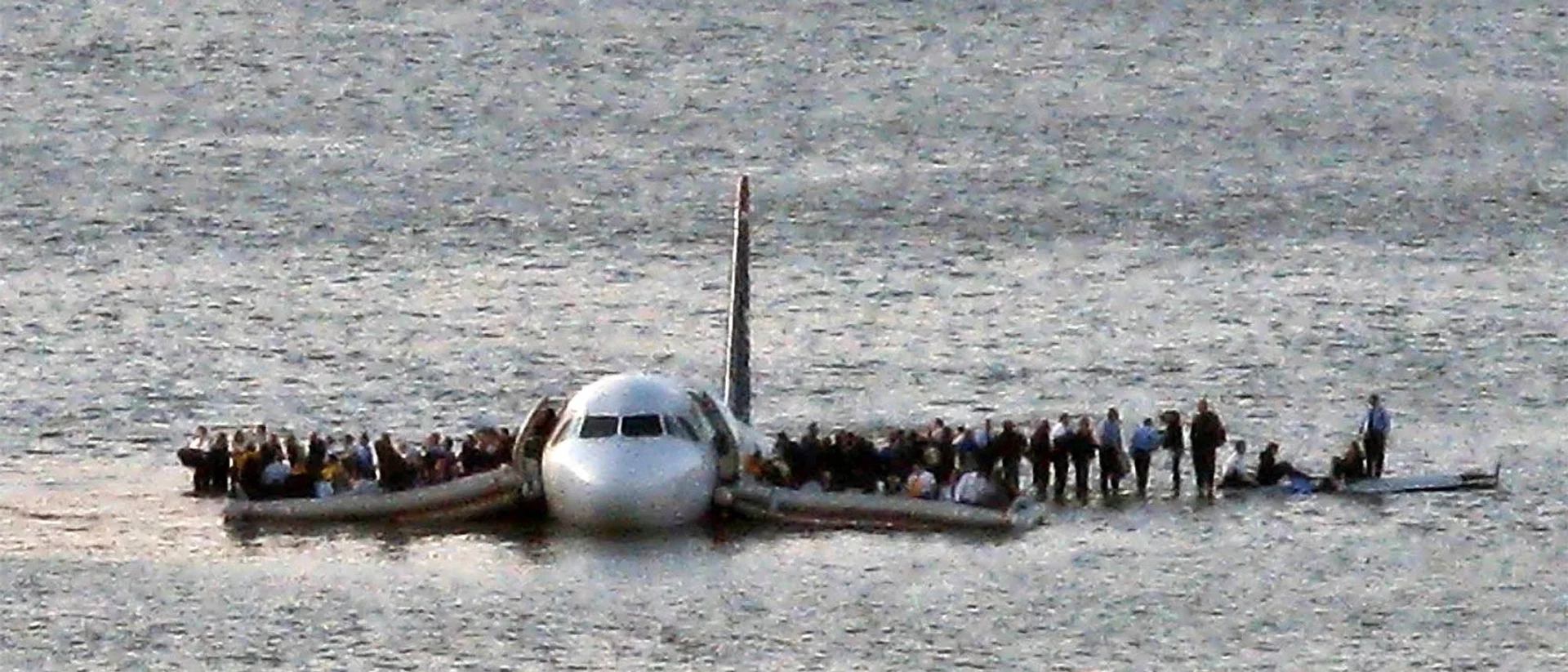
A flock of Canada geese knocked out both engines of US Airways Flight 1549 roughly two minutes after takeoff. Captain Chesley Sullenberger had about three and a half minutes to save 155 lives. He landed on the Hudson River - and when NTSB later ran simulations with a realistic 35-second decision delay added, the return to LaGuardia crashed short of the runway. The river was the only choice. Every single person survived.
NTSB Simulations Proved the Hudson Was the Only Choice
At 3:24 PM on January 15, 2009, US Airways Flight 1549 lifted off from LaGuardia Airport, bound for Charlotte. Roughly two minutes into the climb, an Airbus A320 carrying 155 people hit a flock of Canada geese at 2,818 feet - and both engines went silent.
Three and a Half Minutes
Captain Chesley "Sully" Sullenberger had logged 19,663 flight hours over 42 years of aviation. With no engine power and no altitude to spare, he and First Officer Jeffrey Skiles ran through emergency checklists while evaluating every option. LaGuardia was behind them. Teterboro Airport was ahead in New Jersey. And below - the Hudson River. The decision had to come in seconds.
What the Simulations Later Proved
After the incident, the NTSB ran thirteen simulated attempts to return Flight 1549 to LaGuardia. Some of the immediate-turn attempts succeeded - but the NTSB called those unrealistic. In real life, a crew needs time to recognize the failure, attempt an engine restart, and assess options. When investigators added a realistic 35-second human decision delay, the simulated aircraft crashed short of the runway. A Teterboro simulation crashed into buildings before the airport. The river landing that looked desperate was, by the numbers, the only option that was ever going to work.
The Landing
At roughly 3:30 PM, Sullenberger set the A320 down on the water. Wings level, nose up, gear retracted. The landing was nearly perfect. All 155 people aboard evacuated onto the wings and into life rafts as the plane began to flood. Two NY Waterway ferries arrived within minutes, pulling survivors from the freezing river. Janis Krums, a passenger on one of those ferries, took the first photo of the rescue with his iPhone and posted it to Twitter with the caption: "There's a plane in the Hudson."
The Last One Off
Captain Sullenberger was the last person to leave. Before evacuating, he walked the length of the flooding cabin twice to confirm no one remained inside. The NTSB later described the outcome as "the most successful ditching in aviation history." Governor David Paterson of New York called it a miracle. Every single one of the 155 people on board survived a complete double engine failure over one of the most densely populated cities on earth.
Frequently Asked Questions
How long did it take from the bird strike to landing on the Hudson River?
What did the NTSB simulations reveal about returning to LaGuardia Airport?
Did everyone survive the Miracle on the Hudson?
Why did Captain Sullenberger choose the Hudson River instead of returning to an airport?
What did Sully do before leaving the plane?
Verified Fact
Verified Aug 26, 2026 · 5 sources checked
Source: Wikipedia / NTSB ReportShow verification details
Claims checked
- 155 people aboard, all survived
- Bird strike knocked out both engines about 95 seconds after takeoff
- About 3.5 minutes from bird strike to Hudson River landing
- NTSB simulation with 35-second delay crashed short of LaGuardia, proving river was only option
- NTSB called it the most successful ditching in aviation history
Sources: Wikipedia, NTSB, CBS News, HistoryvsHollywood, Poynter