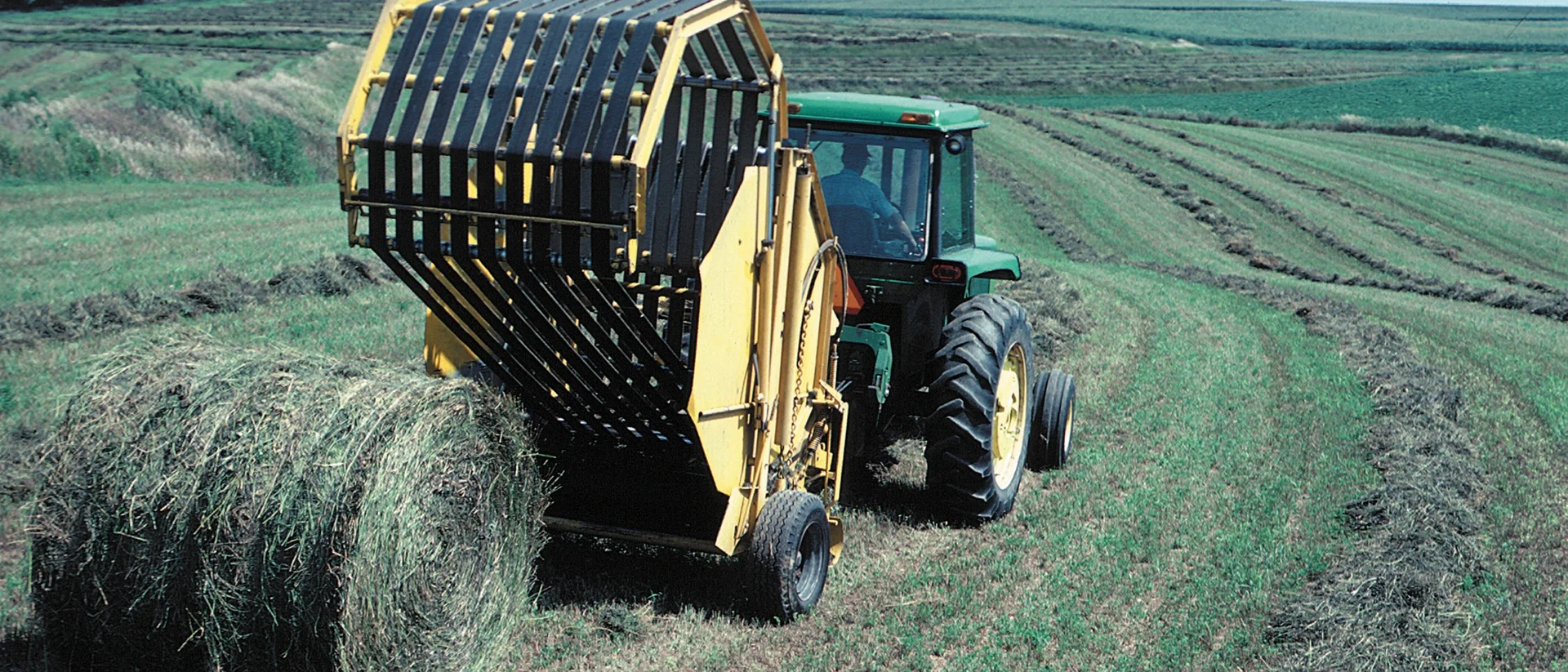
In 1971, a fellow farmer told Gary Vermeer he was quitting cattle because haying took too many hands. Vermeer set out to build a baler one person could run alone. The prototype took about six weeks. It rolled bales about 6 feet wide and 7 feet across. That helped pioneer the modern round baler. Vermeer still builds them in Pella, Iowa, and every summer farmers still roll them his way: one person, one tractor.
The Iowa Farmer Who Pioneered the Modern Round Baler
In 1971, a cattle farmer near Pella, Iowa, told Gary Vermeer he was ready to quit. Putting up hay by hand took too many people and too many hours to keep up. Vermeer decided to build a machine that could do the job with one person and a tractor.
A Fellow Farmer's Breaking Point
Vermeer already ran a small equipment company in Pella making augers and wagon hoists. He wasn't a hay specialist. But the complaint stuck with him: haying was pushing good cattle producers out of the business entirely.
He set himself a simple goal. Build a baler that rolled loose hay into a single large, tightly wound bale, without a second worker stacking or hauling square bales behind it.
Six Weeks on the Factory Floor
Vermeer and engineer Arnie Mathes chalked the first design straight onto the factory floor. Early tests failed, the hay wouldn't catch and start rolling into a bale.
Vermeer fixed it by jamming a fence post into the machine to kick-start the roll, then ordered cardboard tubes and built finger mechanisms to grab the hay properly.
A working prototype came together in about six weeks. It rolled bales roughly 6 feet wide and 7 feet across, far bigger than the small square bales most farms were making by hand.
On the Market by 1972
Vermeer wasn't the first person to try a round baler. Allis-Chalmers had sold a smaller version, the Roto-Baler, since 1947, and university researchers in Iowa had tested large round designs a few years before Vermeer's prototype.
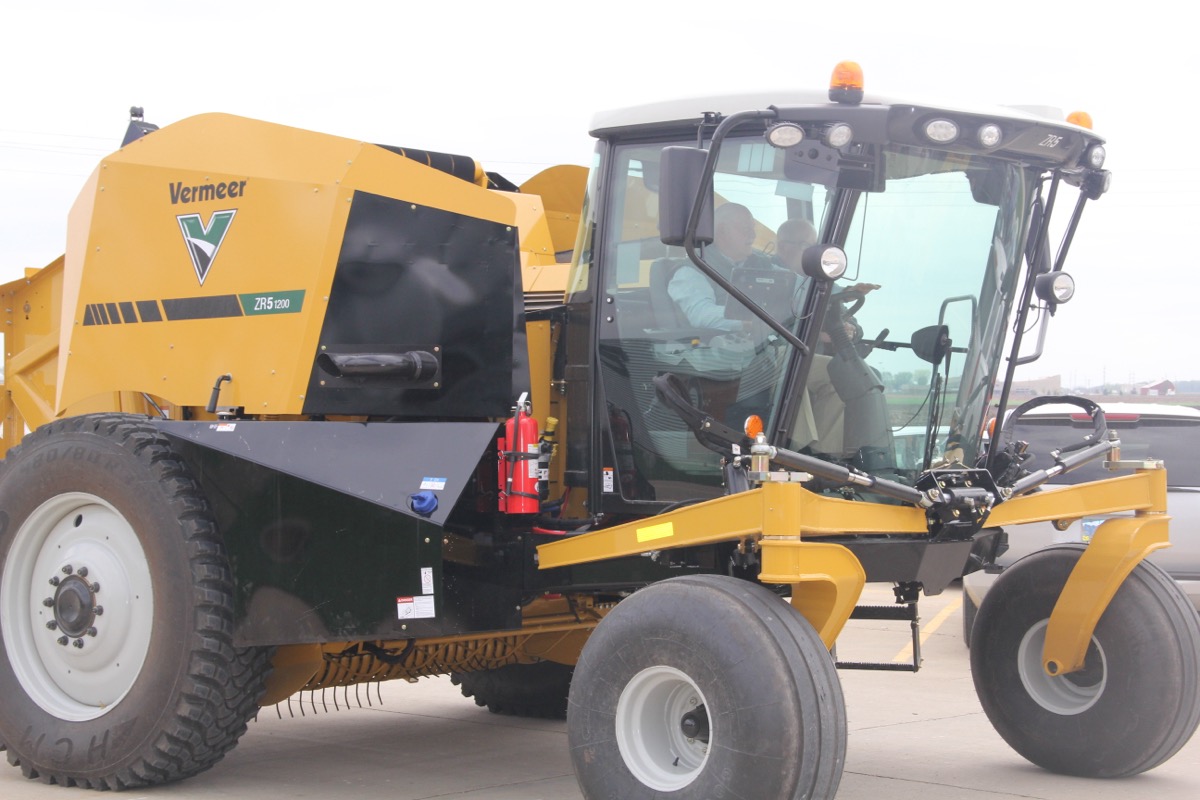
But Vermeer's machine, sold as the 706, was simple enough for one person to run start to finish. By 1972 it was on dealer lots, and the design helped pioneer the large round baler as farms across the country know it today.
Other manufacturers eventually licensed similar designs. Within a few years, the tightly wound round bale, built to shed rain and hold its shape outdoors, had replaced hand-stacked square bales on countless farms.
Rolling Through Every Summer
Vermeer Corporation is still headquartered in Pella, Iowa, and still builds round balers there. The company rolled out a new lineup of hay and forage equipment for the 2026 season, more than fifty years after that first prototype.
Every big round bale sitting in a field this summer, the kind you pass on a highway and barely notice, traces back to one farmer's six-week fix for a fellow farmer's problem.
Source:ASABE
Enjoyed this fact?
1 person loved this
Get a new fact every morning.
A fascinating fact in your inbox every morning. Free. Unsubscribe anytime.
Frequently Asked Questions
Who invented the modern large round hay baler?
How long did it take Gary Vermeer to build his first round baler prototype?
How big were Vermeer's first round bales?
Does Vermeer still make round balers today?
What was Vermeer's first round baler called?
Verified Fact
Verified Sep 8, 2026 · 4 sources checked
Source: ASABEShow verification details
Claims checked
- Gary Vermeer built a one-person round hay baler prototype in 1971 after a fellow farmer said haying was pushing him out of the cattle business
- The prototype came together in about six weeks and rolled bales roughly 6 feet wide and 7 feet across
- Vermeer's baler, sold as the Model 706, reached dealers by 1972 and helped pioneer the modern large round baler (a smaller round baler existed since 1947)
- Vermeer Corporation is still headquartered in Pella, Iowa and continues building round balers there
Sources: ASABE, Vermeer Corporation, Farm Equipment magazine
Related Topics
More from History & Culture
View all History & Culture →