A cornhusking contest was a race to strip corn by hand, timed to the minute. In 1935, one of those contests drew 110,000 people to a cornfield in Newtown, Indiana. Two aerial bombs marked its start and finish, eighty minutes apart. Elmer Carlson of Iowa husked about 41½ bushels of corn by hand and won. NBC broadcast the whole contest live on national radio. Farmers still compete for the same title every October.
110,000 People Once Watched Farmers Husk Corn by Hand
Before Elmer Carlson became a national celebrity, he was just an Iowa farmer with six rows of corn and eighty minutes on the clock. On October 14, 1935, he husked his way to a national title in front of the biggest crowd most people there had ever seen outside a fairground - and it happened in the middle of a cornfield.
A Farm Magazine's Six-Person Experiment
The National Corn Husking Contest began in 1924 in Polk County, Iowa, the idea of a farm-magazine editor who thought husking corn by hand deserved to be treated like a real sport.
The first contest drew about 800 spectators to watch six men compete. Nobody involved could have predicted what it would become within just eleven years.
The Day 110,000 People Showed Up
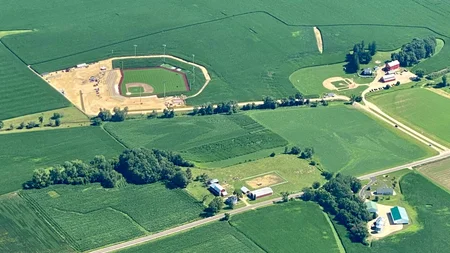
By 1935, the contest had outgrown every county fair that had ever hosted it. That year's national championship was held on a 50 acre plot owned by farmer Leslie Mitchell, just outside Newtown, Indiana.
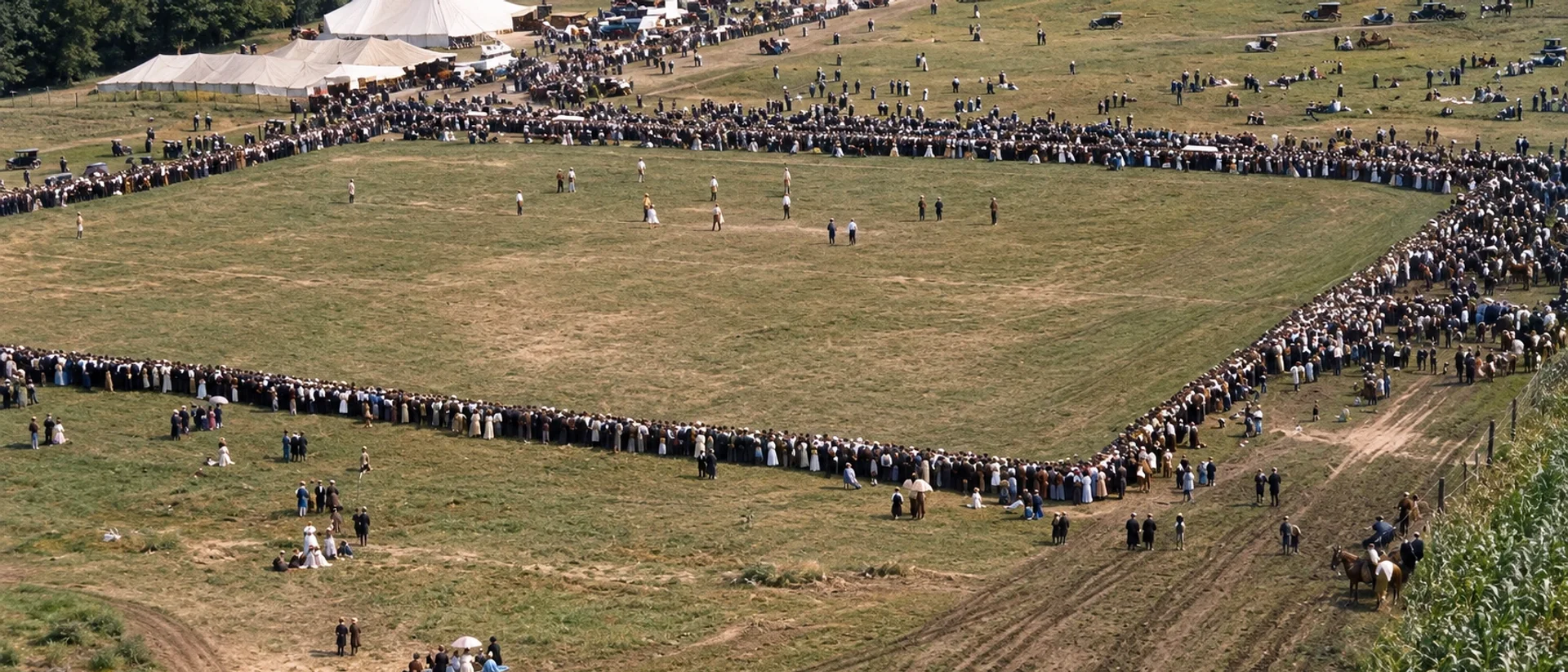
Cars started arriving at 4 a.m. on October 14. By late morning, so many vehicles had packed the roads that latecomers had to park a mile away and walk in.
An estimated 110,000 people showed up. The number still stands today on a historical marker in Newtown's town park.
Eighty Minutes on the Clock
At 11:40 a.m., an aerial bomb went off as a warning. At noon, a second bomb signaled the start.
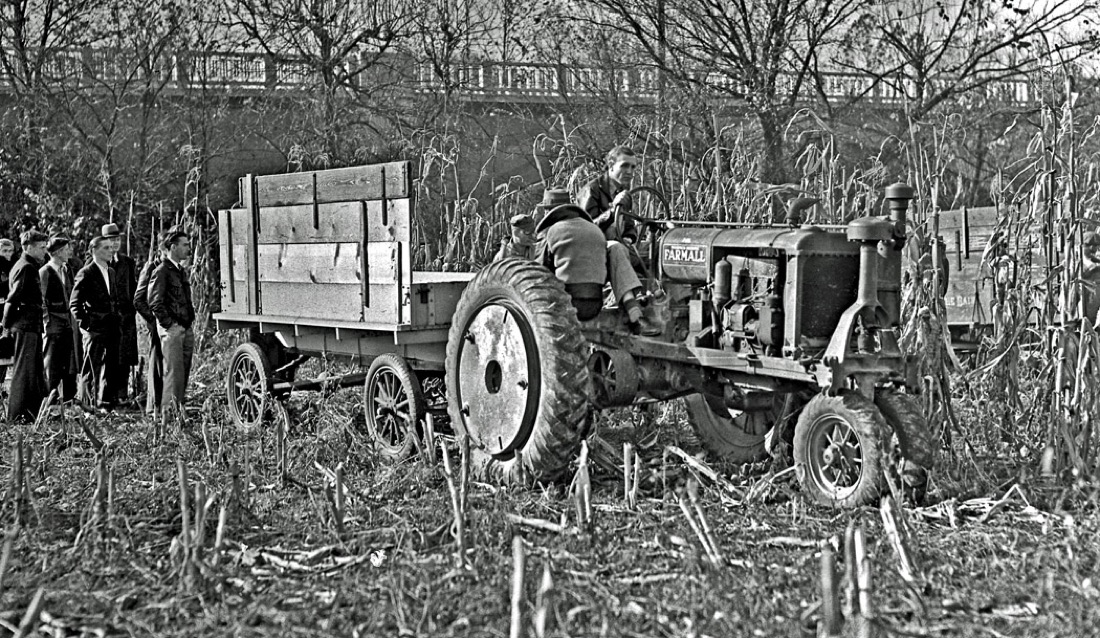
Each competitor had drawn six rows of corn at random. For the next 80 minutes, they raced down the rows, husking two at a time and hurling each ear into a horse-drawn wagon, where it struck a wooden "bang board" in a steady rhythm.
A third bomb ended it. Elmer Carlson, a farmer from Iowa, had husked about 41½ bushels of corn by hand - roughly 3,744 individual ears - more than anyone else on the field.
Turning Farmers Into Radio Stars
The contest wasn't just a local curiosity. NBC sent a portable radio transmitter to broadcast it live, and Chicago's WLS put its own radio personalities on the ground to cover it for listeners back home.
Nebraska Farmer magazine called that year's event an "All Star Show." Farmers who had never left their home county were suddenly minor celebrities with a national radio audience.
Why It Ended, and Why It Never Really Did
World War II ended the run. The last National Corn Husking Contest was held in 1941, just weeks before Pearl Harbor, as mechanical corn pickers were already turning hand husking into a wartime relic rather than a national pastime.
But the sport was never fully buried. The National Cornhusking Association still runs state and national contests today across nine states - Iowa, Indiana, Ohio, Minnesota, Kansas, Missouri, Illinois, South Dakota, and Nebraska.
The 2026 national contest is scheduled for October 16 and 17 at the Saline County Fairgrounds in Marshall, Missouri. Farmers are still showing up to husk corn by hand, on purpose, for a title.
Enjoyed this? Get a new fact every morning.
A fascinating fact in your inbox every morning. Free. Unsubscribe anytime.
Frequently Asked Questions
What was the National Corn Husking Contest?
How many people watched the 1935 National Corn Husking Contest?
Who won the 1935 National Corn Husking Contest?
Why did the National Corn Husking Contest end?
Does the National Corn Husking Contest still happen today?
Verified Fact
Verified Aug 20, 2026 · 2 sources checked
Source: Historical Marker Database (HMDB.org)Show verification details
Claims checked
- The 1935 national contest at Newtown, Indiana drew about 110,000 spectators
- Champion Elmer Carlson of Iowa husked 41 1/2 bushels (about 3,744 ears) in 80 minutes (was 41)
- The contest began in 1924 in Polk County, Iowa with six contestants and about 800 spectators
- NBC broadcast the 1935 contest nationally from a portable transmitter
- National contests ended in 1941 and were revived; they are still held every October
Sources: Cornhusking.com
Related Topics
More from History & Culture
View all History & Culture →