Jack Knight flew through a snowstorm as Congress weighed ending the Air Mail. He had a broken nose from a crash in Wyoming days earlier. Postal workers and farmers lit bonfires along his route. At one stop, the ground crew had already gone home. Knight circled until a watchman heard him and lit a flare. He flew 830 miles through the night, and Congress funded the Air Mail within days.
The Bonfires That Saved the U.S. Air Mail
In February 1921, Congress was deciding whether to keep funding the U.S. Air Mail at all. To prove the service was worth saving, the Post Office staged an around-the-clock relay across the country, by day and by night. The night leg fell to a pilot named Jack Knight, flying with a broken nose and no idea the route he was about to take.
A Program on the Brink
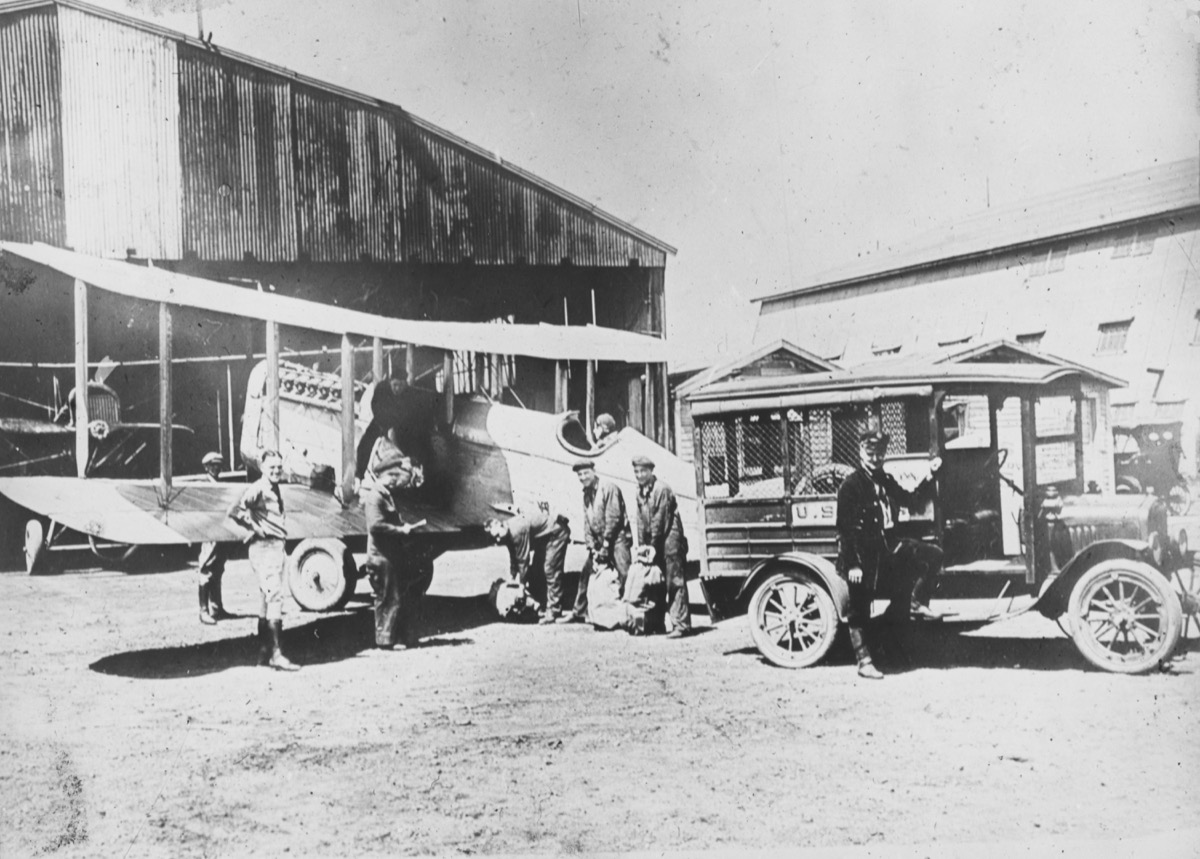
The Post Office Department had built airmail routes across the country since 1918, but the planes still flew only in daylight. Mail rode trains overnight, which erased most of the time advantage flying was supposed to offer.
Congress was unconvinced the program was worth the cost, and was weighing whether to cut its funding. The Department needed one dramatic demonstration that mail could move coast to coast, day and night, without stopping.
A Broken Nose and an Unfamiliar Route
On February 22, 1921, four mail planes set out on the test, two eastbound from San Francisco and two westbound from New York.
The run went wrong almost immediately. One westbound plane was forced down by icing in Pennsylvania and another was stopped by a snowstorm in Chicago. Eastbound, pilot William Lewis crashed and died near Elko, Nevada. His mailbags were salvaged and loaded onto another plane to keep the run alive.
By the time the surviving eastbound mail reached North Platte, Nebraska, after dark, it was Jack Knight's turn to fly.
A former Army flight instructor, Knight was nursing a broken nose and bruises from a crash in Wyoming just days before. He had flown to Omaha many times, but never at night.
Guided by Bonfires
Knight took off into a bitter, sub-zero night. With no runway lights or radio navigation to rely on, he flew by watching the ground.
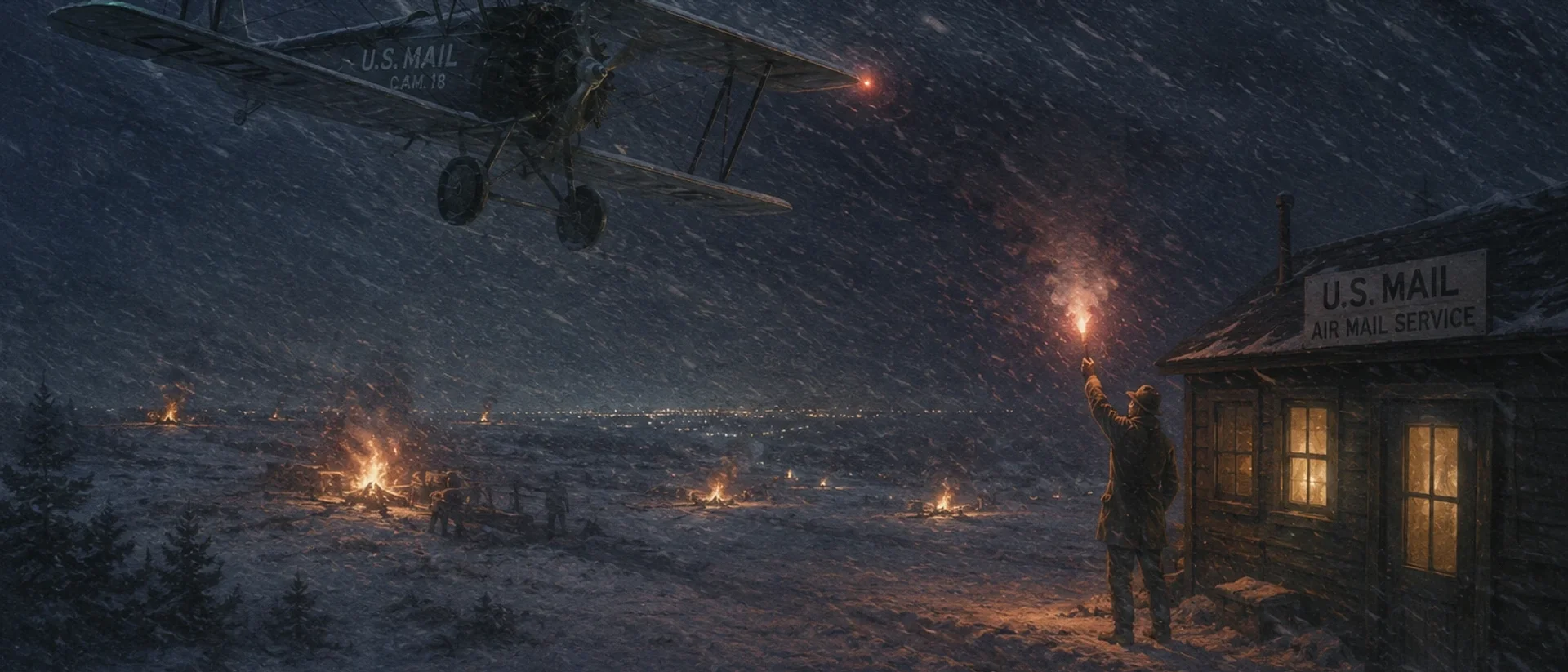
Along the route, signal fires lit by post office employees, airfield managers, and even local farmers marked the way below him.
He landed in Omaha wind-chilled, hungry and exhausted, expecting to hand the mail off to the next pilot. That pilot never showed up. Knight volunteered to keep flying, into a route toward Chicago he had never flown before.
The Airfield Gone Dark
Between Omaha and Chicago lay a refueling stop in Iowa City that Knight had never seen, even in daylight. By the time he reached it, snow was falling.
No bonfires or flares marked the field. The ground crew had gone home, certain the flight had been canceled.
Knight circled low until a night watchman heard the engine and ran out to light a signal flare, giving him just enough light to land.
Coast to Coast
After refueling, Knight flew the final stretch and touched down at Chicago's Maywood Field at 8:40 in the morning, having covered 830 miles through the night.
The mail was handed off for the rest of the journey to New York. Counting every pilot in the relay, the full coast-to-coast run took 33 hours and 20 minutes, a fraction of the several days the same trip took by train.
Newspapers called Knight the hero who saved the airmail. Within days, Congress backed off its plan to cut the service and funded its expansion instead.
Enjoyed this fact?
Be the first to love this
Get a new fact every morning.
A fascinating fact in your inbox every morning. Free. Unsubscribe anytime.
Frequently Asked Questions
Who was Jack Knight?
Why was the 1921 transcontinental airmail flight important?
How did pilots navigate at night without modern instruments in 1921?
How long did the full 1921 coast-to-coast airmail relay take?
What happened to the Air Mail Service after the 1921 flight?
Verified Fact
Verified Aug 14, 2026 · 2 sources checked
Source: United States Postal Service (Smithsonian National Postal Museum content)Show verification details
Claims checked
- Jack Knight flew through a snowstorm with a broken nose from a Wyoming crash
- Bonfires from postal workers and farmers marked his route
- At Iowa City, a watchman lit a flare after Knight circled the dark field
- Knight flew 830 miles overnight; Congress funded Air Mail days later
- Train-trip comparison removed (unsupported by sources)
Sources: United States Postal Service, Wikipedia
Related Topics
More from History & Culture
View all History & Culture →