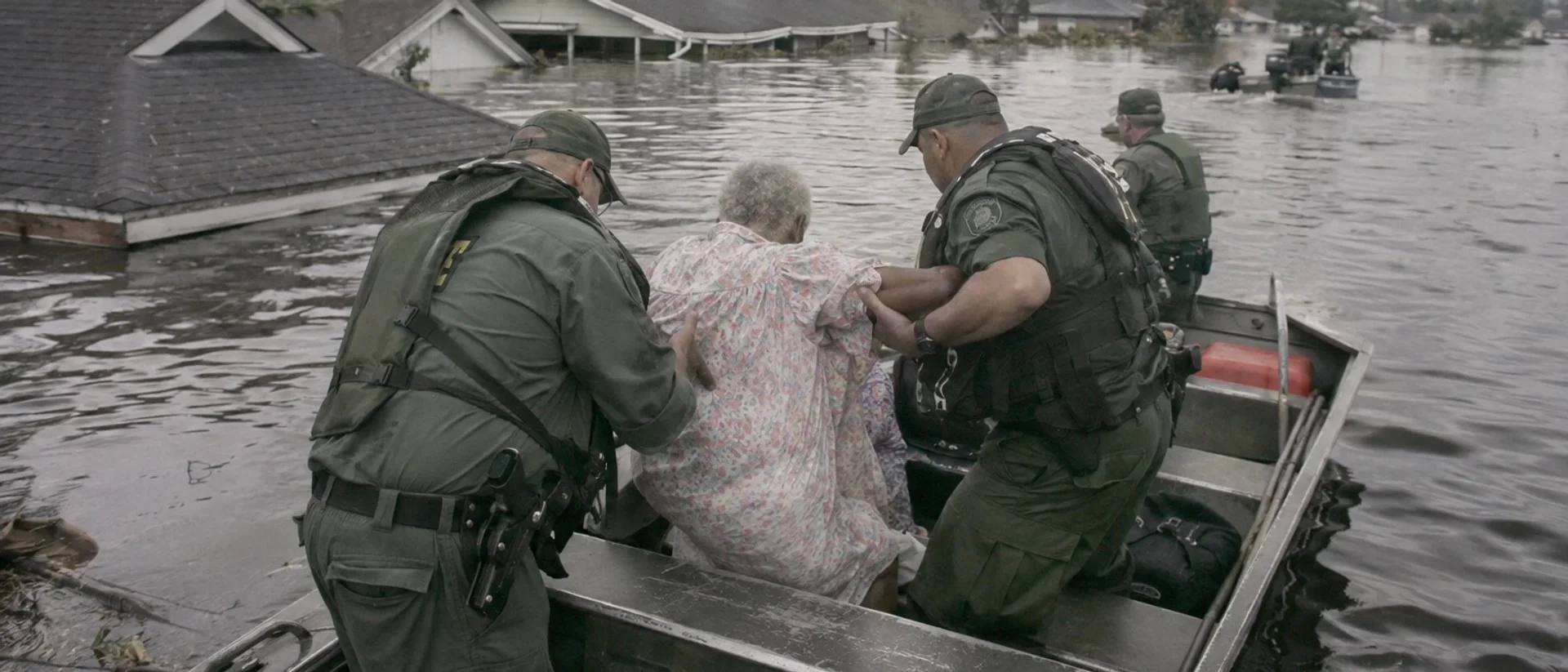
Hurricane Katrina's floodwater covered most of New Orleans in 2005, and among the first rescue teams in were Louisiana's game wardens. On the afternoon of the day the storm hit, 120 wardens drove in from Baton Rouge with boats and were pulling people out of flooded neighborhoods by dark. The department later told the Senate its crews had rescued an estimated 21,000 people.
The Game Wardens Who Pulled 21,000 People Out of Katrina
The Louisiana Department of Wildlife and Fisheries is the agency whose officers check hunting and fishing licenses. In August 2005, its enforcement agents, the state's game wardens, became one of the first search-and-rescue teams to reach flooded New Orleans, and the department later told the Senate its crews had rescued an estimated 21,000 people.
Waiting Out the Storm
Before Katrina made landfall, the department alerted its people and staged boats and vehicles near Baton Rouge and in central Louisiana. Its enforcement chief told the Senate that agents "had to wait for landfall and passage" of the hurricane before moving.
By 9 a.m. on Monday, August 29, 2005, the response teams were gathering in Baton Rouge. By 1 p.m., they were on the road to New Orleans. The initial group was made up of 120 agents, with boats and four-wheel-drive vehicles. Sen. Joe Lieberman later told the same hearing that the department brought 60 boats to the city from its staging areas around the state. Boat counts vary by account: an oral history in the Historic New Orleans Collection recalls about 120 boats in tow, so no single figure is firm.
Into the Water by Dark
The teams reached New Orleans at about 4 p.m. Before that, agents had already started evacuating a nursing home in the Power Boulevard area of Kenner.
In the city, they put boats in the water in New Orleans East, at the St. Claude Avenue Bridge, Esplanade, Elysian Fields, Franklin Avenue and St. Bernard Avenue, all by dark. By then floodwater from failed levees had spread across the city; the National Weather Service later put at least 80 percent of New Orleans underwater by August 31.
The people they found were on rooftops, in attics and on makeshift boats floating through the neighborhoods. Many were elderly, sick or injured. The agents worked through the night in streets with no lighting, debris, downed power lines and water as deep as 15 feet in places.
By daybreak on Tuesday, August 30, the department estimated that nearly 2,000 people had been moved to safety on the elevated stretches of I-10 and I-610.
Help From Nine Other States
By midmorning Tuesday, more enforcement agents and department biologists, technicians and specialists joined the effort. In the following days, conservation officers arrived from Texas, Missouri, Kentucky, Tennessee, Ohio, Minnesota, Michigan, North Carolina and South Carolina.
The Texas Parks and Wildlife Department said its first team of 53 game wardens crossed into Louisiana on August 30 with 50 boats and 52 vehicles, and that on September 1 the team rescued 1,500 patients from Charity Hospital. Texas legislative resolutions later credited its wardens with 4,940 rescues in New Orleans.
The Number They Gave the Senate
In January 2006, the department's enforcement officials testified before the Senate Homeland Security and Governmental Affairs Committee. The agency's own estimate was that Wildlife and Fisheries rescued about 21,000 people. It is the department's estimate, not an audited tally, and no independent count of the figure was found. The same testimony put the rescue total across New Orleans and St. Bernard Parish, from all agencies, at about 60,000.
Enjoyed this fact?
Be the first to love this
Get a new fact every morning.
A fascinating fact in your inbox every morning. Free. Unsubscribe anytime.
Frequently Asked Questions
How many people did Louisiana game wardens rescue during Hurricane Katrina?
When did Louisiana wildlife agents arrive in New Orleans after Katrina?
Which states sent wildlife officers to help in New Orleans?
Why were game wardens used for flood rescues?
Verified Fact
Verified Oct 20, 2026 · 6 sources checked
Source: U.S. Senate Hearing 109-757 (Hurricane Katrina)Show verification details
Claims checked
- 120 agents left Baton Rouge on August 29 after the storm passed and reached New Orleans about 4 p.m.
- Boats were in the water and rescues under way by dark
- Nearly 2,000 people moved to I-10 and I-610 by daybreak August 30
- Officers from nine other states joined in the following days
- 21,000 rescued is the department's own estimate to the Senate, now worded that way
- Texas sent 53 wardens and 50 boats and rescued 1,500 Charity Hospital patients
Sources: U.S. Senate hearing S.Hrg. 109-757, Texas Parks and Wildlife, National Weather Service, Historic New Orleans Collection
Related Topics
More from History & Culture
View all History & Culture →