Michael Sparks paid $2.48 at a Nashville thrift store for a yellowed scroll he thought was an engraving. It was one of only 200 official copies of the Declaration of Independence, printed for John Quincy Adams in 1823. The previous owner had donated it by mistake after his wife cleared out the garage. It sold at auction for $477,650.
He Paid $2.48 for a Thrift Store Scroll. It Was the Declaration of Independence.
Michael Sparks was browsing the racks at Music City Thrift in Nashville, Tennessee in March 2006 when a yellowed, rolled-up scroll caught his eye. He paid $2.48 for it - not because he knew what it was, but because he thought it looked like a beautiful engraving.
The $2.48 Scroll
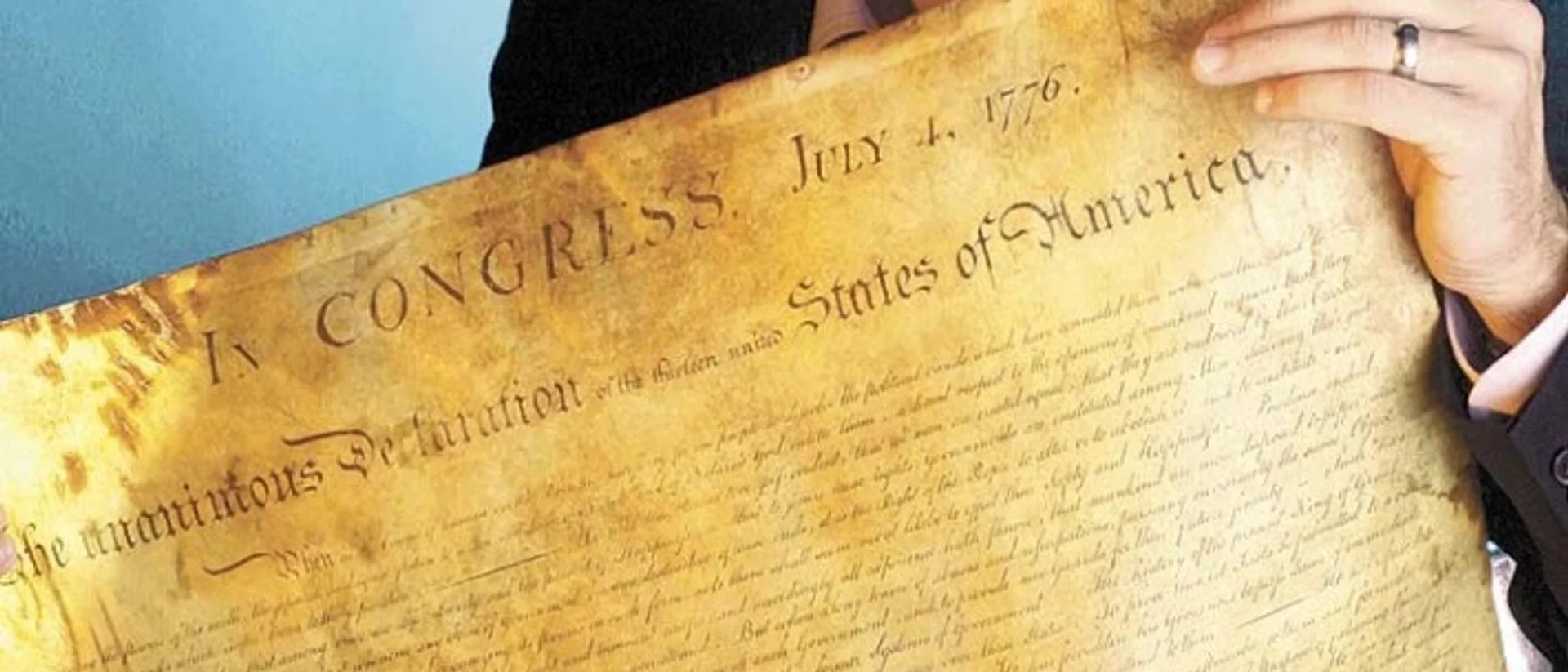
The document was old, shellacked, and curled tight. Sparks, a regular thrift store visitor, tucked it under his arm along with his other purchases. Back home, he unrolled it carefully. The text across the top read: "In Congress, July 4, 1776."
What he was holding was one of only 200 official copies of the Declaration of Independence - an 1823 facsimile commissioned by President John Quincy Adams and printed by engraver William Stone from the original parchment. Before Sparks found his copy, only 35 of the 200 had been publicly documented. His was one of the rest.
How It Ended Up in a Thrift Store Bin
After Sparks went public with his find, a Nashville man named Stan Caffy came forward. The scroll had hung in Caffy's garage for years - acquired somewhere along the way and largely forgotten. When Caffy married, his wife made him clear out the garage. She gathered up everything that was going, including the scroll, and donated it to Music City Thrift in the same batch. Caffy had no idea what he was discarding.
Authentication and the Auction
Sparks spent nearly a year working through the authentication process. Don Etherington - the same conservator who had worked on the original Declaration of Independence in the 1990s - was brought in to assess the document. The team removed it from a canvas carrier, carefully remoistened it, and stripped away the old varnish. It was confirmed genuine.
In March 2007, Raynor's Historical Collectible Auction in Burlington, North Carolina put it up for sale. Six bidders competed by phone and internet. The hammer fell at $477,650 - breaking the previous world record for a William Stone copy by nearly $80,000. The buyer remained anonymous.
What Sparks Did With the Money
Sparks said he planned to buy a used car, make some repairs to his home, help his parents, and donate a portion to charity. He acknowledged that after taxes, the windfall felt more modest than the headline number suggested - but it was still a life-changing sum for a man who had paid $2.48 for the thing that started it all.
Frequently Asked Questions
What did Michael Sparks find at a Nashville thrift store?
How much did Michael Sparks sell the Declaration of Independence for?
How did the Declaration of Independence end up in a thrift store?
What are the William Stone copies of the Declaration of Independence?
How did Michael Sparks know the document was authentic?
Verified Fact
Verified via Deseret News
Source: Deseret NewsShow verification details
Core claims confirmed: Michael Sparks, Music City Thrift Nashville, $2.48 paid March 2006, one of 200 William Stone copies commissioned by John Quincy Adams, printed 1823.