A foul ball fell into the Philadelphia bleachers in 1923. Robert Cotter, age 11, caught it and pocketed it. Back then the ball belonged to the Phillies, so they pressed charges. He spent the night in a cell. Next morning a judge freed him, refusing to brand a boy a thief over a $1.50 ball. It was the first court ruling that a fan could keep one. Every foul ball in the seats tonight is yours.
The 11-Year-Old Who Won You the Foul Ball
The men who ran the Philadelphia Phillies wanted a test case. They got one, and it cost them the ball, the argument, and the century that followed. Their defendant was eleven years old and four foot six.
A Rainspout and a Foul Ball
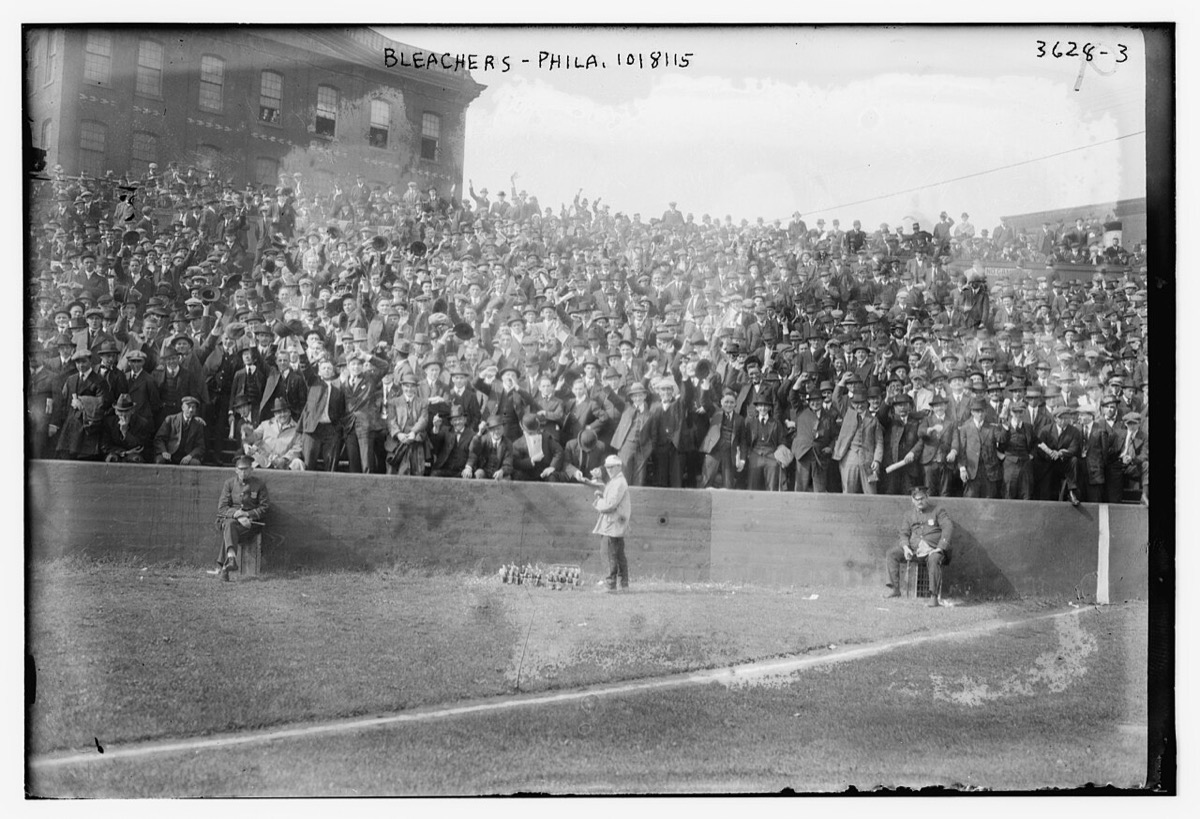
Robert Cotter, known around his neighborhood as Toughie Red, did not buy a ticket for the Cubs game on July 18, 1923. He and his older brother Raymond climbed a rainspout and crawled under a gate at Baker Bowl while a guard was looking the other way.
Somewhere in the late innings, a foul ball came down into the stands.
The Philadelphia Inquirer described it plainly: "The boy stuck up his hand, snatched the ball out of mid-air and pocketed it, while admiring bleacherites applauded his dexterity."
In 1923 that ball was company property. Every club in the majors but one expected balls hit into the crowd to be handed straight back.
A Night in the House of Detention
As Cotter walked out of the park, the captain of the guards seized him and dragged the crying boy to a nearby policeman.
The officer did not want to arrest a child. Phillies secretary Bill Shettsline talked him into it.
"I think they knew I sneaked in, and that's why I got arrested," Cotter said many years later.
He was taken to the Philadelphia House of Detention, while club officials said openly that they wanted to "make a test case of the incident in an effort to check ball pilfering."
The courthouse closed before his mother could post bail. So an eleven-year-old spent the night in a cell over a baseball.
The Judge Who Had Been a Boy
Early the next morning, Judge Charles L. Brown had the boy brought into his courtroom and appointed an advocate to defend him. He took testimony from the guard who had grabbed him.
Then he turned on the ballclub.
"I don't know whether you or Shetzline were ever boys, for if you were you would know how they cherish the ball they got, and you would permit them to have the ball instead of throwing them into a cell overnight."
He would not brand the boy a thief, he said, just to save a $1.50 ball. If the Phillies wanted their test case, there was the decision.
Cotter walked out with his freedom and the ball.
The Rule Every Fan Lives By
It was the first court ruling that a spectator could keep a foul ball.
He was not the first fan to fight for one. The Cubs had let their crowd keep balls at Weeghman Park since 1916, and a New York stockbroker named Reuben Berman won $100 from the Giants in 1921 over the way they handled him after he refused to give a ball back. Berman's case is often called the real turning point, but the decision never addressed whether he was entitled to keep the baseball.
Philadelphia's test case is the one that settled the question in court. With the precedent set, the Phillies and every other major-league team began letting fans keep balls hit out of play. Today nearly every team prints a version of the same sentence: guests are welcome to keep any foul ball hit into the stands.
They Gave Him Two More
Cotter grew up, carried mail for a living, and raised six children in the Logan section of Philadelphia.
On May 7, 1998, nearly 75 years after the club tried to make an example of him, the Phillies brought him back to the ballpark. They gave him box seats at Veterans Stadium and handed him two signed baseballs, one from the 1998 team and one from Hall of Fame pitcher Robin Roberts.
He left the ballpark with both. They were his to keep.
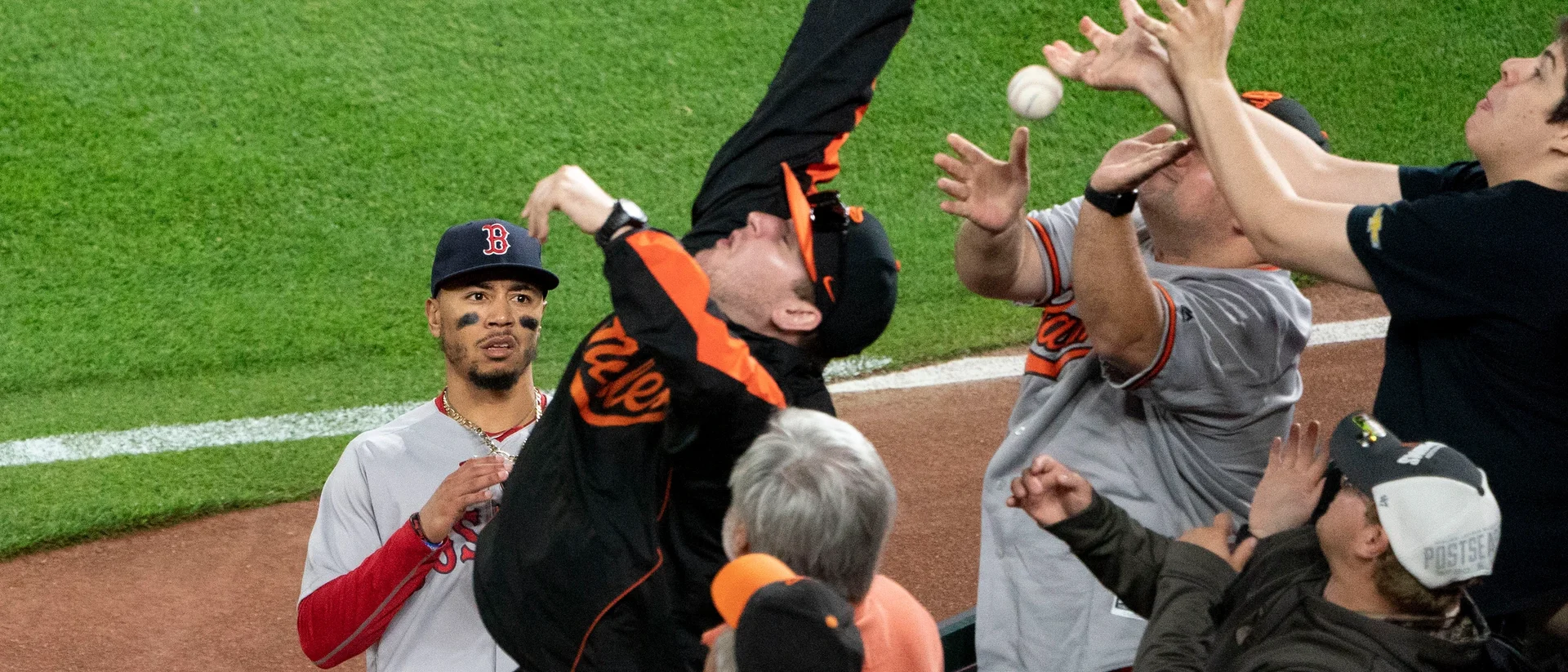
Hero photo: fans reach for a foul ball at Oriole Park at Camden Yards, 2018. Keith Allison via Flickr, CC BY-SA 2.0.
Frequently Asked Questions
Why do fans get to keep foul balls?
Who was Robert Cotter?
Was it ever illegal to keep a foul ball?
What did the judge say in the Robert Cotter case?
Where was Baker Bowl?
Verified Fact
Verified Sep 12, 2026 · 5 sources checked
Source: Society for American Baseball ResearchShow verification details
Claims checked
- Robert Cotter, aged 11, caught a foul ball at Baker Bowl on July 18, 1923
- The Phillies pressed a case against him to make a test case of ball pilfering
- He was held overnight at the Philadelphia House of Detention (later retellings say House of Correction)
- Judge Charles L. Brown dismissed the case next morning and let him keep the ball
- It was the first court ruling that a spectator could keep a foul ball
- A 1921 case won an earlier fan damages but never decided who owned the ball
Sources: Society for American Baseball Research, Philadelphia Inquirer, GBH News