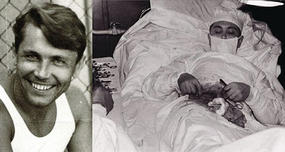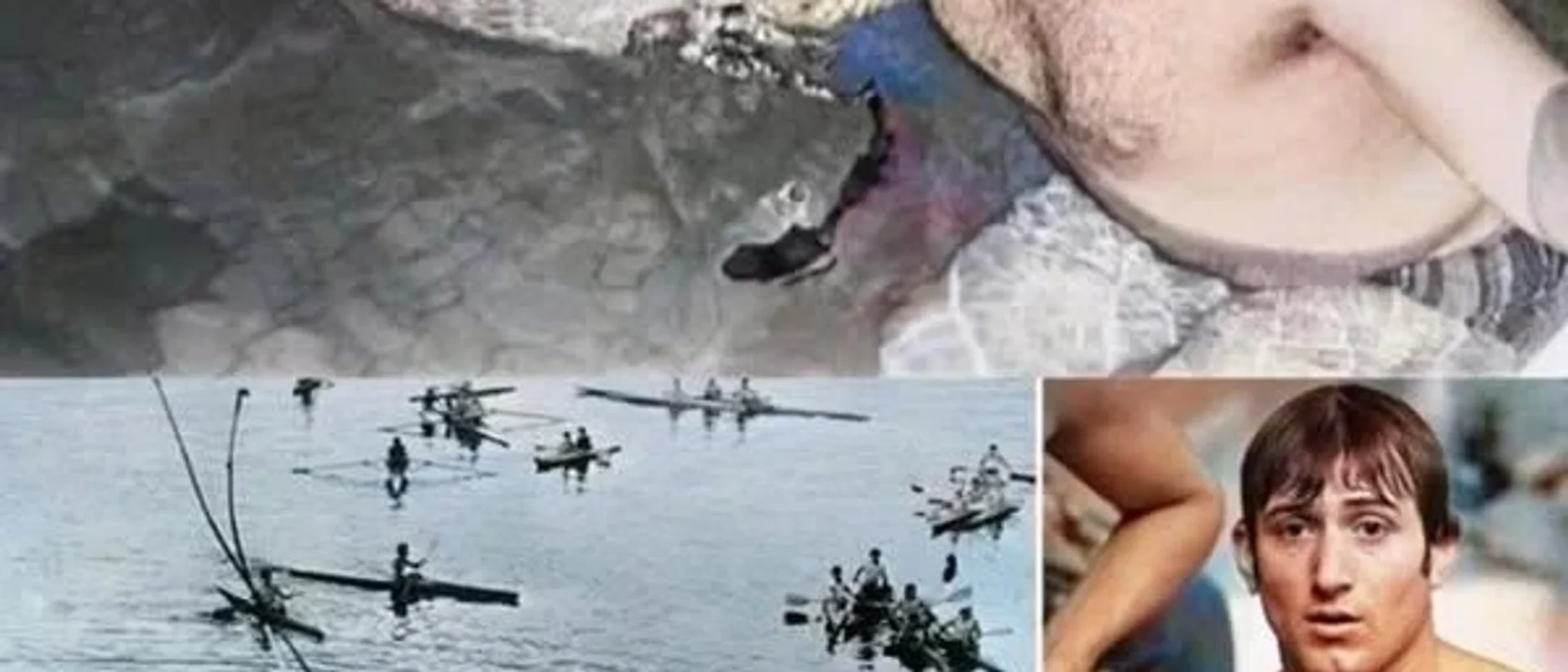
The greatest finswimmer alive watched a trolleybus carrying 92 passengers plunge into a reservoir in Yerevan. He dove in 20 times through shattered glass in near-zero visibility, pulling people from the wreck one by one. 20 survived. His lungs were permanently destroyed. He never competed again. The Soviet government suppressed the story for 6 years. He named his shoe company Second Breath.
He Held 11 World Records. Then He Dove In.
Most people would have kept running. Shavarsh Karapetyan heard a crash, looked toward the water, and made a choice that would cost him everything he had spent his life building.
The Greatest Finswimmer in the World
By September 1976, Shavarsh Karapetyan had won 17 world championships, set 11 world records, and accumulated 37 gold medals in finswimming - a discipline combining speed swimming with rubber fins. He had won 7 Soviet championships and 13 European championships. He was 23 years old and at the absolute peak of his powers, still competing, still breaking records. His training regimen was punishing by any standard: long daily runs alongside the Yerevan reservoir were part of the routine.
September 16, 1976
Karapetyan was 12 miles into a training run along the bank of the Yerevan reservoir with his brother Kamo when a trolleybus carrying approximately 92 passengers veered off the road and broke through a dam wall, plunging into the water some 25 meters (80 feet) offshore. It sank to a depth of 10 meters (33 feet). The water was freezing, thick with silt and sewage contamination, and visibility was near zero. The trolleybus had gone down with passengers still inside.
Karapetyan stripped off his tracksuit and dove in. He kicked out the rear window with his legs - the glass shredding the skin from his lower left leg - and began pulling people out one at a time. Each dive took approximately 25 seconds. He surfaced, breathed, and went back down. He did this 20 times, pulling 37 people from the submerged wreck. Nine others managed to escape through the broken window independently. He swallowed contaminated water with every dive. When he finally surfaced after the last dive, he lost consciousness on the bank.
The Cost
Of the 37 people Karapetyan pulled from the trolleybus, 20 survived. He was rushed to hospital with a fever of 104 degrees Fahrenheit. The contaminated water had given him pneumonia in both lungs, and he developed sepsis. He spent weeks in critical care and was hospitalized for approximately 45 days. When he recovered, his lung capacity was permanently impaired. The respiratory damage was irreversible. He trained again, desperately, but his times were gone. At 24 years old, the greatest finswimmer in the world never competed again.
Six Years of Silence
In the Soviet Union, the story disappeared almost immediately. State authorities blocked publication of any account of the rescue. The stated reason - which Karapetyan later confirmed - was that Soviet trolleybuses were not supposed to fall into water. Acknowledging the accident meant acknowledging an infrastructure failure, and that was not acceptable. The people he had saved did not even know his name.
Six years later, in October 1982, a journalist named Sergei Leskov was covering a finswimming competition when he heard about what Karapetyan had done in 1976. He published the account in Komsomolskaya Pravda, the Soviet newspaper, under the headline "The Underwater Battle of the Champion." Only then did the rescued passengers learn who had saved them. Karapetyan received a UNESCO Fair Play commendation that year and later the Medal "For the Salvation of the Drowning." An asteroid discovered in 1978 - Asteroid 3027 Shavarsh - was formally named after him in 1986.
He Did It Again
On February 15, 1985 - nine years after the trolleybus - Karapetyan was passing the Karen Demirchyan Sports Complex in Yerevan when a fire broke out in the building. He went in. He pulled people from the burning building until he collapsed, this time with severe burns, and was hospitalized again for an extended period.
When asked about it afterward, he said he could not walk past.
Second Breath
Karapetyan eventually moved to Moscow. He founded a shoe company and named it "Second Breath" - a term in Russian competitive swimming for the recovery of rhythm after the initial push, the moment when the body finds its pace after breaking through pain. He carried the torch in the 2014 Winter Olympics relay. He founded the Shavarsh Karapetyan Foundation to support young swimmers in Armenia.
He was 23 years old when he dove into that reservoir. He is now in his 70s. The asteroid named after him has been orbiting the sun for nearly 50 years.
Frequently Asked Questions
How many people did Shavarsh Karapetyan save from the trolleybus?
Why did the Soviet Union suppress the trolleybus rescue story?
What happened to Shavarsh Karapetyan after the rescue?
Did Shavarsh Karapetyan rescue people again after 1976?
What is Second Breath, Shavarsh Karapetyan's shoe company?
Verified Fact
Verified Apr 29, 2026 · 2 sources checked
Source: WikipediaShow verification details
Claims checked
- Finswimmer dove 20 times, pulled survivors from trolleybus
- 20 people survived
- Story suppressed by Soviet government for 6 years
- His lung damage ended his career
- Second Breath shoe company named after event
Sources: Wikipedia, Aurora Humanitarian Initiative
Related Topics
More from History & Culture
View all History & Culture →