Wounded World War II veteran Bob Dole was raising money for a memorial that much of America did not know was planned. He went to Tom Hanks with a long list of reasons to help. Within ten seconds, Hanks said, "I'm your man." He became the campaign's national spokesman, and more than 600,000 donations came in. It opened in 2004, and about four million people visit every year.
Tom Hanks Said Yes to the WWII Memorial in 10 Seconds
Tom Hanks said yes to the National World War II Memorial campaign in under ten seconds. Bob Dole, a World War II veteran, told a House committee in 2000 that he and FedEx's Fred Smith had "this big long list of things to tell him," and that "within 10 seconds he said, 'I'm your man. What do you want me to do.'"
A Memorial Few People Knew About
The idea began in 1987, when World War II veteran Roger Durbin approached a member of Congress and asked for a national memorial to those who served.
General Herrling of the campaign told the committee that for about two years, in 1996 and into 1997, "much of the American public was not aware" the memorial was being built.
Then came the money. Dole and Smith, a former Marine and then president and CEO of FedEx, co-chaired the fundraising campaign. They needed Americans to know the memorial was coming, and they needed a famous face to say so.
"I'm Your Man"
Hanks became the campaign's national spokesman. He made public service announcements asking people to help build the memorial, and Dole told the committee that they had "raised the recognition."
Smith's statement to the same hearing was blunt about the result: "Our success is due in large part to the public awareness generated by Tom Hanks's role as our national spokesperson."
What He Did and Did Not Do
Hanks did not pay for or build the memorial. Dole and Smith led the fundraising campaign, and the American Battle Monuments Commission says it was sustained by more than 600,000 individual contributions. Hanks was the national voice asking people to give.
Still Standing on the Mall
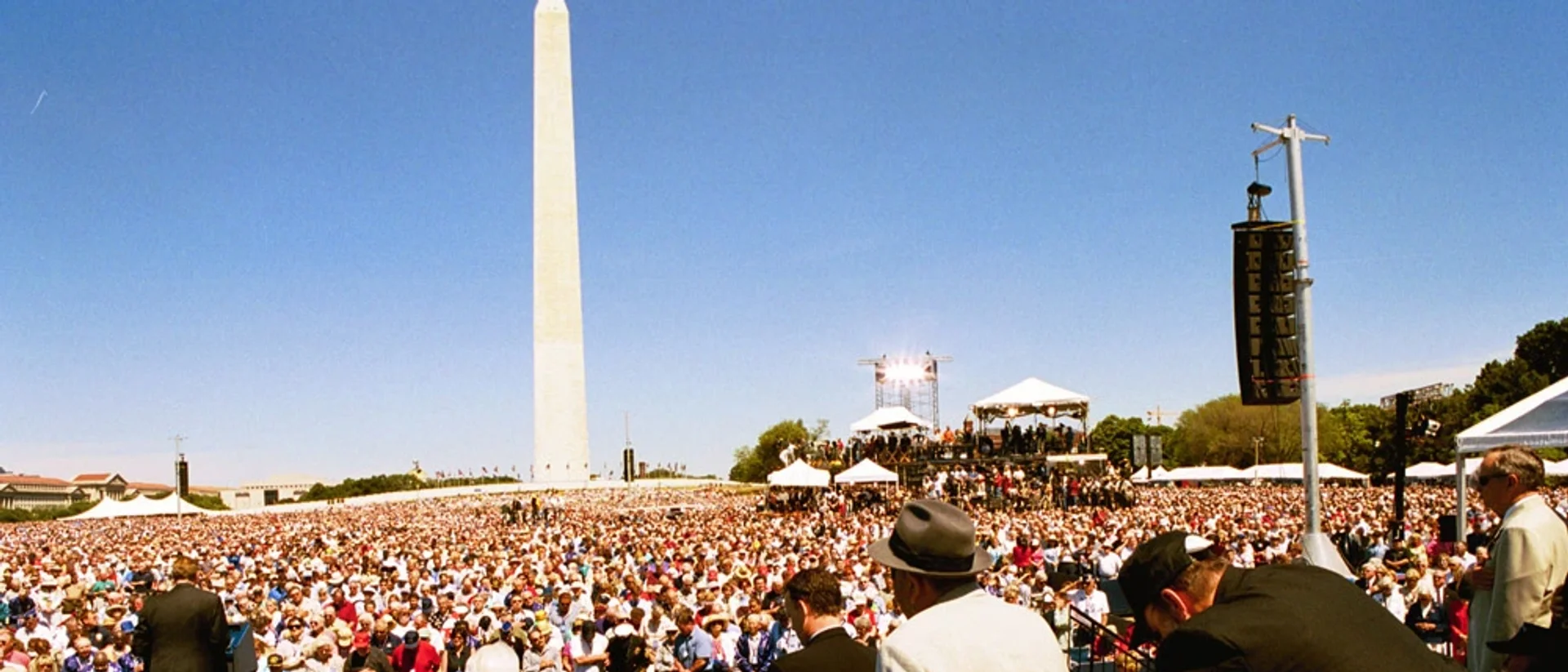
The memorial opened to the public on April 29, 2004. A month later, on May 29, more than 150,000 people came to the National Mall for the dedication, and Hanks attended as the campaign's national spokesman.
Visitor counts for 2025 put attendance at about four million (3,993,717 by the count on file).
Enjoyed this fact?
Be the first to love this
Get a new fact every morning.
A fascinating fact in your inbox every morning. Free. Unsubscribe anytime.
Frequently Asked Questions
Did Tom Hanks pay for the National World War II Memorial?
What was Tom Hanks's role in the World War II Memorial?
When did the National World War II Memorial open?
How many people visit the World War II Memorial each year?
Verified Fact
Verified Oct 4, 2026 · 4 sources checked
Source: U.S. House Committee Hearing (GovInfo)Show verification details
Claims checked
- Dole said Hanks agreed within ten seconds ("I'm your man")
- Much of the public was unaware the memorial was planned in 1996-97
- The campaign credited its success largely to the awareness Hanks generated as national spokesman
- Opened to the public April 29, 2004; more than 600,000 individual contributions; about four million visitors in 2025
- Bob Dole was wounded in World War II (Italy, 1945)
Sources: US House hearing record (2000), American Battle Monuments Commission, National Park Service via Wikipedia
Related Topics
More from History & Culture
View all History & Culture →