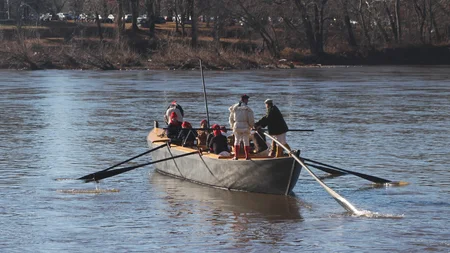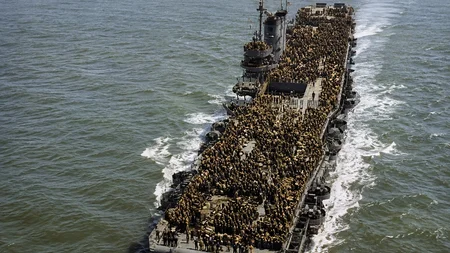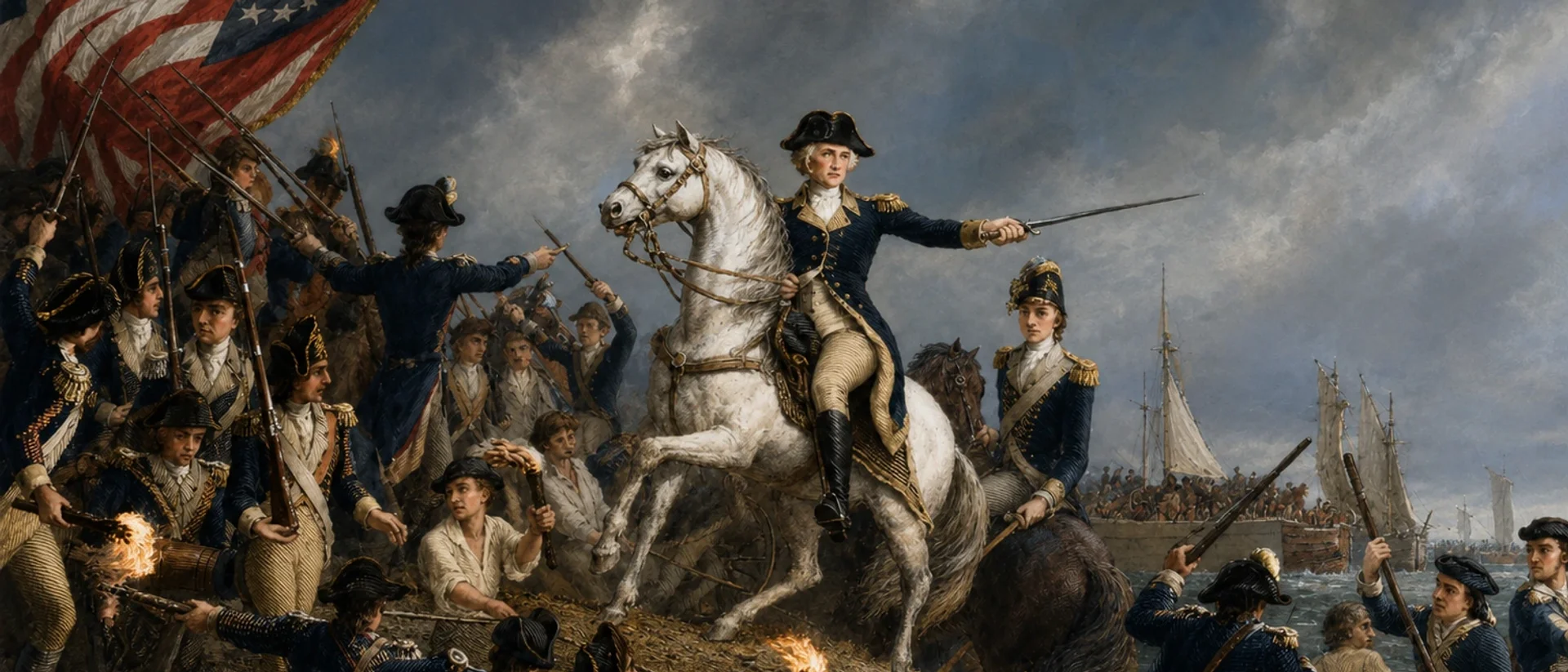
George Washington's army was pinned against the East River on the night of August 29, 1776, two days after losing the Battle of Long Island. Washington ordered a silent evacuation. Colonel John Glover's Marblehead fishermen rowed 9,000 soldiers across, boat after boat. Near dawn, a thick fog hid the last crossings. Washington left on the final boat. The British woke up to empty trenches.
The Night 9,000 Soldiers Vanished From Brooklyn
Just after 11 p.m. on August 29, 1776, Colonel John Glover gave the order to start rowing. Behind him on the Brooklyn shore, 9,000 exhausted Continental soldiers waited their turn in the dark, close enough to hear British sentries across the fields. By sunrise, every one of them would be gone.
A Battle Gone Wrong
Two days earlier, Washington's army had been routed at the Battle of Long Island.
The British had outflanked the Continental lines and pushed the survivors back onto Brooklyn Heights. Thousands of American troops were now pinned with the East River at their backs and a much larger British force camped just outside their trenches.
If the British attacked again, or simply waited them out, Washington risked losing the bulk of his army in a single stroke, only months after declaring independence.
Nine Thousand Men, One Night
Washington's only way out was across the water, and he needed people who could handle a boat in total darkness without making a sound.
He turned to Colonel John Glover's 14th Continental Regiment. The unit was recruited almost entirely from Marblehead, Massachusetts, a fishing town whose men had spent their working lives on the sea.
Starting at 11 p.m., Glover's sailors and fishermen began rowing troops, artillery and supplies across the East River to Manhattan, boat after boat, all through the night.
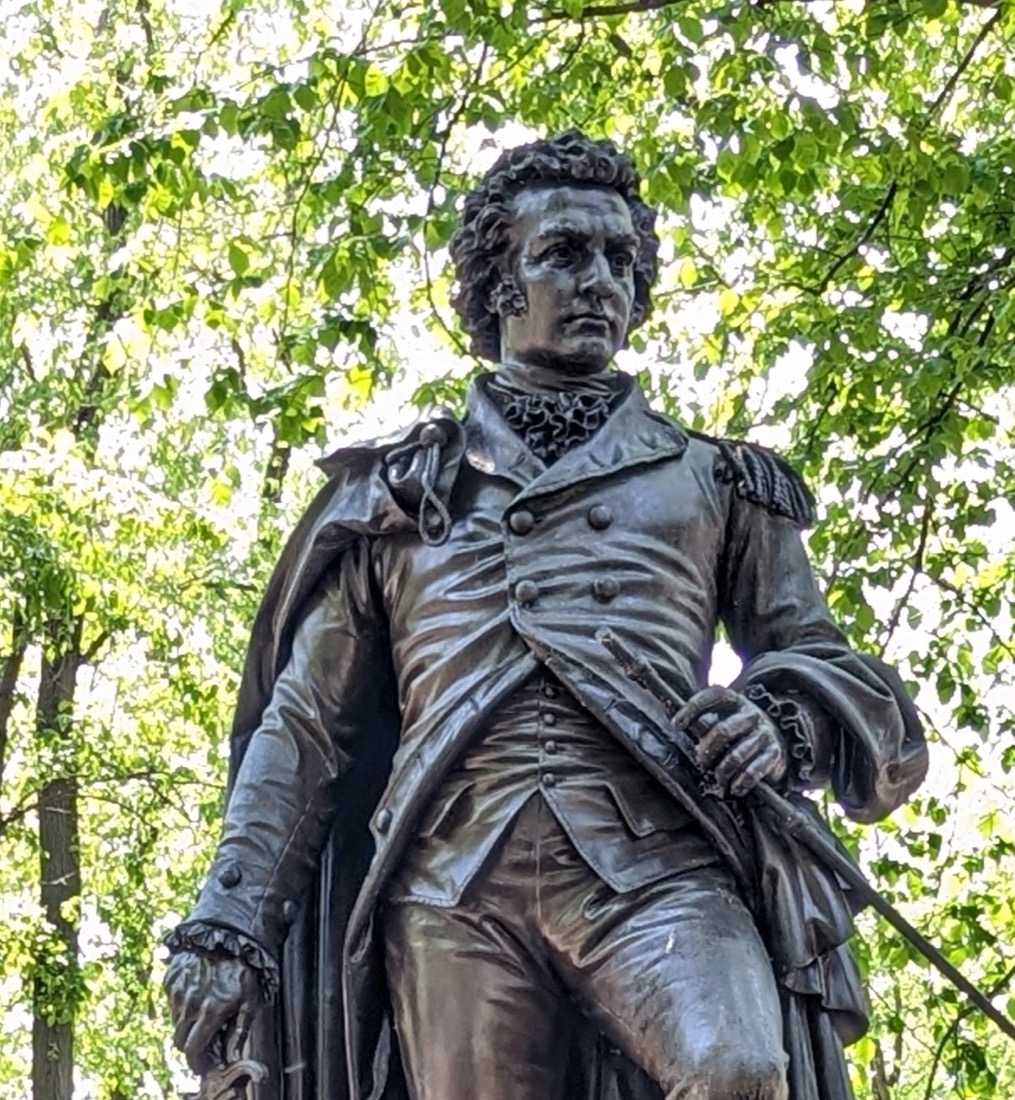
The Fog That Saved a Revolution
The whole operation depended on silence. One shout, one dropped oar, and the British camped nearby might realize the Continental Army was slipping away.
As dawn approached, hundreds of soldiers were still waiting on the Brooklyn shore. Daylight would expose the entire crossing.
Then a heavy fog settled over Brooklyn Heights, thick enough to hide the last boats from British patrols moving toward the now-empty American lines.
Washington was the last man to leave. He stepped onto the final boat at around 7 a.m. on August 30.
Empty Trenches
When British troops finally advanced on the Brooklyn defenses, they found nothing. Washington, and his entire army, was already across the river in Manhattan.
Roughly 9,000 men made it out in a single night, along with their cannons and supplies. Glover's regiment wasn't done, either. That December, the same Marblehead sailors rowed Washington across the Delaware River for the surprise attack on Trenton.
August 2026 marks 250 years since that overnight escape, still remembered as one of the closest calls of the entire Revolutionary War.
Enjoyed this? Get a new fact every morning.
A fascinating fact in your inbox every morning. Free. Unsubscribe anytime.
Frequently Asked Questions
What happened during the Brooklyn evacuation in 1776?
Who was Colonel John Glover?
How many soldiers escaped from Brooklyn Heights?
Did fog really help the retreat succeed?
When is the 250th anniversary of the Brooklyn evacuation?
Verified Fact
Verified Aug 12, 2026 · 2 sources checked
Source: Wikipedia (Battle of Long Island)Show verification details
Claims checked
- About 9,000 troops evacuated overnight
- Evacuation was led by Colonel John Glover's Marblehead fishermen
- Evacuation was silent and unseen by the British
- Fog concealed the final crossings near dawn
- Washington left on the last boat
Sources: National Park Service, Wikipedia
Related Topics
More from History & Culture
View all History & Culture →