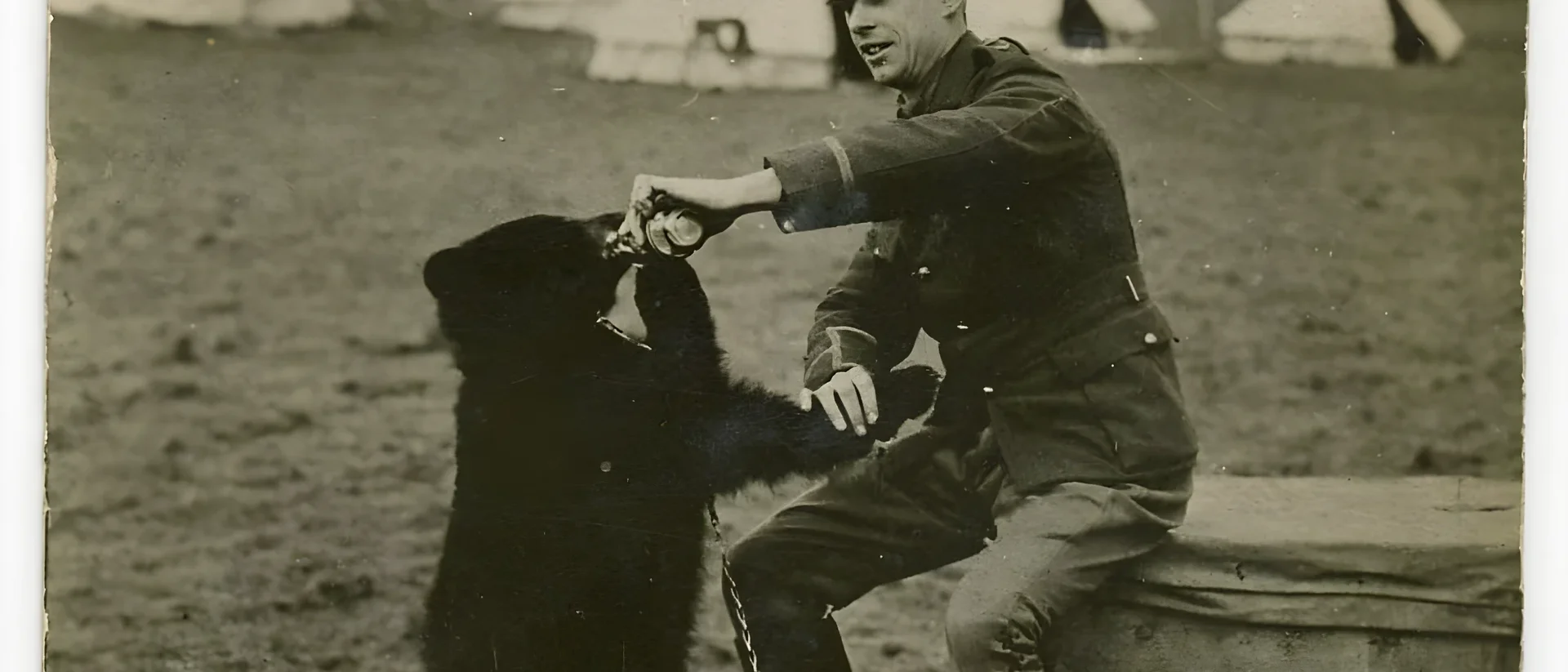
Winnie-the-Pooh was a real bear. Harry Colebourn, a Canadian soldier headed to WWI, bought an orphaned cub for $20 at a train stop in 1914 and named her Winnipeg. When he shipped out to France, he left her at London Zoo, so gentle that keepers let a boy named Christopher Robin climb into her enclosure and feed her condensed milk. He renamed his teddy bear after her.

The Real Winnie-the-Pooh Was a $20 WWI Bear Cub

1 viewsPosted 1 day agoUpdated 11 minutes ago

A soldier steps off a train at a tiny station in northern Ontario and walks away with a bear cub tucked under his arm. That is not the plot of a children's book. It is the actual origin story of Winnie-the-Pooh.

A Vet Heading to War

Lt. Harry Colebourn was a veterinarian from Winnipeg, Manitoba, serving with the Fort Garry Horse, a Canadian cavalry regiment. In August 1914, he was on a train heading east to Quebec, the first stop on his journey to fight in the First World War.

"Bought Bear $20"

On August 24, 1914, the train stopped at White River, Ontario. A local trapper was there with an orphaned black bear cub - he had shot her mother but could not bring himself to kill the cub too, so he sold her instead. Colebourn bought her on the spot for $20. His personal diary from that day records the moment bluntly: "Bought bear $20." He named her Winnipeg, after his hometown. The soldiers just called her Winnie.

The Regiment's Mascot

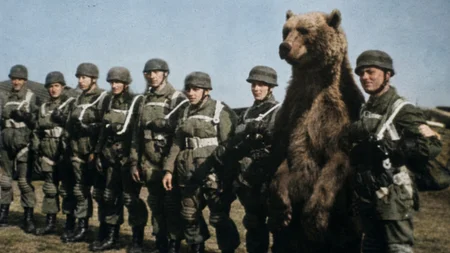
Winnie followed Colebourn to Salisbury Plain in England, where the Canadian troops trained before shipping to the front. She became the unofficial mascot of the Fort Garry Horse and the Second Canadian Infantry Brigade, posing for photos with soldiers and sleeping under Colebourn's cot at night.

Left Behind at London Zoo

When Colebourn's brigade was finally ordered to France in December 1914, he could not bring a bear into the trenches. On December 9, 1914, he left Winnie at London Zoo for safekeeping, planning to collect her after the war. Once he saw how much visitors adored her, he decided to leave her there permanently.

The Boy Who Fed Her Condensed Milk

Winnie turned out to be so gentle that zookeepers let children into her enclosure to pet and feed her. One of them was a young boy named Christopher Robin Milne, who became a regular visitor starting in 1924. Winnie disliked honey. Instead, Christopher Robin fed her spoonfuls of condensed milk.

He loved her so much that he renamed his own teddy bear, previously called Edward Bear, after her. His father, author A.A. Milne, took notice, and in 1926 published a book about a boy and his bear called Winnie-the-Pooh.

A Century of Silly Old Bears

Winnie lived at London Zoo until she died in 1934. The books A.A. Milne wrote about her namesake have never gone out of print. Nearly a hundred years later, millions of children still fall asleep with a stuffed version of a real Canadian army mascot who once slept under a soldier's cot on her way to war.

Enjoyed this? Get a new fact every day.

Follow FunFactz for the best ones in your feed.

or get one in your inbox

Frequently Asked Questions

Was Winnie-the-Pooh based on a real bear?
Yes. Winnie-the-Pooh was named after a real black bear named Winnipeg, or Winnie, who lived at London Zoo. Author A.A. Milne's son Christopher Robin visited her often and renamed his own teddy bear after her.
Who bought the real Winnie the bear?
Lt. Harry Colebourn, a Canadian army veterinarian from Winnipeg, bought the orphaned cub for $20 at a train stop in White River, Ontario, on August 24, 1914, while traveling to fight in World War One.
Why did Christopher Robin feed Winnie condensed milk instead of honey?
The real Winnie disliked honey. Zookeepers allowed young Christopher Robin Milne into her enclosure, where he regularly fed her spoonfuls of condensed milk instead.
What happened to the real Winnie the bear?
Winnie lived at London Zoo from December 1914 until she died in 1934. She became famous during her lifetime for her gentle temperament and her connection to the Winnie-the-Pooh books.
When was the first Winnie-the-Pooh book published?
A.A. Milne published Winnie-the-Pooh in 1926, inspired by his son Christopher Robin's real relationship with the bear at London Zoo.

Verified Fact

Verified Jul 24, 2026

Source: Wikipedia
Show verification details

Verified 2026-07-24. Sources: Wikipedia (Winnipeg (bear)), History.com "The True Story of the Real-Life Winnie-the-Pooh" (fetched via proxy - direct fetch geo-redirects non-US traffic to history.co.uk homepage, so US readers get the real article but note the redirect risk), Toronto Metropolitan University "Remembering the Real Winnie" archive (diary scans), thenewsminute.com, curiousrambler.com, CBC (news + kids + radio). Claims checked: Aug 24 1914 purchase at White River Ontario for CA$20 - CONFIRMED (Wikipedia, TMU diary archive: diary reads "Bought Bear $20", separate entry "Left Wpg 7 P.M." Aug 23). Lt. Harry Colebourn, Fort Garry Horse veterinarian - CONFIRMED. Named Winnipeg/Winnie after hometown - CONFIRMED. Salisbury Plain training Oct 1914-Feb 1915, mascot of Fort Garry Horse and 2nd Canadian Infantry Brigade, slept under his cot - CONFIRMED (Wikipedia, History.com, TMU archive photo). Left at London Zoo Dec 9 1914 - CONFIRMED (Wikipedia + TMU diary "Took Winnie to zoo London"). Children incl. Christopher Robin Milne allowed INSIDE her enclosure/cage - CONFIRMED (History.com "children were even allowed to enter the bear pit", thenewsminute "let inside Winnies cage", A.A. Milne own book introduction describes the cage being unlocked for Christopher Robin). Condensed milk feeding - CONFIRMED (History.com, zookeeper Ernest Sceales 1933 quote "many is the tin of condensed milk she has emptied direct from tiny fingers", multiple sources). Winnie disliked honey (the stated REASON for condensed milk) - MEDIUM confidence only: corroborated by several secondary sources (CBC Radio, thenewsminute, curiousrambler) using near-identical phrasing but no primary/firsthand quote located, and History.com does not mention honey at all - flagged as the one sub-claim without a primary source; kept as-is since it is widely published, low-risk, and social_ai_notes already hedges it correctly (notes a competing photo caption says honey, correctly concludes condensed milk/dislike-of-honey is the better-sourced version - this hedge is accurate, do not let a commenter override it). A.A. Milne published Winnie-the-Pooh in 1926 - CONFIRMED. Teddy bear renamed from Edward Bear to Winnie(-the-Pooh) by Christopher Robin - CONFIRMED, correctly attributed (no reversed agency). Winnie died at London Zoo May 12 1934 - CONFIRMED, stated plainly with no grief framing (fun-brand pass). CA$20 to ~$550 modern equivalent - CONFIRMED consistent with Wikipedia CA$547 (2025 dollars); correctly labeled as Canadian dollars in social_ai_notes, not confused with USD-today. Numeric coherence: all figures ($20, ~$550, 1914 purchase, 1926 publish, 1934 death) reconcile across text/article/faqs/social fields with no contradictions. CORRECTION MADE: article's "White River" paragraph implied a hunter separate from the trapper killed the mother bear; sources (History.com, multiple corroborating pieces) confirm it was the SAME trapper who killed the mother and then could not bring himself to kill the cub - corrected the sentence to remove the reversed/ambiguous agency. Citation fidelity: source_url changed from Wikipedia to History.com because Wikipedia does not support the condensed-milk/inside-enclosure claims that are central to the fact text (not just secondary color) - History.com backs nearly the full headline claim set in one article. Grades reviewed, not inflated: engine=2 correct (Winnie-the-Pooh IS a mass-recognizable brand and the fact IS the true story behind it, not trivia name-dropped); mainstream_novelty=1 is an honest, non-inflated score (the real-bear-behind-Pooh story is moderately well-circulated trivia, not a fresh angle); proof_photo_strength=2 correct (strong real archival photos exist: Colebourn with cub, Christopher Robin feeding Winnie in her enclosure); affinity_pool=2 correct (Winnie-the-Pooh is a mass US household brand via Disney/books/merchandise). Minor non-blocking note for social-manager: plain social_text is 436 chars (over the 280-420 soft target, under the 450 hard stop) - not corrected here as a style-only issue outside verification scope, flagged for trim. No discrepancies affecting core claims found. Gemini CLI dead - manual sentence-by-sentence trace performed against History.com, Wikipedia, and TMU archive source text instead.

Related Topics

More from History & Culture

View all History & Culture