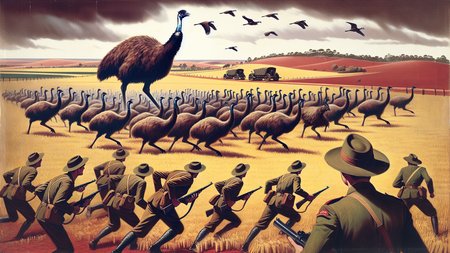
During World War 1, starving wolves amassed in such great numbers that Germans and Russians had a temporary cease fire to fight off the wolf attacks.
When Wolves United Foes: WWI's Wild Truce
War is often described as a chaotic and brutal affair, but few stories from history encapsulate the sheer desperation and bizarre circumstances of conflict quite like the informal 'Wolf Truces' of World War I. On the Eastern Front, where the fight between German and Russian forces was particularly savage, an unexpected enemy often forced both sides into a temporary, unspoken alliance: hordes of starving wolves.
Imagine the scene: trenches stretching for miles, the constant thunder of artillery, and men locked in a brutal struggle. Yet, amidst this human-made hell, nature itself presented an equally terrifying threat. The conflict's devastating toll, resulting in countless casualties left on the battlefields, created an irresistible lure for scavenger animals. Wolves, driven from their natural habitats and perpetually hungry, found an abundant, gruesome food source.
The Unseen Enemy Emerges
The conditions on the Eastern Front were notoriously harsh. Vast, desolate landscapes, brutal winters, and prolonged stalemates meant bodies often lay unburied for extended periods. This grim reality provided an open invitation for wolves, whose populations, ironically, may have initially thrived on the unexpected bounty.
As the war dragged on, these wolf packs grew bolder and more numerous. Reports from 1917, particularly during the brutal winter of 1916-1917, describe the animals becoming increasingly aggressive. They weren't just scavenging; they were actively preying on livestock, venturing into villages, and, most disturbingly, attacking soldiers.
A Ceasefire Born of Necessity
This escalating threat led to extraordinary moments of cooperation. Numerous accounts, including those reported in contemporary newspapers like The New York Times and The Oklahoma City Times, detail instances where German and Russian troops would spontaneously halt their fighting. Faced with a common, primal enemy, their differences seemed to momentarily fade.
- Soldiers, often under direct attack or witnessing comrades being dragged away, would turn their rifles and machine guns not on each other, but on the advancing wolf packs.
- These informal truces were not negotiated treaties, but rather desperate, unspoken agreements born of immediate necessity. Survival instincts overrode national loyalties.
- After repelling the attacks, often having fought side-by-side against the predatory onslaught, the soldiers would frequently return to their respective trenches and resume the human conflict.
The sheer scale of the wolf menace was a testament to the war's disruption of natural ecosystems and the desperate hunger it inflicted on all living things. Wolves were drawn to the scent of death, but they also learned to associate humans, particularly the wounded or isolated, with potential meals.
Accounts from the Front Lines
Eyewitness testimonies from soldiers recounted terrifying encounters. Lone sentries, scouting parties, or even injured men lying in no-man's-land were particularly vulnerable. The wolves represented a non-partisan threat that ignored the artificial lines of battle.
These 'wolf truces' serve as a grim reminder of the multifaceted horrors of World War I. Beyond the bombs, gas, and bullets, soldiers also contended with disease, starvation, and, in some areas, the very real danger of being devoured by wild animals. It highlights the desperate and often surreal nature of trench warfare.
Beyond the Battlefield
While these informal ceasefires were dramatic and unusual, they were sporadic and localized. They did not signify any broader softening of hostilities between the warring nations. Instead, they underscore the profound impact of war on both human society and the natural world, forcing even the most entrenched enemies to momentarily unite against a shared, terrifying foe.
The story of the wolf truces reminds us that sometimes, external pressures can momentarily transcend deeply held animosities. It's a striking historical footnote, often overlooked, that adds another layer of complexity to the already harrowing narrative of the Great War.
Frequently Asked Questions
Did German and Russian soldiers really stop fighting to battle wolves?
Why were there so many wolves during WWI?
Were these wolf truces official agreements?
What happened after the wolf attacks were repelled?
Verified Fact
This fact has been reviewed and verified against original sources.
Show verification details
Historical accounts and newspaper reports confirm informal 'Wolf Truces' on the Eastern Front during WWI, where German and Russian soldiers temporarily united to fight large, hungry wolf packs.