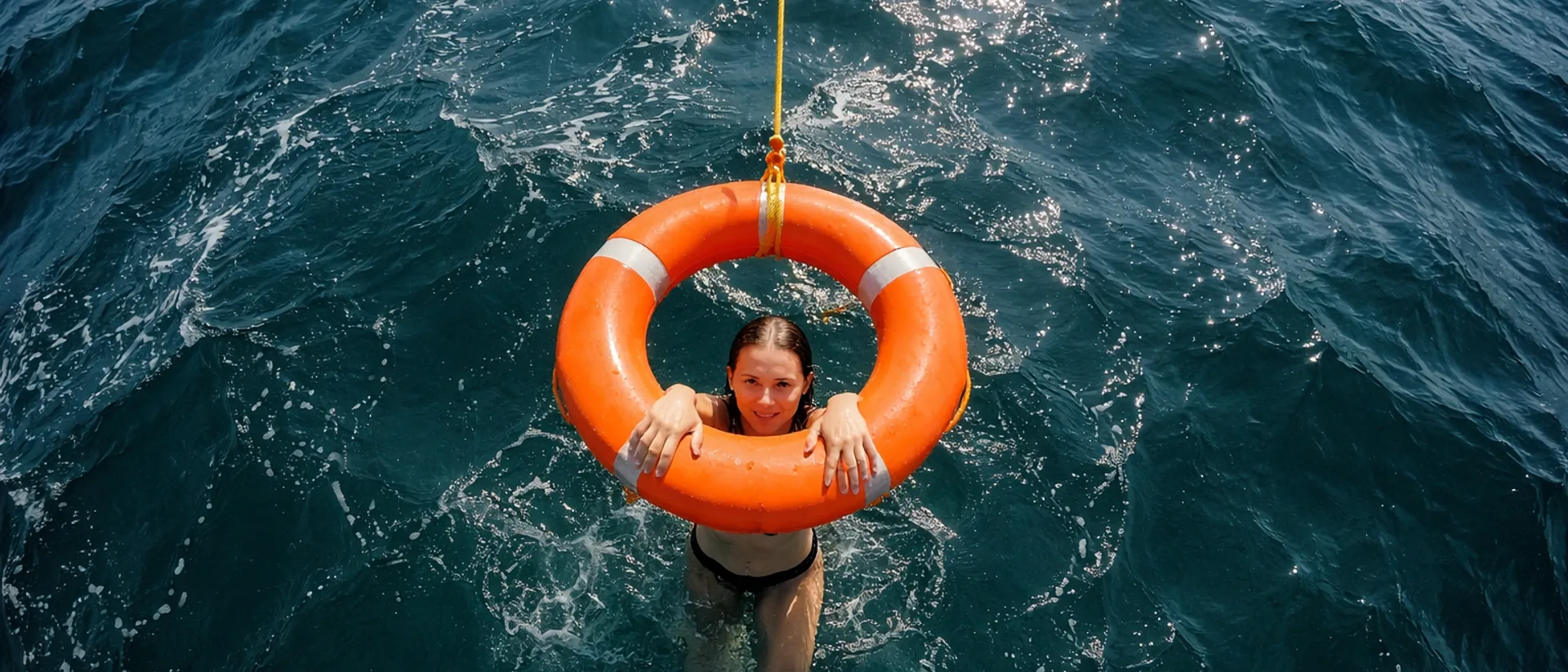
A teenager was drowning in a rip current at Pensacola Beach. Andrew Smith, a fisherman with a seizure disorder who can't swim, was the only person nearby who could help. He strapped a flotation device to his shark-fishing drone and flew it out. First drop missed. A bystander handed him a second float. Second drop - she grabbed it and held on.
A Fisherman Used His Shark-Fishing Drone to Save a Drowning Teen
On the evening of May 15, 2025, a teenager found herself trapped in a rip current about 100 yards off Pensacola Beach, Florida. She was losing strength fast, pulled further from shore with every passing second. A young girl came sprinting across the sand screaming for help.
Andrew Smith, a local shark fisherman, was setting up nearby. He heard the screaming and looked out at the water. The problem was immediate and personal - Smith has a seizure disorder that makes it medically dangerous for him to swim. He couldn't go in after her. And nobody else on that stretch of beach could either.
But Smith had something most beachgoers don't - a heavy-lift drone built for deploying shark bait hundreds of yards offshore. He grabbed one of the flotation devices scattered along the beach, strapped it to his drone, and launched.
The first attempt failed. Wind conditions made the drop difficult, and Smith released the float too early. He later called it "a terrible miss" - it wasn't even close. The teenager was still out there, still fighting, and the clock was running out.
Then a bystander ran over with a second flotation device. Smith attached it, adjusted his approach, flew lower, and released. This time the girl grabbed it and held on.
First responders arrived about five minutes later. EMS, police, and lifeguards all told Smith the same thing afterward - without that second drop, the teenager would not have made it. She was medically cleared at the scene and went home with no injuries.
Smith had been reluctant to even go to the beach that evening. A friend had talked him into it, and they'd only been there about ten minutes when the emergency started. Drone manufacturer Swellpro later recognized his actions by gifting him their latest model, the Fisherman FD2.
Enjoyed this? Get a new fact every morning.
A fascinating fact in your inbox every morning. Free. Unsubscribe anytime.
Frequently Asked Questions
What kind of drone did Andrew Smith use for the rescue?
Why couldn't Andrew Smith swim out to save the girl himself?
Did the teenager survive the rip current?
Why did the first drone drop miss?
Verified Fact
This fact has been reviewed and verified against original sources.
Source: CBS NewsShow verification details
Fisherman: Andrew Smith. Date: May 15, 2025, Pensacola Beach, FL, around 7 PM. Seizure disorder confirmed - prevents him from swimming. First drop missed due to wind. Bystander provided second flotation device. Girl grabbed second drop.
Related Topics
More from People & Mind
View all People & Mind →