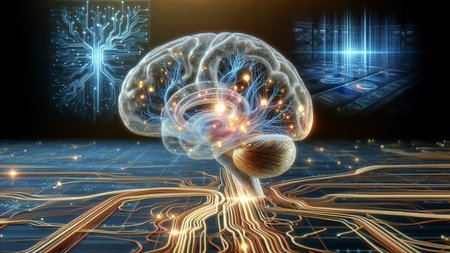
Falling in love raises levels of nerve growth in a person's brain for about a year and can improve their memory.
Love's Neural Spark: How Romance Rewires Your Brain
Falling in love is an experience that transcends mere emotion. It's a profound biological event, capable of reshaping our very brains. Far from being just a poetic notion, scientific studies reveal that the flush of new romance actually triggers significant neurological changes. These alterations include a surge in nerve growth and an unexpected boost in memory capabilities, often lasting for approximately a year after the initial infatuation.
This fascinating phenomenon highlights the intricate connection between our emotional states and our physical biology. Love, it turns out, isn't just in the heart; it deeply influences the most complex organ we possess – the brain.
The Nerve Growth Factor Surge
One of the most compelling pieces of evidence linking love to brain changes is the elevation of Nerve Growth Factor (NGF). This protein is absolutely crucial for the survival, maintenance, and development of neurons – the fundamental cells of our nervous system. When individuals fall head-over-heels, their blood levels of NGF can increase dramatically.
These heightened NGF levels are not just a fleeting occurrence. Research indicates they remain significantly elevated in couples during the intense, early phase of romantic love. This period, often characterized by strong emotional attachment and preoccupation with the beloved, typically spans about twelve months.
The presence of more NGF suggests an environment conducive to neural health and potentially, the formation of new neural connections. It’s almost as if love prepares the brain for a period of intense learning and adaptation.
Oxytocin: The Love Hormone's Role
Beyond NGF, another key player in love's neurological impact is oxytocin, widely known as the 'love hormone.' This powerful neuropeptide is released during social bonding, physical intimacy, and moments of deep connection. But its influence extends far beyond warm, fuzzy feelings.
Oxytocin has been shown to actively regulate synaptic plasticity. This refers to the brain's incredible ability to strengthen or weaken connections between neurons, a process vital for learning and memory storage. Furthermore, oxytocin promotes neurogenesis – the birth of brand-new brain cells, particularly in areas critical for cognitive functions.
- Synaptic Plasticity: Enhances the brain's ability to adapt and form new connections.
- Neurogenesis: Stimulates the creation of new neurons, particularly in memory-related regions.
Both synaptic plasticity and neurogenesis are foundational processes for how we learn new information and solidify memories. The brain becomes more malleable, more receptive, and potentially more efficient under oxytocin's influence.
Sharpening the Edges of Memory
The neurochemical cocktail associated with falling in love doesn't just create new neural pathways; it also appears to directly enhance our memory functions. The initial stages of romance activate specific brain regions, including parts of the limbic system. This area is intrinsically linked to both emotion and memory formation, explaining why memories tied to a new love are often so vivid and enduring.
The sustained presence of oxytocin, in particular, has been found to engage neural circuits directly involved in memory retention. It can significantly improve the processes by which long-term memories are consolidated. Studies, even in animal models, have demonstrated oxytocin's capacity to boost spatial memory and hippocampal neurogenesis, providing compelling biological support for this claim.
A Symphony of Brain Chemistry
Falling in love orchestrates a complex symphony of brain chemistry. Alongside NGF and oxytocin, other neurotransmitters play crucial roles. The brain's reward centers light up, flooding the system with dopamine, creating feelings of euphoria and motivation. Noradrenaline, a stress hormone that also acts as a neurotransmitter, can sharpen focus and heighten awareness, contributing to the intense attention paid to a new partner.
These chemical shifts lead to measurable changes in neural pathways. Existing connections can be rewired, and new ones can be strengthened, illustrating a profound form of neuroplasticity. This means the brain isn't just reacting to love; it's actively transforming itself in response to this powerful human experience.
The Broader Impact of Connection
The neurological effects of falling in love extend beyond just brain growth and memory. This period of intense connection and emotional intimacy can have wider implications for mental well-being and cognitive function. The brain becomes more attuned to its environment and more engaged with social cues, skills that have long-term benefits.
So, the next time you feel that flutter of new love, remember it's more than just a feeling. It's a remarkable biological process, an intricate dance of chemicals and neurons that literally reshapes your brain, making you more receptive, more connected, and potentially, a little bit sharper. Love truly is a powerful stimulant for both heart and mind.
Frequently Asked Questions
How long do the brain changes from falling in love last?
What is Nerve Growth Factor (NGF) and why is it important in love?
Does oxytocin really create new brain cells?
Can falling in love actually improve memory?
Are these brain changes permanent?
Verified Fact
This fact has been reviewed and verified against original sources.
Related Topics
More from People & Mind
View all People & Mind →