At 14, James Harrison nearly died during lung surgery and was saved by strangers' blood. He kept his promise to pay it back for 60 years, donating plasma 1,173 times. His rare anti-D antibodies created a treatment given during pregnancy that saved his own daughter's babies, and the Man with the Golden Arm saved 2.4 million Australian newborns over his lifetime.
The Man Who Saved 2.4 Million Babies
When James Harrison was 14 years old, a major chest surgery left him in hospital for three months. Doctors gave him blood transfusions from strangers - 13 units in total. He had no idea who those people were. He made a promise: when he was old enough, he would donate blood himself.
A Promise Kept for 60 Years
Harrison kept that promise for the rest of his life. At 18, he walked into a donation clinic for the first time. Doctors quickly noticed something unusual about his blood. It contained a rare and exceptionally potent antibody - anti-D, also known as Rh immunoglobulin - that could treat a dangerous condition called rhesus disease.
Rhesus disease occurs when a mother with Rh-negative blood carries an Rh-positive baby. Her immune system can produce antibodies that cross the placenta and attack the baby's blood cells, causing brain damage or death. Before the 1960s, thousands of Australian babies died from it each year. Harrison's blood offered a solution that almost didn't exist anywhere else on Earth.
The Numbers Behind the Nickname
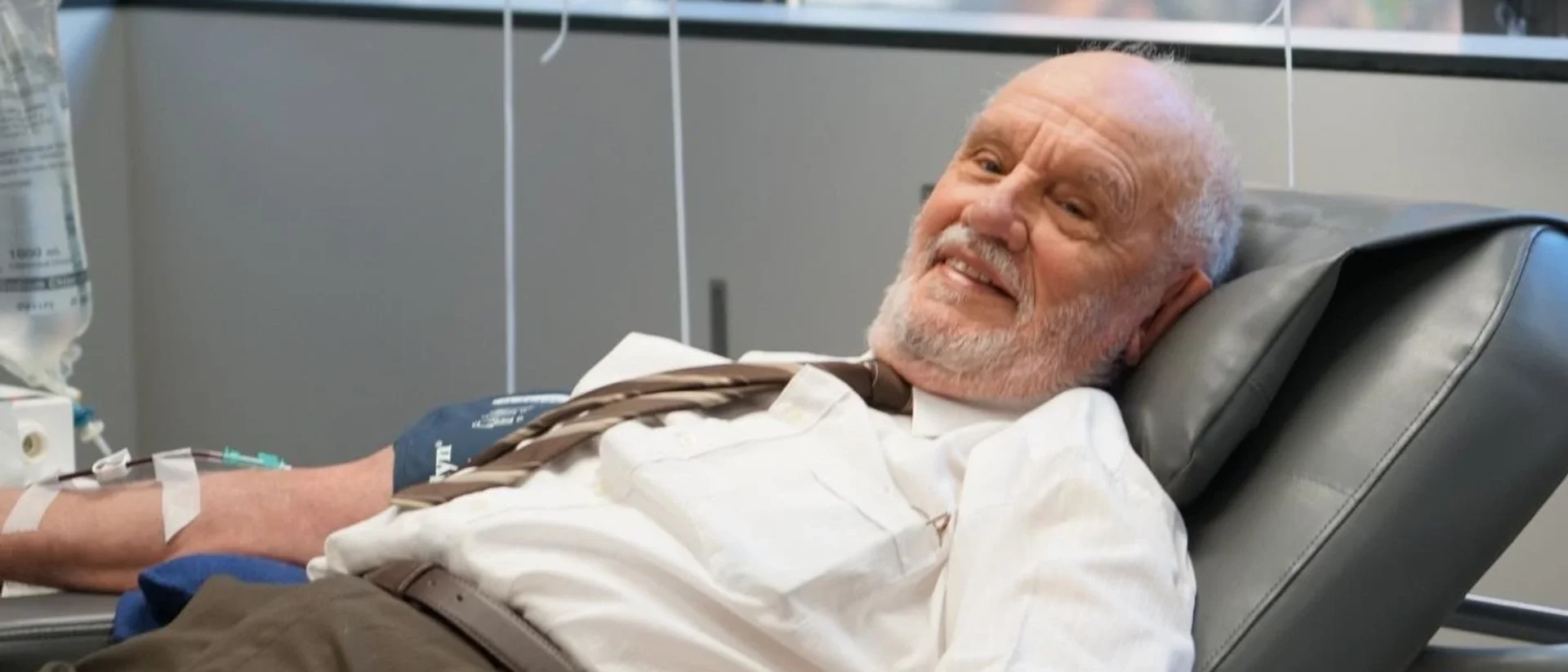
For 60 years, Harrison donated plasma approximately every three weeks - the maximum frequency permitted by Australian health authorities. Over six decades, he completed 1,173 donations. His plasma was processed into more than 3 million doses of Anti-D immunoglobulin. The Australian Red Cross estimates his contributions helped protect approximately 2.4 million babies from rhesus disease. Australia became the first country in the world to achieve full self-sufficiency in Anti-D supply, in no small part because of him.
He earned the Guinness World Record for the most blood donated by an individual. He earned something else too - the nickname the Man with the Golden Arm.
The Circle Closes
In 2011, Harrison arrived for what would be his 1,000th donation. Seated in the chair right next to him was his grandson Scott - making his very first donation. Tracey Mellowship, Harrison's daughter and Scott's mother, had herself received Anti-D injections during pregnancy. Without the treatment developed from Harrison's plasma, his own daughter's pregnancies were at risk. Scott - one of the babies that risk applied to - grew up and chose to donate blood beside his grandfather.
Retirement and Death
Australian health regulations require donors to retire at 81. In May 2018, Harrison made his final donation - his 1,173rd. He was awarded the Medal of the Order of Australia, one of the country's highest honours, in 1999. He died peacefully in his sleep on February 17, 2025, at a nursing home north of Sydney, aged 88.
Fewer than 200 blood donors worldwide currently carry the antibodies needed to contribute to Anti-D programs. Harrison had hoped his record would one day be broken. He said he never once regretted a single donation.
Frequently Asked Questions
Who was James Harrison the blood donor?
What made James Harrison's blood so special?
What is rhesus disease and why is Anti-D important?
Did James Harrison's blood save his own grandchildren?
When did James Harrison die?
Verified Fact
Verified Mar 3, 2025 · 4 sources checked
Source: CNNShow verification details
Claims checked
- Donated plasma 1,173 times
- Treatment saved 2.4 million Australian newborns (CNN said 2 million)
- Died February 17, 2025
- Daughter received Anti-D treatment
- Grandson donated at his 1,000th donation
Sources: CNN, NPR, Wikipedia, Australian Red Cross Lifeblood
Related Topics
More from People & Mind
View all People & Mind →