Nek Chand was an Indian roads inspector who began secretly building a garden in a forbidden forest gorge around 1965. He hid thousands of sculptures there for about a decade, made from broken bangles, tiles and factory waste. Officials discovered it in 1975 and could have torn it down. Instead they gave him a salary and 50 workers. The Rock Garden now covers 40 acres with over 5,000 statues.
The Secret Illegal Garden Nek Chand Built for 18 Years
Every night for about a decade, a government employee in India slipped away from his family and worked on a project that could have cost him his job.
A Roads Inspector With a Secret
Nek Chand Saini was born in 1924 in a village that is now part of Pakistan. He moved to the newly built city of Chandigarh in the 1950s and took a job as a roads inspector for the city's Public Works Department.
Chandigarh itself was a grand government experiment, a planned capital laid out with wide boulevards and strict zoning. On the edge of the city, in a forested gorge near Sukhna Lake, there was a stretch of land the government had marked off limits for construction. Chand started going there anyway.
Building an Illegal Kingdom Out of Trash
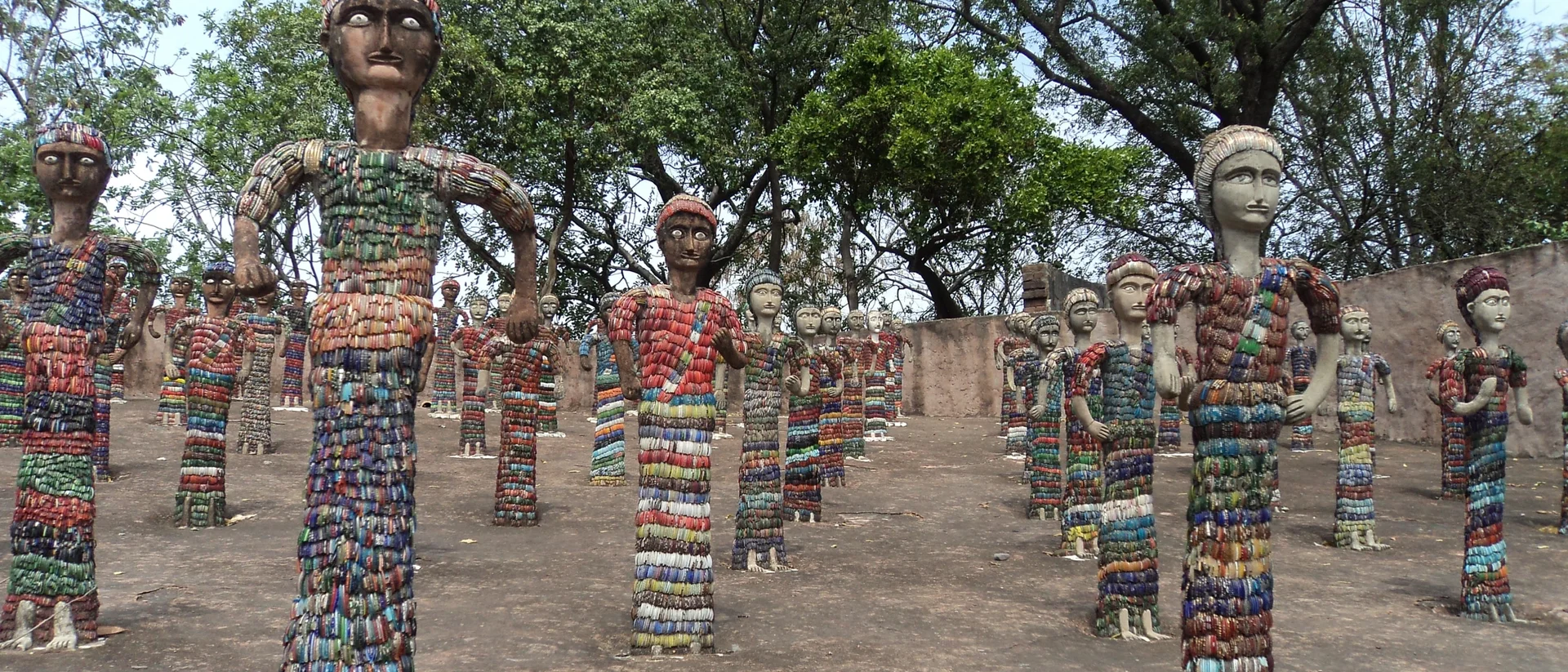
From the late 1950s, Chand began collecting materials from demolition sites and industrial dumps around the city: broken bangles, cracked ceramic, bottle caps, tiles, sinks and scraps of iron slag.
By around 1965 he was carrying the waste to the gorge by bicycle and shaping it into sculptures of dancers, musicians, soldiers and animals, bound together with cement and sand.
He linked the figures with courtyards, walkways and waterfalls. Because building on the land was illegal, he worked almost entirely alone and told very few people what he was doing.
A Decade Underground
For about ten years, Chand kept expanding his hidden world after his day job ended.
By the time government officials stumbled onto it in 1975, his creation covered 12 acres and held hundreds of interlinked courtyards full of sculpture. Under the law, it was a demolition-ready violation sitting on protected government land.
The Garden That Was Too Beautiful to Destroy
Word of the discovery spread through Chandigarh, and residents began making their way through the forest to see it for themselves.
Faced with overwhelming public support, the Chandigarh Landscape Advisory Committee chose not to demolish the site. Instead, Chand was given a paid position and a workforce of 50 laborers so he could work on the garden full time.
It was formally opened to the public on January 24, 1976, in front of a crowd of thousands.
A Roads Inspector's Legacy
Nek Chand kept building the garden until his death in 2015. Today it spans 40 acres and contains more than 5,000 sculptures, making it one of the most visited sites in India.
In 1984 Chand received the Padma Shri, one of India's highest civilian honors, and pieces of his work have since been exhibited in museums including the American Folk Art Museum in New York.
He never had permission to start. He just kept building until the world had no choice but to let him finish.
Frequently Asked Questions
Who was Nek Chand?
How long did Nek Chand keep the Rock Garden secret?
What is the Rock Garden of Chandigarh made from?
How big is the Rock Garden of Chandigarh today?
What happened when officials found out Nek Chand had built it illegally?
Verified Fact
This fact has been reviewed and verified against original sources.
Source: Amusing PlanetShow verification details
Claims checked
- Roads inspector, Public Works Dept, Chandigarh
- Forbidden forest gorge near Sukhna Lake, illegal/secret build
- 12 acres at discovery
- Materials (broken bangles, tiles/crockery, factory/industrial waste)
- Salary + workforce of 50 laborers
- Opened to public January 24, 1976
- Current size 40 acres / 5,000+ sculptures
- Padma Shri 1984, born 1924, died 2015
Related Topics
More from People & Mind
View all People & Mind →