Steve Irwin's family never walked away. After he died on September 4, 2006, Australia bought 330,000 acres of Cape York, bigger than New York City, and named it after him. Every August they still tag crocs there in the Wenlock River: nearly 300 since 2008, what Australia Zoo calls the world's longest-running croc study. Twenty years on, still out there.
Steve Irwin's Family Still Tags Crocs, 20 Years On
Every August, Steve Irwin's family packs up and disappears into the crocodile country of Cape York, Australia's remote northern tip. They are not there to visit a memorial. They are there to work, on 330,000 acres of wilderness that Australia bought and named after him, a stretch bigger than New York City.
A Reserve Bigger Than New York City
The Steve Irwin Wildlife Reserve covers roughly 135,000 hectares of far north Queensland, land the Australian government set aside as a tribute after his death in 2006.
It protects some of the country's richest freshwater habitat, including the Wenlock River, home to estuarine crocodiles, sawfish and speartooth sharks. In 2013, the Queensland government moved to permanently ban mining across the reserve.
The Study That Outlived Him
In 2008, two years after Steve's death, Terri, Bindi and Robert Irwin partnered with the University of Queensland to keep the crocodile research going on the Wenlock River, using capture methods he had developed himself.
Every crocodile caught gets fitted with an acoustic tag with a decade-long battery life; the larger ones also get a GPS tracker. The team has now logged over 10 million data recordings on how crocodiles move, dive and regulate their body temperature.
They've tagged nearly 300 crocodiles since the study began, in what Australia Zoo calls the world's longest-running crocodile research project.
Twenty Years Later, Still Out There
Steve Irwin died on September 4, 2006. Twenty years on, the reserve that carries his name is still protected, still studied, and still visited by the family that runs it.
Each year, the trip has become what Australia Zoo describes as "almost a pilgrimage" for the Irwins back to the Wenlock River, with the crocodile count still climbing every August.
Professor Craig Franklin of the University of Queensland leads the scientific side of the project, which Australia Zoo calls the largest and most comprehensive study of crocodiles anywhere in the world.
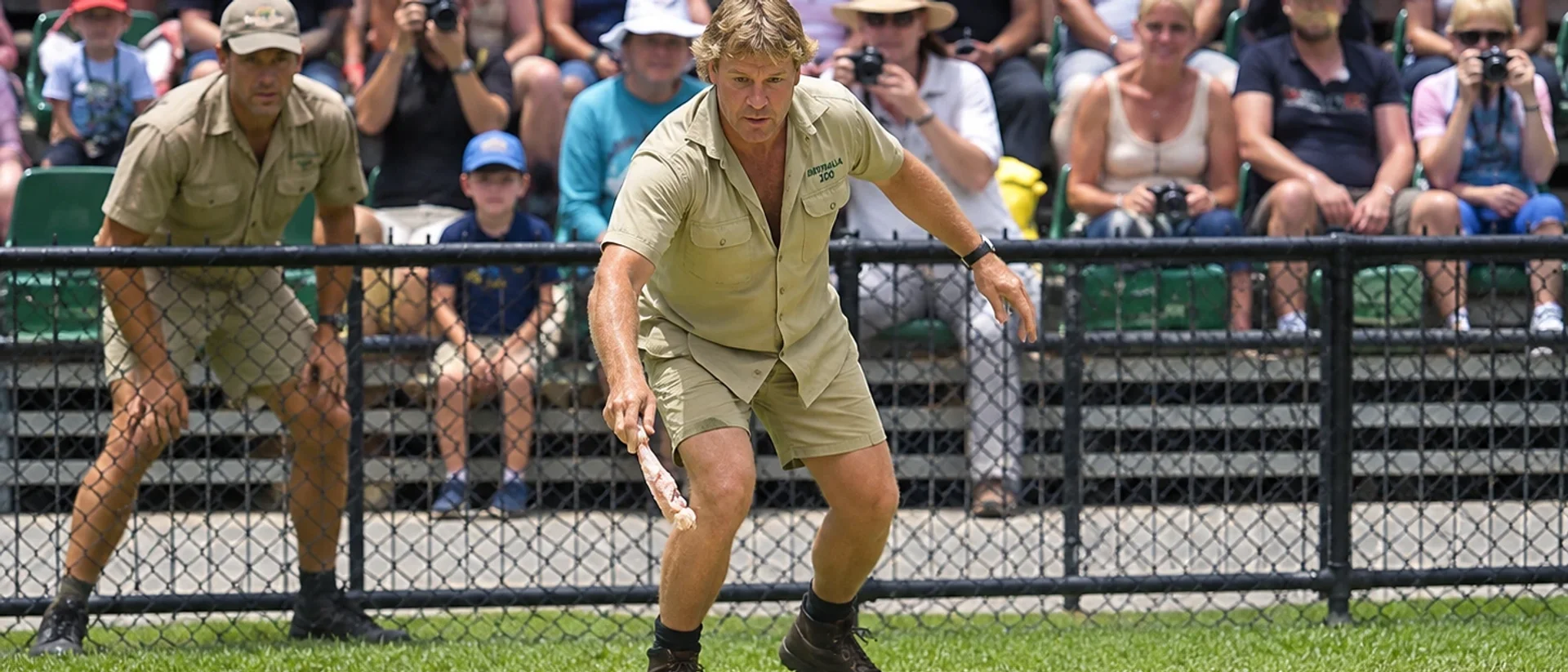
Photo credits: Steve Irwin at the Crocoseum, Australia Zoo, 2003 (Biatch2, CC BY-SA 3.0); the Crocoseum at Australia Zoo, 2026 (CC BY-SA 4.0). Both via Wikimedia Commons.
Frequently Asked Questions
How big is the Steve Irwin Wildlife Reserve?
How many crocodiles has the Irwin family tagged?
Who runs the crocodile research now?
Is the Steve Irwin Wildlife Reserve open to the public?
What is the crocodile research used for?
Verified Fact
Verified Aug 27, 2026 · 6 sources checked
Source: Australia ZooShow verification details
Claims checked
- The Australian government purchased 330,000 acres (about 135,000 hectares) of Cape York and named it the Steve Irwin Wildlife Reserve after his 2006 death
- The reserve is larger than New York City
- Terri, Bindi and Robert Irwin continued crocodile research on the Wenlock River with the University of Queensland starting in 2008
- Number of crocodiles tagged corrected to "nearly 300" (was "over 300") to match Australia Zoo's current published figure of 296
- Australia Zoo describes the project as the world's longest-running crocodile study, with over 10 million data recordings collected
- Queensland banned mining on the reserve in 2013
Sources: Australia Zoo, University of Queensland, ABC News
Related Topics
More from People & Mind
View all People & Mind →