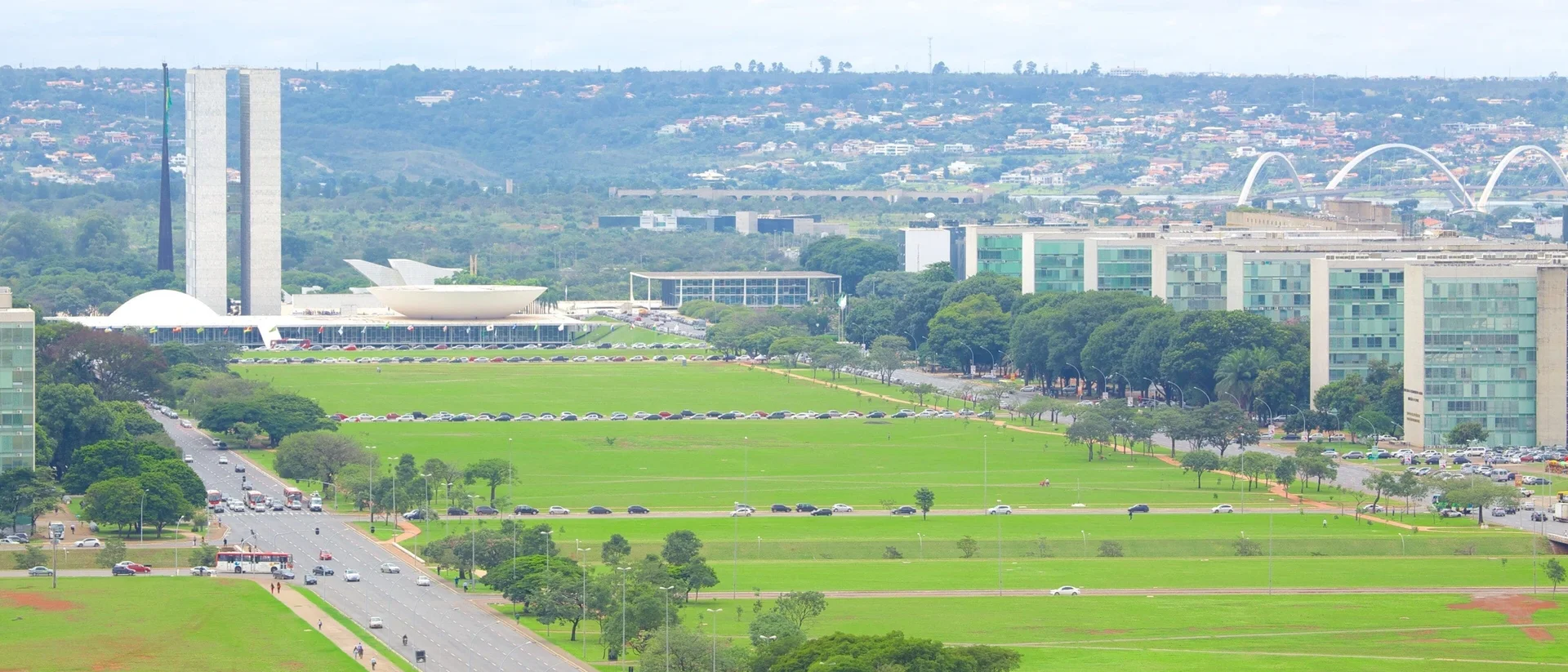
The Monumental Axis in Brasília holds the Guinness World Record for the widest central reservation of a dual carriageway, measuring 250 meters (820 feet) wide.
Brazil's Record-Breaking Boulevard Has the World's Widest Median
When Brasília was designed in the late 1950s, urban planner Lúcio Costa wasn't thinking small. The city's central artery, the Monumental Axis (Eixo Monumental), stretches 16 kilometers through the heart of Brazil's capital, connecting the nation's most important government buildings. But it's not the length that earned it a world record—it's the absurdly wide green space running down the middle.
The Monumental Axis holds the Guinness World Record for the widest central reservation of a dual carriageway, measuring 250 meters (820 feet) across. To put that in perspective, that's wider than two American football fields placed end to end. The central median alone is larger than some entire streets.
The Urban Legend vs. Reality
You might have heard the claim that "160 cars can drive side by side" on this road. That's a persistent urban legend. The actual roadway consists of two six-lane avenues—twelve lanes total—separated by that massive central park. Still impressive, but nowhere near 160 cars wide.
The confusion likely stems from people mentally adding up the entire 250-meter width, including the grass, trees, and walking paths in the median. If you theoretically paved over all that greenery and squeezed cars bumper-to-bumper? Maybe you'd fit 100+ vehicles. But that defeats the whole purpose.
Why So Wide?
Brasília was built from scratch between 1956 and 1960 as Brazil's new capital, designed by architect Oscar Niemeyer and urban planner Lúcio Costa. The city's layout resembles an airplane when viewed from above, with the Monumental Axis forming the fuselage.
Costa envisioned the central reservation as monumental public space—not wasted asphalt, but a grand ceremonial greenbelt befitting a national capital. It includes:
- Parks and gardens for public gatherings
- Monuments and sculptures
- Wide pedestrian promenades
- Space for national celebrations and events
The 2.4-kilometer stretch from the Municipal Plaza to the Plaza of the Three Powers officially holds the Guinness record. Opened in April 1960, it connects Brazil's executive, legislative, and judicial buildings in one sweeping architectural statement.
A City Built for the Future
Brasília was designed during the height of modernist urban planning, when architects believed cities should be organized by function, with ample space for cars and grand vistas. The Monumental Axis embodies that philosophy—perhaps to an extreme.
Today, the UNESCO World Heritage-listed city serves as both a functioning capital and a testament to mid-century ambition. And while you can't actually drive 160 cars side by side, crossing that 250-meter median on foot definitely makes you feel like you're traversing something monumental.
Frequently Asked Questions
What is the widest road in the world?
Can 160 cars really drive side by side in Brazil?
When was the Monumental Axis built?
How wide is the Monumental Axis in Brazil?
Why is Brasília's main road so wide?
Verified Fact
This fact has been reviewed and verified against original sources.
Show verification details
Corrected: The '160 cars side by side' claim is an urban legend. The road actually has 12 lanes total (6 each direction). The real record is for the widest central reservation (median) of a dual carriageway.
Related Topics
More from Places & Culture
View all Places & Culture →