
The Bean in Chicago's Millennium Park is really Cloud Gate, 168 stainless-steel plates welded into one seamless, 110-ton mirror. Every day the park is open, a small crew hand-wipes its base to strip off the fingerprints and oils that would corrode the finish. Twice a year another crew scaffolds the whole sculpture overnight for a full wash and polish. The wipe-down crew is still out there, cloths in hand.
The Tiny Crew That Keeps Chicago's Bean Spotless
One of Chicago's most photographed sculptures has a job title nobody thinks about: the Bean gets touched by thousands of hands a day, and someone has to wipe every one of those fingerprints off before they eat into the mirror finish.
168 Plates, One Seamless Mirror
The sculpture's real name is Cloud Gate. British-Indian artist Anish Kapoor designed it, and the city dedicated it in Millennium Park in 2006.
It is built from 168 stainless-steel plates welded together and polished until the seams disappear, forming one continuous mirrored shell. The finished piece weighs 110 tons, roughly 220,000 pounds, and stands three stories tall.
Donors once suggested fencing it off to cut down on wear and tear. Kapoor said no. He wanted an interactive sculpture people could walk up and touch, not one they had to admire from behind a rail.
The Job Nobody Notices
That decision created a permanent maintenance job. A crew wipes down the lower six feet of the sculpture with soft polishing cloths several times a day, every day the park is open.
"Oils on our skin would corrode that mirrored, polished surface," Millennium Park Foundation Executive Director Scott Stewart told ABC7 Chicago.
In warmer months, staff also work the sculpture with a hose and a squeegee, spraying it down and then squeegeeing off every water droplet so none dry into spots. "Every day, two hours," Stewart said of the routine. "It's one of the best workouts you can get in the city."
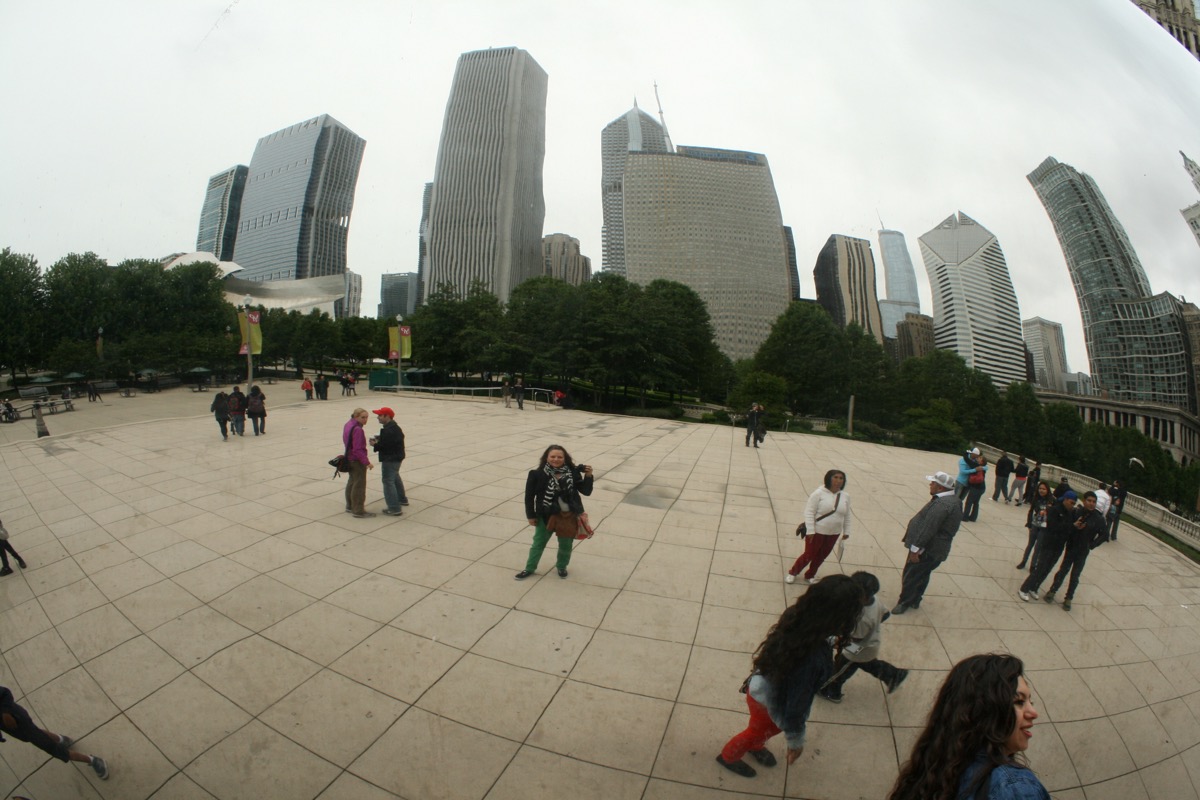
The Deep Clean Happens After Midnight
Wiping away fingerprints keeps the lower panels bright, but dust, rain streaks and bird droppings still build up higher on the shell where nobody can reach with a cloth.
Twice a year, a maintenance contractor closes off the plaza overnight and builds lightweight aluminum scaffolding around the entire sculpture. The crew works from around 11 p.m. until roughly 5:30 a.m., then clears the scaffolding before the park reopens.
They rinse the steel with a mild detergent and a low-pressure sprayer to lift dirt and droppings, then hand-polish the whole surface with an environmentally friendly solution to restore the mirror shine. Chicago Public Media reported the annual upkeep runs between $35,000 and $50,000 in labor and materials, paid out of an endowment rather than tax dollars.
Still Shining
The overnight power wash has run on this twice-a-year schedule since 2008, according to the contractor that performs it. The daily hand-wipe never stops.
The wipe-down crew is still out there, cloths and squeegee in hand, keeping Kapoor's touchable sculpture exactly that: touchable.
Source:ABC7 Chicago
Enjoyed this fact?
Be the first to love this
Get a new fact every morning.
A fascinating fact in your inbox every morning. Free. Unsubscribe anytime.
Frequently Asked Questions
What is the Bean in Chicago actually called?
How often is the Bean cleaned?
Why does the Bean need cleaning so often?
What is Cloud Gate made of?
How much does it cost to maintain the Bean?
Verified Fact
Verified Sep 5, 2026 · 4 sources checked
Source: ABC7 ChicagoShow verification details
Claims checked
- Cloud Gate (the Bean) is 168 stainless-steel plates welded into one seamless shell weighing about 110 tons
- Formally dedicated in Millennium Park on May 15, 2006
- A crew hand-wipes the lower panels every day the park is open, with a hose and squeegee in warm months
- The whole sculpture gets a full overnight scaffold wash and hand polish twice a year, running since 2008
- Donors once wanted it fenced off to cut maintenance costs, but Kapoor refused because he wanted it touchable
Sources: ABC7 Chicago, WBEZ Chicago Public Media, Stuart Dean, Wikipedia
Related Topics
More from Places & Culture
View all Places & Culture →