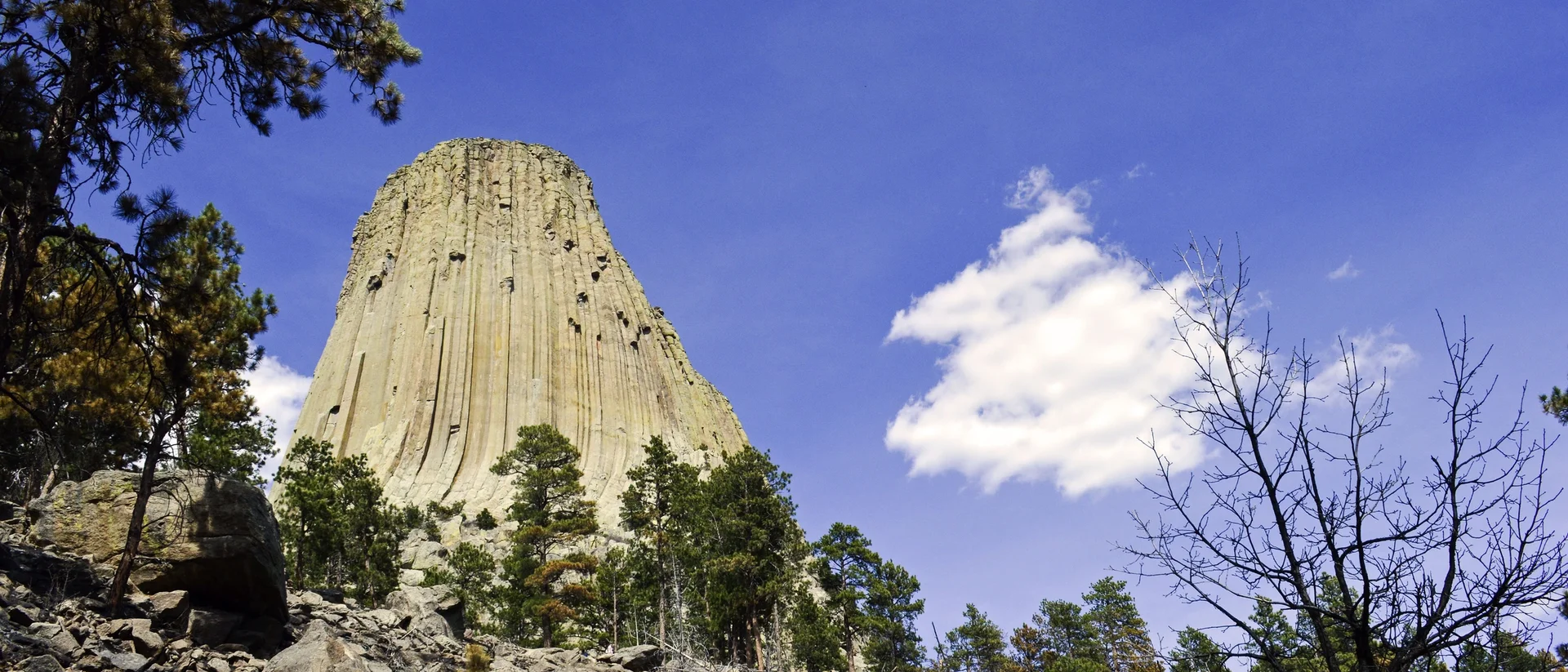
Devils Tower, the giant rock column in Wyoming, was first climbed on a homemade ladder of wooden pegs. On July 4, 1893, rancher William Rogers went up its 867 feet in an Uncle Sam suit, flag in hand, while about 800 people watched. The park service restored the upper part of that ladder in 1972, and it still clings to the rock, visible with binoculars.
The Wooden Ladder Still Clinging to Devils Tower
Devils Tower, the 867-foot rock column in northeastern Wyoming, was first climbed on a ladder of wooden pegs. Part of that ladder is still on the rock today.
A Ladder Hammered Into a Crack
Two local ranchers, Willard Ripley and William Rogers, built the ladder in 1893. According to the National Park Service, Ripley did most of the construction, while Rogers and Ripley's father did most of the cutting and hauling.
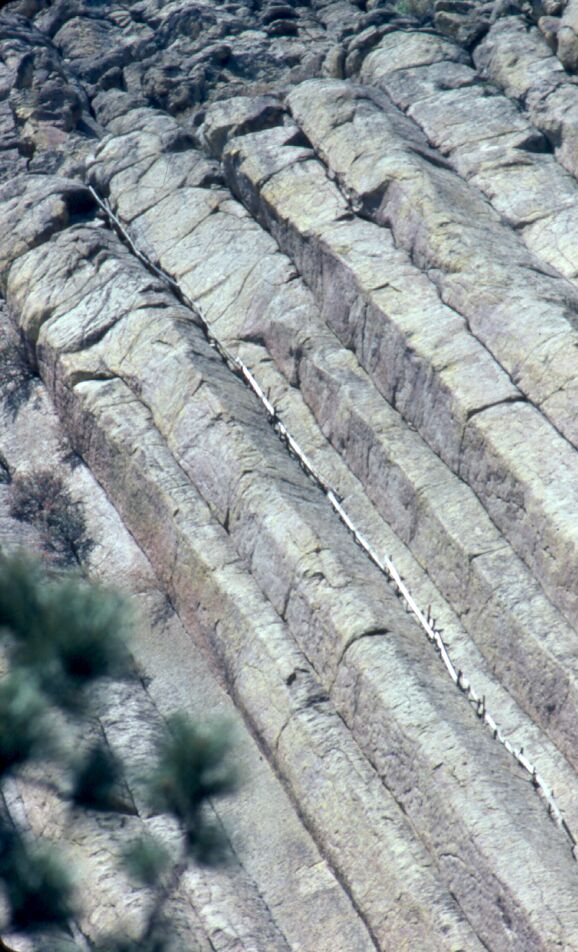
It ran up a vertical crack between two columns on the southeast face. The steps were pegs about 3 inches thick and 24 to 30 inches long, sharpened at one end and driven into the rock. Construction finished on June 28 or 29.
The plan was a ladder of about 350 feet. It reached a sloped area roughly two-thirds of the way up, known as the Meadows, and Ripley scrambled from there to the summit.
800 People and an Uncle Sam Suit
By the evening of July 3, about 800 people had gathered at the base. Spectators came from as far as Rapid City, South Dakota, and some traveled more than 100 miles on a three-day trip by horse and wagon.
On July 4, 1893, Rogers climbed to the top by noon. He wore an Uncle Sam suit and carried an American flag.
A long-held story says the flag was torn up and sold in pieces afterward. The park service says that was never substantiated, and no pieces have been found.
The Ladder Kept Going
Rogers's wife, Linnie, used the same ladder to become the first woman to climb the tower, on July 4, 1895.
The last known climb on the ladder came in 1927, by Babe "The Fly" White.
What Is Still There
In 1972, the park service removed the bottom section of the ladder and restored the upper section. That section still clings to the southeast face.
It is small against the rock. Travel accounts, including Mental Floss, say visitors will likely need binoculars to pick it out.
More than 130 years after two ranchers drove the first peg, the ladder is still up there in the crack.
Source:National Park Service
Enjoyed this fact?
Be the first to love this
Get a new fact every morning.
A fascinating fact in your inbox every morning. Free. Unsubscribe anytime.
Frequently Asked Questions
Who first climbed Devils Tower?
Is the wooden ladder still on Devils Tower?
How many people watched the first climb of Devils Tower?
Who was the first woman to climb Devils Tower?
Verified Fact
Verified Oct 17, 2026 · 5 sources checked
Source: National Park ServiceShow verification details
Claims checked
- Rancher William Rogers climbed Devils Tower on July 4, 1893 in an Uncle Sam suit carrying a flag
- About 800 people gathered to watch
- The tower is 867 feet from base to summit
- The ladder stopped about two-thirds of the way up; the top was reached by scrambling
- Park service restored the upper part of the ladder in 1972 (sources differ on length, 140 to 200 feet)
- The remaining ladder can be seen with binoculars
Sources: National Park Service, Mental Floss, National Register of Historic Places
Related Topics
More from Places & Culture
View all Places & Culture →