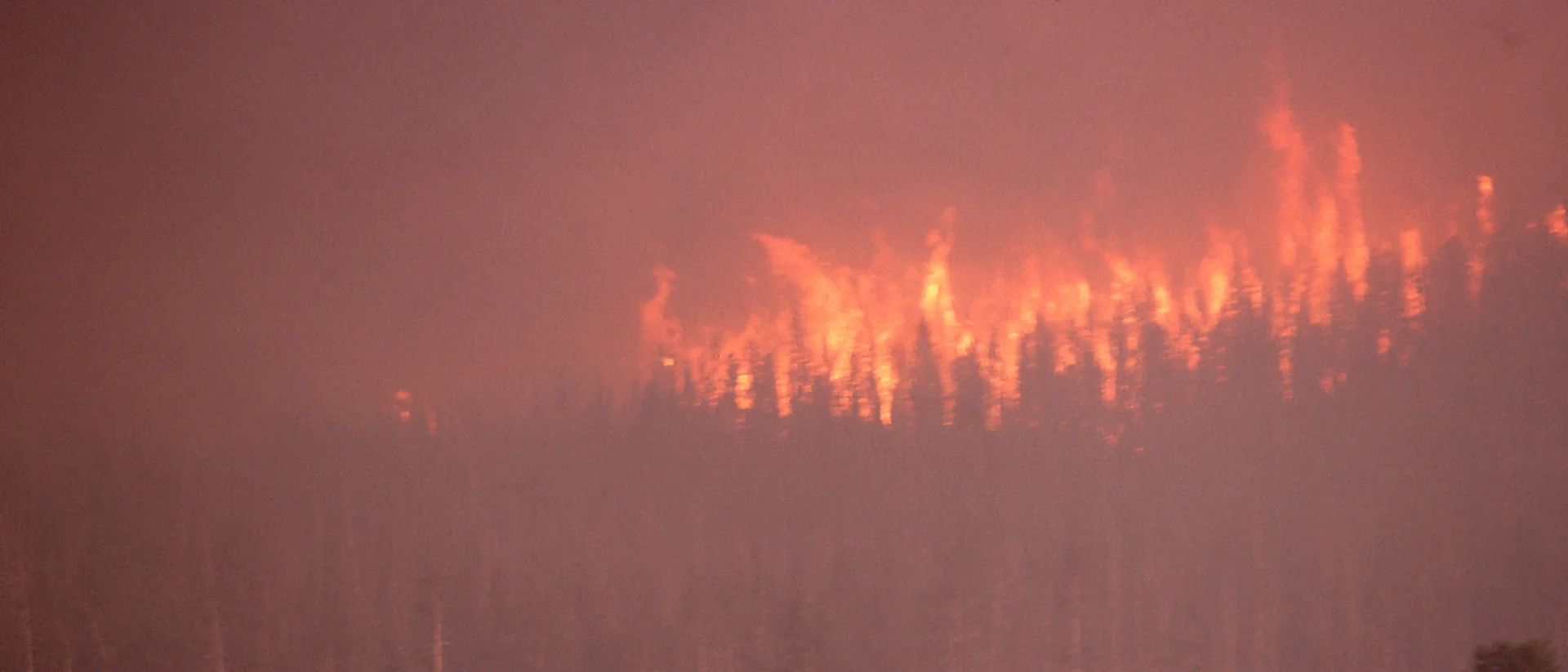
A firestorm roared into the Old Faithful area of Yellowstone in 1988. Crews climbed onto the roof of the giant log hotel beside the geyser to save it. The fire threw embers the size of fists, and cabins nearby burned. Roof sprinklers added a year earlier kept the shingles wet, and crews beat out the sparks that caught. The Old Faithful Inn they saved still stands.
Crews Stood on Old Faithful Inn's Roof as a Firestorm Hit
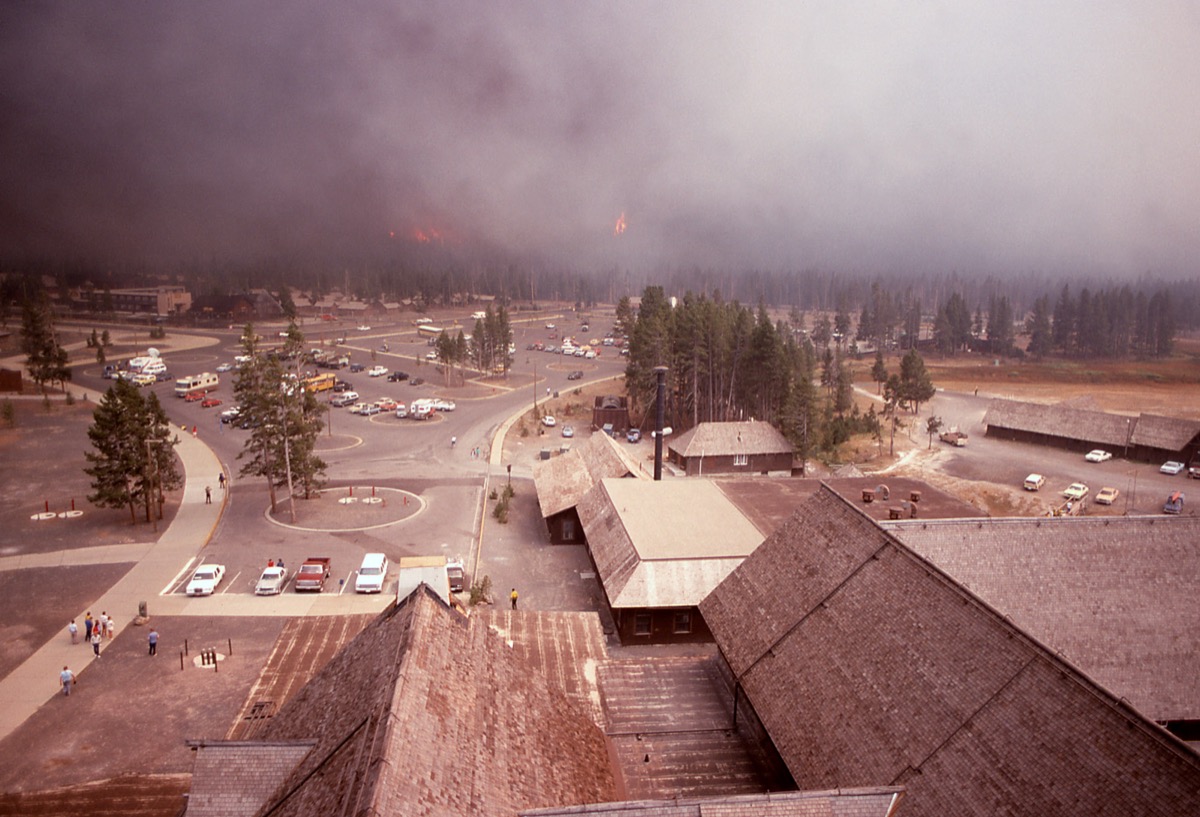
The Old Faithful Inn, the giant log hotel beside Yellowstone's most famous geyser, came close to burning on September 7, 1988. A firestorm swept through the buildings around it, and crews stood on its wooden roof with hoses while embers rained down. When the smoke cleared, the inn was still standing with only minor damage.
A Fire Headed for the Geyser
The North Fork fire started on July 22, 1988, just outside the park near West Yellowstone, when a man cutting wood dropped a cigarette.
It became the largest fire of a summer that would burn about 36 percent of Yellowstone, nearly 800,000 acres in all.
In early September, high winds and dry conditions pushed the fire toward the Upper Geyser Basin, home to Old Faithful geyser and the hotel built beside it in 1904.
Workers not needed to fight the fire were ordered to leave. Air tankers dropped fire retardant on the approaching flames, but they could not stop the front.
"We Don't Lose the Old Faithful Inn"
Bob Barbee, the park superintendent, had given his fire commanders one firm order. A lot of things in Yellowstone could burn, he told them, but not the inn.
"Under any circumstances, we don't lose the Old Faithful Inn. And if we do, I'm dead meat, and so are you," Barbee recalled to NPR in 2008.
Fire management officer Phil Perkins later told the Deseret News that saving the inn was a top priority, but no one was certain it could be done.
Firefighters watered the inn down for days as the flames came closer. When the fire arrived, they draped hoses over the building and drenched it, and some stood with hoses on the roof.
Lee Whittlesey, the longtime Yellowstone historian, was there that day. He watched crews on the roof put out small fires started by embers landing on the shingles.
A Roof Built to Get Wet
The inn had one more line of defense. In 1987, during a long restoration, a sprinkler system was added to its roof to soak the building if a fire ever threatened it.
The idea had first been raised in 1979. Andy Beck, the Park Service architect managing the restoration, had consulted on the installation.
On the day of the fire, Beck was at his office in Denver, 565 miles away. Asked how he felt as the fire swept through, he said simply, "I was not worried at all."
The fire tossed out embers the size of fists. The roof sprinklers kept the wooden shingles wet so landing embers were less likely to catch, while helicopters dropped water on the flames nearby.
"It's the nicest sight I'd ever seen because, otherwise, I'm sure we'd have lost it," Whittlesey said of the water running over the building.
What Burned and What Didn't
The firestorm destroyed 19 small buildings in the Old Faithful area, including employee cabins and storage sheds, and badly damaged an old dormitory.
By late in the day, the main front of the fire had moved on. The Old Faithful Inn was still standing.
Jeff Henry, a photographer and former ranger who was there that day, said losing the inn "would've been a tremendous blow." Rain and snow arrived on September 11 and calmed the fires across the park.
The Inn They Saved
A decade before the fire, the inn had faced a different threat. By the late 1970s, there was talk of tearing it down.
Instead it was restored, and today it is the most requested place to stay in Yellowstone. Its log lobby rises about 76 feet, roughly the height of the lodgepole pines in the forest outside.
The inn closes each winter and is scheduled to reopen on April 30, 2027. It still stands beside the geyser it was named for.
Source:Deseret News
Enjoyed this fact?
Be the first to love this
Get a new fact every morning.
A fascinating fact in your inbox every morning. Free. Unsubscribe anytime.
Frequently Asked Questions
How did the Old Faithful Inn survive the 1988 Yellowstone fires?
How many buildings burned at Old Faithful in 1988?
When was the Old Faithful Inn built?
How tall is the lobby of the Old Faithful Inn?
Is the Old Faithful Inn open in winter?
Verified Fact
Verified Oct 14, 2026 · 6 sources checked
Source: Deseret NewsShow verification details
Claims checked
- The North Fork fire reached the Old Faithful area on September 7, 1988
- Crews stood on the inn's roof and beat out small fires started by embers
- The fire threw embers described as the size of fists
- A roof sprinkler system was added in 1987, the year before the fire
- Small cabins and other buildings nearby burned while the inn had only minor damage
- The inn still stands beside the geyser
Sources: NPR, Deseret News, American Heritage, Bozeman Daily Chronicle, Yellowstone Forever, Wikipedia
Related Topics
More from Places & Culture
View all Places & Culture →