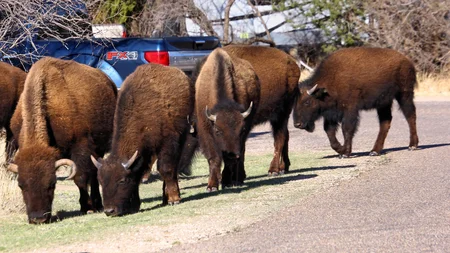
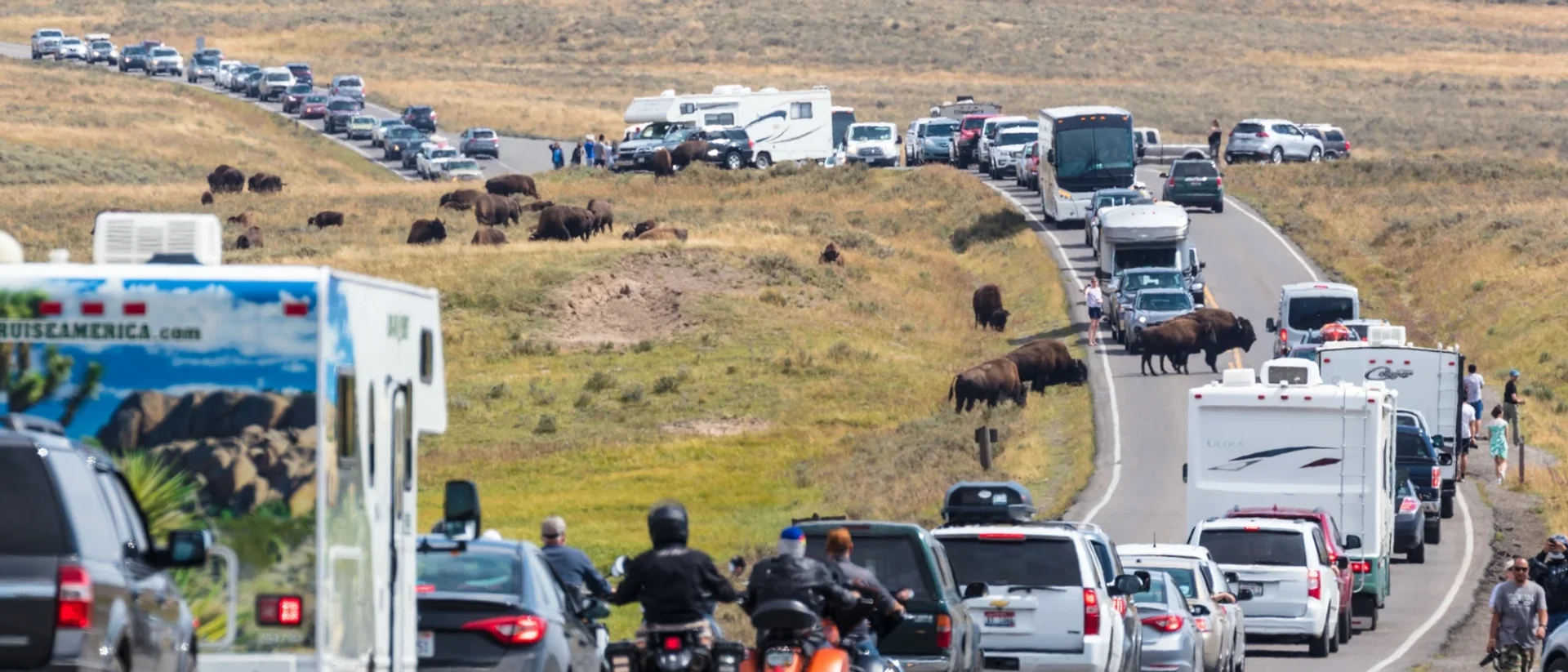
By 1902, poachers had cut Yellowstone's wild bison down to about two dozen animals. They hid in Pelican Valley, the last free herd left in the country. Today the park counts nearly 5,300 bison. Most summer mornings in Hayden Valley, the herd walks straight down the centerline. Traffic stops in both directions. Rangers still give the same order: stay in the car, be patient, and never honk.
Yellowstone's Bison Still Rule the Road
By 1902, Yellowstone's wild bison were down to about two dozen animals. Poachers had hunted the rest of the herd almost to nothing, and the last holdouts were hiding in a remote corner of the park called Pelican Valley.
The Last Wild Herd Left
Bison once numbered in the tens of millions across North America. By the time the hunting slowed, Yellowstone's Pelican Valley group was one of the only wild herds still standing anywhere in the country.
Congress had passed the Lacey Act in 1894 to punish poachers, but the hunting continued until the U.S. Army, then in charge of protecting the park, stepped up patrols. The wild herd stopped shrinking.
In 1902, the U.S. Army also brought in 21 bison from private ranches in Montana and Texas to rebuild numbers faster, moving them in 1907 to a new outpost called the Buffalo Ranch. Over time those newcomers mixed with the wild survivors and formed the single herd that exists today.
Genetic testing has found Yellowstone's herd carries less trace of cattle DNA than almost any other public bison herd in the country. Older mitochondrial DNA tests found none at all; the most sensitive modern whole-genome tests have found only a trace amount in one animal, far below the levels seen in most other American bison herds.
Nearly 5,300 Bison Today
The National Park Service estimates the park's bison population at close to 5,300 animals before each spring's calving season.
They range across the park's interior, including Hayden and Pelican valleys, moving with the seasons much as the wild herd did before it nearly disappeared.
The Jam Nobody Can Rush
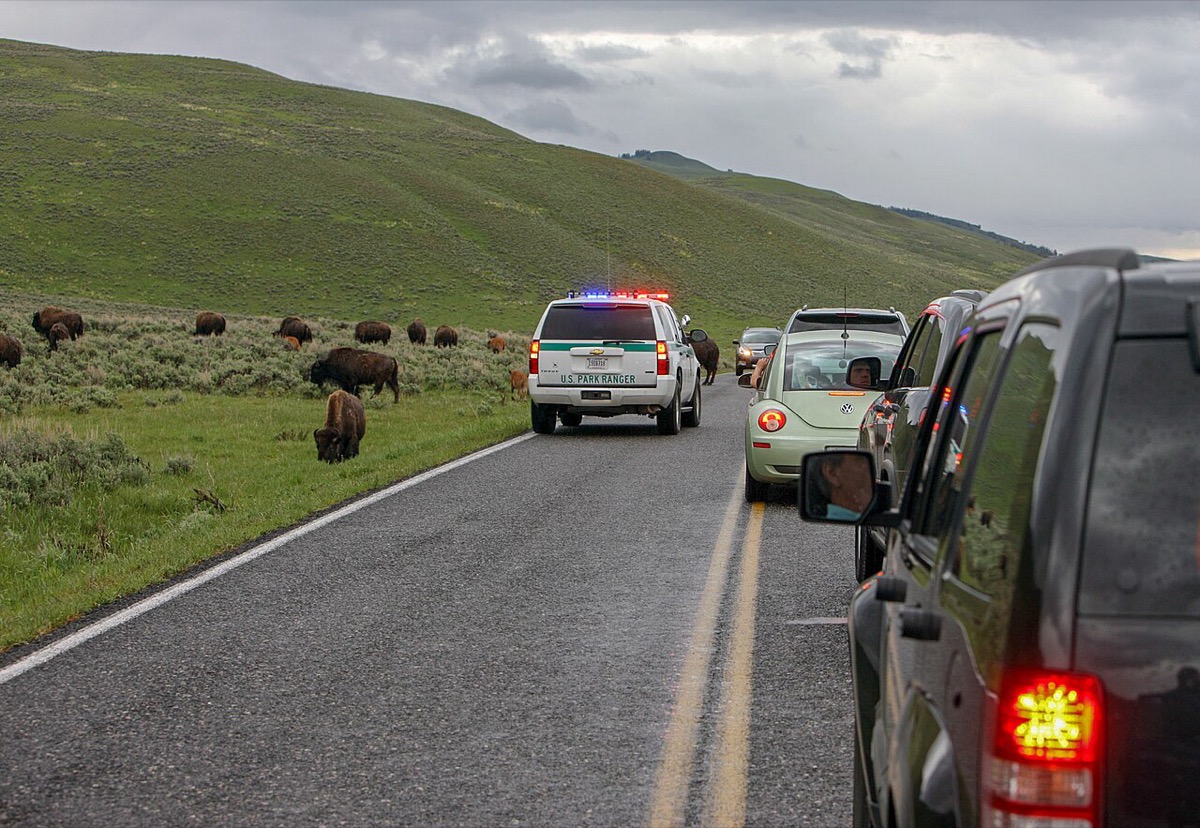
Every summer, tourists driving through Hayden Valley run into the same thing: a line of bison walking straight down the center of the road.
Traffic backs up in both directions, sometimes for a mile, while the herd takes its time crossing or simply ambles down the pavement. The National Park Service calls these "bison jams" and says on its site that they are common enough to plan extra travel time around.
The agency's instructions for drivers are consistent: stay inside the vehicle, keep at least 25 yards away, and never honk the horn or drive toward the animals to move them along.
Why Nobody Argues With Them
Bison look slow, but the National Park Service warns they have injured more visitors than any other animal in Yellowstone, and can run about three times faster than a person.
That combination is why rangers wait the herd out instead of trying to clear the road themselves. The bison that survived a near-extinction by hiding in one valley now set the pace for everyone who visits.
Source:National Park Service
Enjoyed this fact?
Be the first to love this
Get a new fact every morning.
A fascinating fact in your inbox every morning. Free. Unsubscribe anytime.
Frequently Asked Questions
How many bison live in Yellowstone today?
Why did Yellowstone's bison population almost disappear?
What is a bison jam in Yellowstone?
What should drivers do during a bison jam?
Are Yellowstone's bison different from other American bison herds?
Verified Fact
Verified Sep 1, 2026 · 4 sources checked
Source: National Park ServiceShow verification details
Claims checked
- Poachers cut Yellowstone's wild bison down to about two dozen animals by 1902
- The survivors held out in Pelican Valley, the park's remote interior
- The National Park Service counts nearly 5,300 bison in the park today (2025 estimate)
- Bison walking down Hayden Valley roads stop traffic in both directions
- Rangers tell drivers to stay in the vehicle, keep 25 yards back, and never honk
- Bison have injured more Yellowstone visitors than any other animal and can run 3x faster than a person
- Article said ranch bison arrived in 1907 (was 1902; moved to Buffalo Ranch in 1907)
- Article and FAQ said the herd has no detectable cattle DNA at all; a 2022 whole-genome study found a trace amount, so the claim was scoped to compare against other public herds
Sources: National Park Service, National Parks Traveler, Journal of Heredity
Related Topics
More from Animals
View all Animals →