
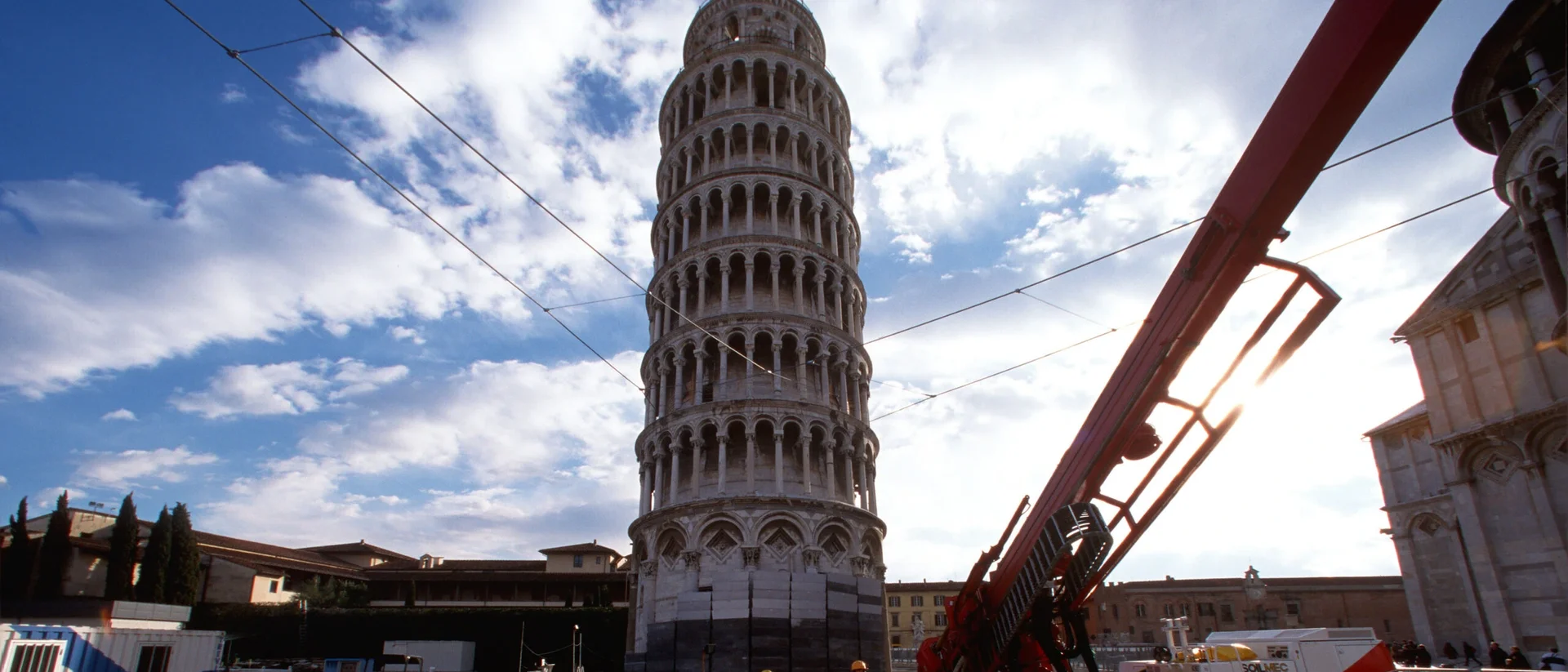
The Leaning Tower of Pisa closed in 1990 for the first time in 800 years. Engineers warned it was close to collapse. Over 11 years, they drilled beneath the north side and extracted soil. The tower settled back by 44 centimeters. It reopened in December 2001. Experts say it is now safe for at least 300 more years.
The Leaning Tower of Pisa Was Secretly Straightened
Most tourists posing for the classic "holding up the tower" photo have no idea they are standing next to a building that was on the verge of collapse. By 1990, the Leaning Tower of Pisa had tilted so far that engineers gave it a grim verdict: intervene now or lose it forever.
The Day It Shut Down
On January 7, 1990, the Italian government did something unprecedented: it closed the Leaning Tower of Pisa to the public for the first time in its 817-year history. The tilt had reached 5.5 degrees - past the threshold engineers calculated would trigger collapse. With nearly a million visitors a year walking through its seven floors of marble, the risk was no longer theoretical.
The Secret Underneath
A committee of international engineers, architects, and restoration experts spent the early 1990s studying the problem before committing to a solution. The approach they settled on sounds almost absurd: carefully remove soil from beneath the high (north) side of the foundation. By creating a controlled void on the non-leaning side, the ground would compress unevenly and the tower would gently tilt back toward vertical.
Starting in 1999, engineers drilled dozens of angled boreholes beneath the north foundation and began slowly siphoning out the underlying clay - removing only a few hundred liters at a time over weeks and months. To stabilize the structure during the process, hundreds of tons of lead counterweights were placed at the base on the high side. Steel cables were wrapped around the lower stories to guard against any sudden shift.
The Result
Over roughly 30 months of active soil extraction, the tower moved back by 44 centimeters - restoring it to approximately the same angle it had in the early 1800s. The project cost an estimated $25 million. On December 15, 2001, after 11 years of closure, the Leaning Tower of Pisa reopened to the public. Most visitors could not see any visible difference.
Still Standing - for Centuries
The intervention did not stop there. After 2001, the tower continued to self-correct naturally - no further excavation required. By 2008, sensors confirmed all movement had ceased. The total correction reached 48 centimeters. Experts now say the tower is stable for at least 300 more years. The lean remains - at about 3.97 degrees, it is still magnificently tilted - but the race against gravity has been won, at least for now.
Frequently Asked Questions
Why was the Leaning Tower of Pisa closed in 1990?
How did engineers fix the Leaning Tower of Pisa?
How much was the Leaning Tower of Pisa straightened?
How long is the Leaning Tower of Pisa expected to stay stable?
When did the Leaning Tower of Pisa reopen after stabilization?
Verified Fact
Verified Jun 15, 2026 · 7 sources checked
Source: CBS NewsShow verification details
Claims checked
- Closed in 1990 for the first time in 817 years
- Tilt was 5.5 degrees and collapse risk was genuine
- Soil extracted from the north side corrected the lean by 44 cm by reopening
- Reopened December 15, 2001, safe for 300+ years
- Steel cables wrapped around lower stories (not anchored to fifth story)
Sources: CBS News, PBS NOVA, Practical Engineering, Smithsonian, NBC News, EF Tours, geological-digressions.com