Half Dome is the granite dome in Yosemite that looks impossible to climb without ropes. It isn't. Every spring, a park crew hauls two steel cables up its steepest stretch. Every fall, they take them down. In between, permit holders haul themselves up hand over hand to the summit. Up to 300 people go up on any given day. The cables are up right now. Hikers are climbing them this week.
The Hidden Cables That Let You Climb Half Dome
Half Dome is the granite dome that appears on California license plates, and from almost any angle in Yosemite Valley it looks like nobody could ever stand on top of it. For most of the year, nobody can. But every spring, a park crew climbs to the summit and puts up two steel cables, and for a few months, ordinary hikers with a permit can pull themselves up the last stretch by hand.
The Crew That Climbs It First
Before any permit holder sets foot on the route, someone from Yosemite National Park has to get there ahead of them.
Each year, a crew hikes to the top of Half Dome and puts the cables in place for the season. The National Park Service says the cables typically go up the Friday before Memorial Day weekend.
They stay up through the summer and into fall, then come down again once the weather turns.
The Last Stretch Up Bare Rock
The hike to Half Dome is long before it is steep. Most of the route is a standard trail through forest and past waterfalls.
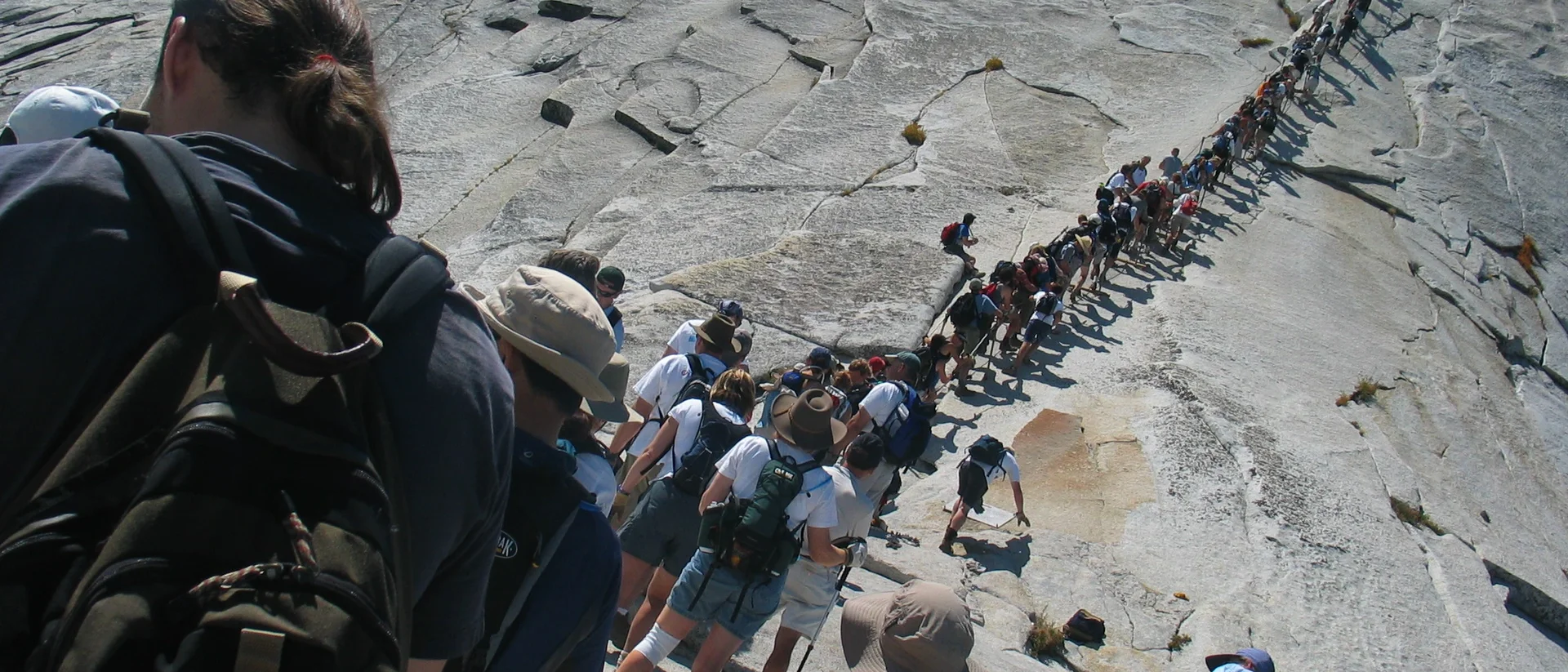
The final push is different. The two cables run about 300 yards up the dome's steep granite shoulder to the 8,842-foot summit, with wooden boards spaced along the way as footholds.
Hikers grip a cable in each hand and walk the boards upward, hauling themselves toward the top.
Winning a Spot
Access is limited on purpose. The park caps the route at 300 people a day: roughly 225 day hikers and 75 backpackers staying overnight in the valley below.
Most day hikers get their spot through a preseason lottery on Recreation.gov held every March, with a smaller daily lottery two days before each hike for anyone who missed out.
Up and Down Every Year
The Sierra Club funded the first cables in 1919, so hikers without climbing gear could reach a summit once called "perfectly inaccessible." The Civilian Conservation Corps rebuilt them in 1934, and the route is now listed on the National Register of Historic Places.
Every October, the crew climbs back up and takes the cables down for winter. Right now, they are up, and permit holders are climbing them this week.
Frequently Asked Questions
Are the Half Dome cables up all year?
How many people can climb Half Dome each day?
How do you get a Half Dome permit?
How long have the Half Dome cables been there?
What are the Half Dome cables made of?
Verified Fact
Verified Sep 1, 2026 · 5 sources checked
Source: National Park ServiceShow verification details
Claims checked
- The cables are up now and access needs a permit
- The park caps the route at 300 hikers a day, about 225 day hikers and 75 backpackers
- Permits come from a March preseason lottery, plus a smaller lottery two days before each hike
- The Sierra Club funded the first cables in 1919 and the Civilian Conservation Corps rebuilt them in 1934
- The cable route runs about 300 yards to the 8,842 foot summit
Sources: National Park Service, Recreation.gov
Related Topics
More from Places & Culture
View all Places & Culture →