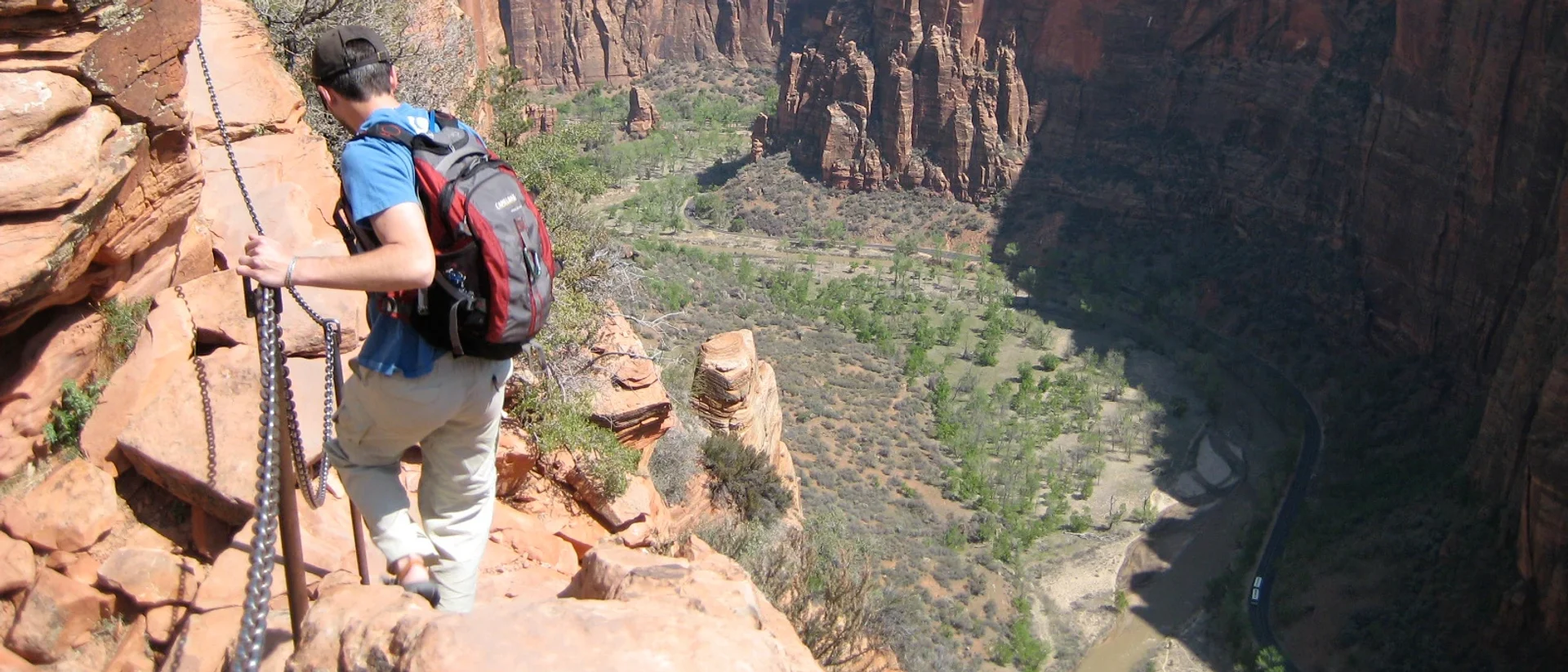
At Zion National Park, the last half-mile to Angels Landing runs along a knife-edge ridge. Drops of about 1,000 feet fall away on both sides. A single metal chain, bolted into the rock for about a century, is the only handhold. So many hikers wanted to try it that Zion had to ration it. Since 2022, a daily lottery decides who gets a permit for that stretch. Winners still grip the same chain to reach the summit.
The Zion Chains Hikers Still Grip to Reach Angels Landing
Every day at Zion National Park, thousands of hikers enter a lottery for a chance to grip a chain bolted into a sandstone ridge nearly a century ago.
A Ridge Only a Few Feet Wide
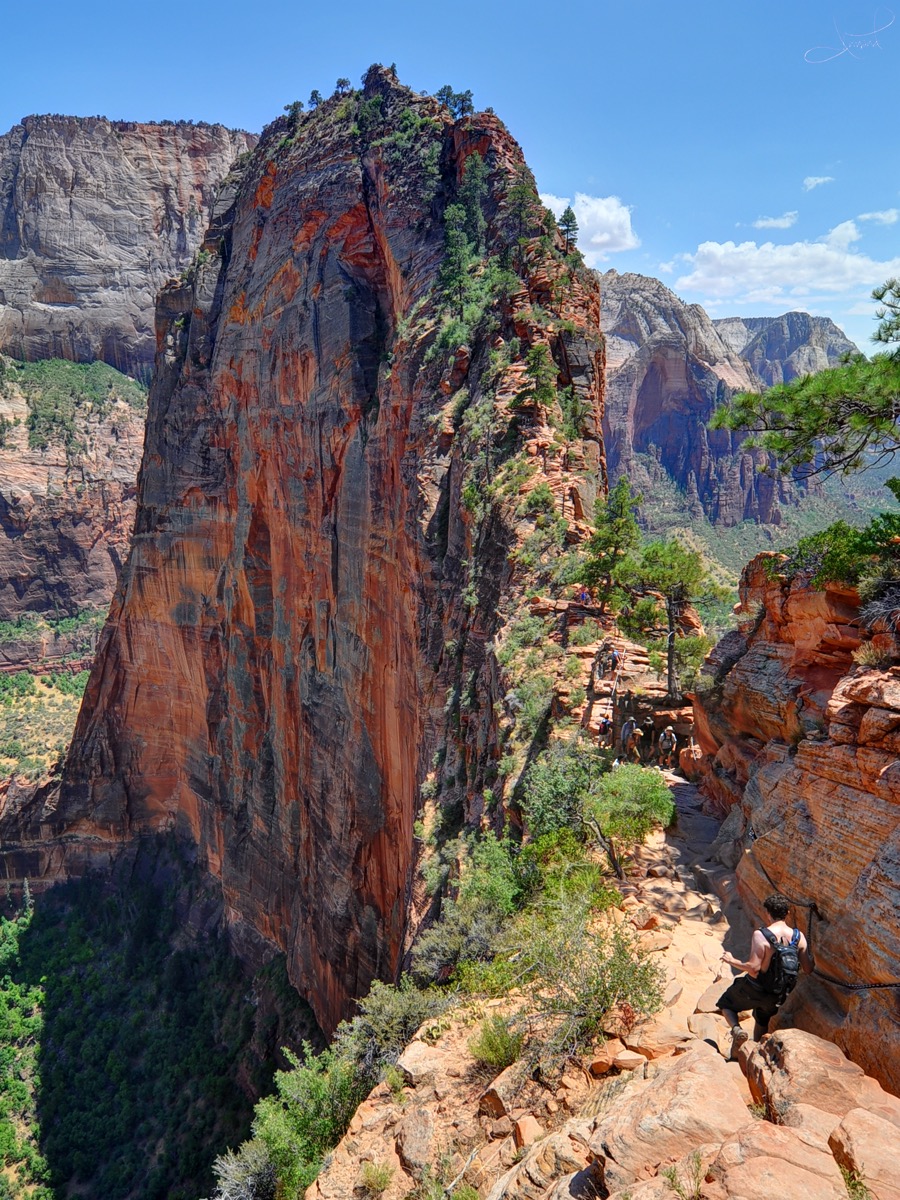
Angels Landing sits above Zion Canyon in Utah, a narrow sandstone fin that juts out from the canyon wall. The last half-mile to the summit is the part hikers talk about most.
The trail narrows to just a few feet wide in places, with sheer drop-offs of about 1,000 feet on either side. A single metal chain, anchored into the rock, is the only handhold along the exposed stretch.
The path is often only wide enough for one person, so hikers heading up have to take turns with hikers heading down.
Carved by Hand in 1926
The National Park Service built the Angels Landing Trail in 1926, cutting steps directly into the sandstone. Walter Ruesch, the park's first superintendent, and Park Service planner Thomas Chalmers Vint led the work.
Crews bolted a chain into the same ridge in the years that followed, giving hikers something to hold onto where the rock offers no natural grip.
The trail is now listed on the National Register of Historic Places, recognized as one of the most dramatic routes the Park Service has ever built.
Too Popular for Its Own Trail
By the late 2010s, so many people wanted to climb the chains that Zion ran formal hiker counts in 2019 and 2021 to measure the crowding on the narrow ridge.
In April 2022, the park launched a permit system just for the stretch beyond Scout Lookout. Hikers now enter one of two lotteries: a seasonal drawing for dates months out, or a day-before drawing that opens at midnight and closes at 3 p.m. for a shot at hiking the next day.
Each application costs $6, and permit winners pay an additional $3 per person before they can start up the chains.
Still There, Still Held
The chain has needed maintenance and small repairs over the decades, but it still runs the same route hikers have gripped for about a century.
Every morning, a new group of lottery winners reaches Scout Lookout, checks their permit, and starts up the same rock that Walter Ruesch's crew carved a century ago.
Frequently Asked Questions
When were the chains on Angels Landing installed?
How do you get a permit to hike Angels Landing?
How steep are the drops on the Angels Landing chains?
How long is the hike to Angels Landing?
Who built the Angels Landing Trail?
Verified Fact
Verified Sep 3, 2026 · 5 sources checked
Source: National Park ServiceShow verification details
Claims checked
- Final half-mile ridge has drop-offs of about 1,000 feet on both sides
- A metal chain anchored into the rock is the only handhold on that stretch
- Trail built in 1926 by National Park Service crews under Walter Ruesch
- Chain's install date corrected to "for about a century" (was stated as 1926)
- Permit lottery for that stretch has run since April 2022
- Hike length corrected to NPS figures, 5.4 miles, 1,488 feet gain
Sources: National Park Service, National Register of Historic Places, Wikipedia
Related Topics
More from Places & Culture
View all Places & Culture →