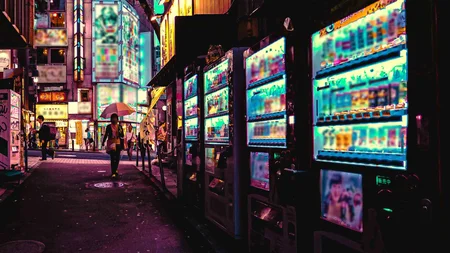
Japan has around 4 million vending machines—one for every 30 people—which is still more than the entire population of New Zealand.
Japan Has More Vending Machines Than New Zealand Has People
Walk down any street in Tokyo, Osaka, or even the most remote Japanese village, and you'll encounter something quintessentially Japanese: vending machines. Lots of them. The country operates approximately 4 million of these automated retailers—more than the entire population of New Zealand.
That's one vending machine for every 30 Japanese residents. For comparison, the United States has about one for every 50 people.
Why So Many?
Japan's vending machine density isn't random. It's the result of several uniquely Japanese factors:
- Low crime rates — Machines can operate 24/7 without vandalism or theft concerns
- High labor costs — Automation beats hiring staff for simple transactions
- Limited retail space — In cramped urban areas, vertical selling makes sense
- Cultural convenience — Japanese society values efficiency and minimal social friction
The machines also solve a practical problem. Japan's strict labor laws and aging population mean fewer people available to work late-night convenience store shifts. Vending machines never sleep, never call in sick, and never need health insurance.
Far Beyond Drinks
While Coca-Cola and Boss Coffee dominate, Japanese vending machines have evolved into something almost absurd. You can buy fresh eggs, umbrellas, neckties, surgical masks, hot ramen, and even rhinoceros beetles (popular as children's pets).
Some machines sell fresh produce from local farms. Others dispense Buddhist prayer beads. A few infamous ones have offered used underwear, though these have largely been regulated out of existence.
The technology keeps advancing. Modern Japanese vending machines use facial recognition to suggest drinks based on your apparent age and gender. Some accept payment via smartphone. Others adjust prices based on weather—hot drinks cost less on cold days.
The Numbers Game
Japan's vending machine count peaked at around 5.6 million in the early 2000s. The current figure of roughly 4 million represents a decline, driven by population shrinkage and the rise of convenience stores like 7-Eleven, which now number over 21,000 locations nationwide.
Still, the industry generates approximately ¥4.4 trillion ($30 billion USD) annually. Beverage machines alone account for about half of all sales.
New Zealand, meanwhile, has a population of roughly 5.1 million. So while Japan's vending machine count has dropped below that threshold, the comparison remains striking. One country automates its retail to an almost comical degree; the other has more sheep than people (about 25 million of them).
Cultural Icon
Japanese vending machines have become genuine cultural artifacts. Tourists photograph them. Artists paint them. Anime features them as background fixtures so common they're essentially invisible to characters but fascinating to foreign viewers.
They represent something deeper about Japanese society: the belief that convenience isn't a luxury but a baseline expectation. Why should buying a drink require human interaction? Why should anyone go thirsty at 3 AM in a rural train station?
The machines provide an answer that's humming quietly on nearly every block in Japan.
Frequently Asked Questions
How many vending machines does Japan have?
Why does Japan have so many vending machines?
What unusual things can you buy from Japanese vending machines?
What is the population of New Zealand compared to Japan's vending machines?
How much money do Japanese vending machines generate?
Verified Fact
This fact has been reviewed and verified against original sources.
Show verification details
Updated vending machine count to current 2024 figures (approximately 4.06 million, down from peak). The comparison to New Zealand's population remains valid and interesting.