Lake Hillier sits on a remote island off Western Australia. For 200 years, it stayed bubblegum pink through every season. Algae and bacteria in the salt crust cause the color, not the water. It is safe to swim in, just not to drink. Bottle a sample and it keeps that same shade. Heavy rain in 2022 diluted the salt, turning the lake grey. Scientists expect the pink to return within a decade.
Why This Australian Lake Is Bubblegum Pink
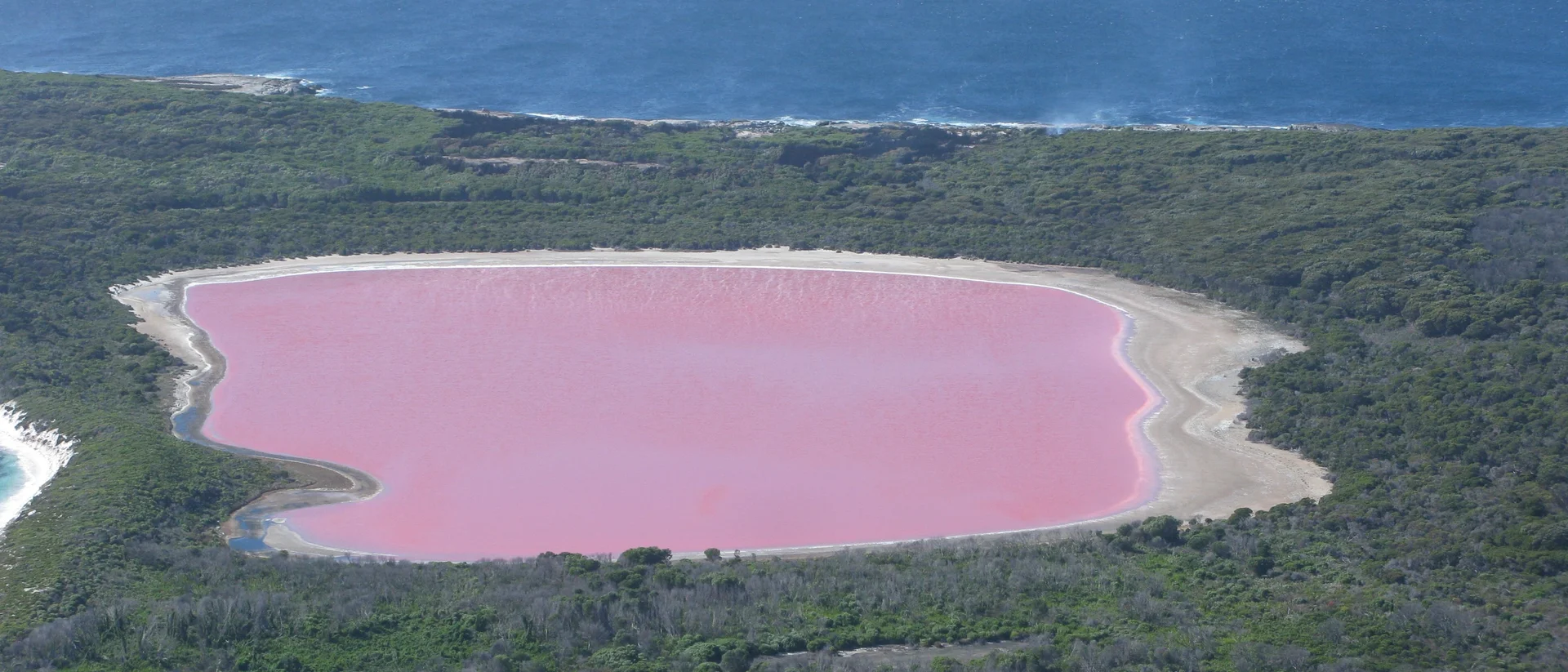
Fly over Middle Island off the south coast of Western Australia and you will spot something that looks almost fake: a lake the color of bubblegum, sitting just a few hundred meters from the deep blue of the Southern Ocean.
A Lake Like No Other
Lake Hillier is a small saltwater lake on Middle Island, part of the Recherche Archipelago, a cluster of islands off Esperance in Western Australia.
It measures roughly 600 meters long and 250 meters wide, ringed by a thin band of sand and a wall of eucalyptus forest.
British explorer Matthew Flinders climbed a nearby peak and spotted the lake in January 1802, recording its odd rose color in his ship's log.
Why Is It Pink?
For years, the color was blamed on a microscopic algae called Dunaliella salina, which produces a reddish pigment when stressed by high salt levels.
A 2015 DNA-sequencing study by molecular biologist Ken McGrath complicated that story.
The algae made up only about 0.1 percent of the genetic material sampled from the lake.
A salt-loving bacteria called Salinibacter ruber made up 20 to 33 percent instead, living in thick crusts of salt around the shoreline.
Researchers now think the color comes from a mix of pigmented microbes crowding the hypersaline water and crust, not one single organism.
It Stays Pink Even in a Jar
Unlike some other pink lakes around the world, which fade in and out of color as temperatures rise and fall with the seasons, Lake Hillier historically held its shade no matter the weather.
Scoop a sample into a sealed bottle and, unlike many natural dyes, it does not fade back to clear.
For roughly two centuries after Flinders logged it, visitors and scientists reported the same vivid pink, rain or shine.
Is It Safe to Swim In?
Yes.
Despite salt levels comparable to the Dead Sea, swimming in Lake Hillier carries no known health risk.
Drinking the water is a different matter.
The extreme salinity, along with the microorganisms living in it, makes it unsafe to consume.
A Recent Change
That two-century streak broke in 2022.
Unusually heavy rainfall dumped large amounts of fresh water into the lake, diluting the salt levels its pink microbes depend on.
The lake turned a dull blue-gray, and by some recent reports it has not fully returned to its old hue.
Scientists studying the site expect salt levels to climb again as the excess water evaporates, and predict the pink could fully return within five to ten years.
For now, Middle Island's strangest resident is doing what it has always done best: waiting for the salt to build back up, and the color to come home.
Frequently Asked Questions
Why is Lake Hillier pink?
Is it safe to swim in Lake Hillier?
Does Lake Hillier's pink color fade if you bottle the water?
Where is Lake Hillier located?
Has Lake Hillier always been pink?
Verified Fact
Verified Jul 12, 2026 · 4 sources checked
Source: Wikipedia (Lake Hillier)Show verification details
Claims checked
- Lake Hillier is on Middle Island, Recherche Archipelago
- Flinders recorded its pink color in 1802
- Color caused by algae and bacteria in salt crust, not water
- Bottled sample keeps its color; safe to swim but not drink
- 2022 heavy rain turned it grey; pink expected back in 5-10 years
Sources: Western Australia Tourism, Wikipedia, National Geographic, ABC News
Related Topics
More from Places & Culture
View all Places & Culture →