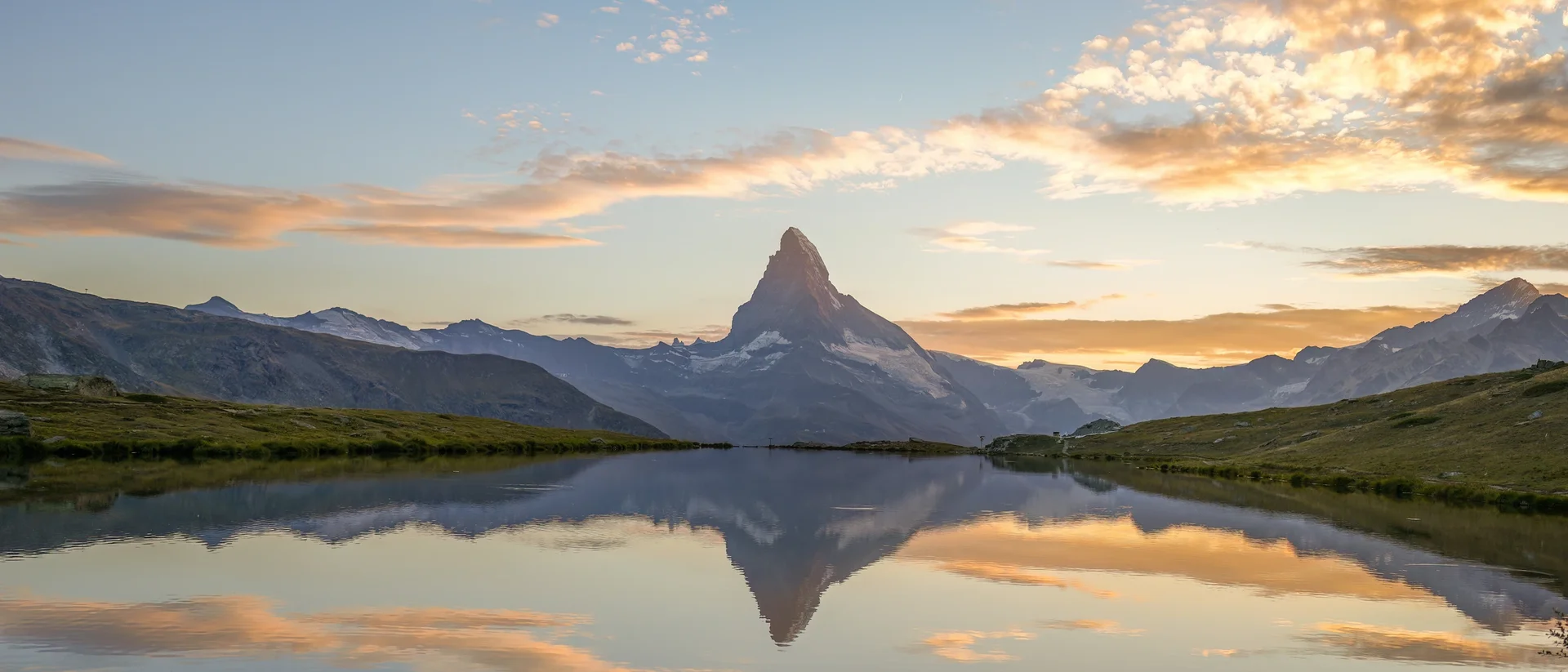
Under the Matterhorn, a glacier has been quietly moving the Italy-Switzerland border. The Theodul Glacier lost nearly a quarter of its mass in just 37 years. The melting shifted the watershed - and the frontier - further into Italian territory. In 2024, Switzerland approved a plan to redraw roughly 100 meters of their shared border. A melting glacier moved a national border.
A Matterhorn Glacier Quietly Moved an International Border
Near the Matterhorn, the boundary between two nations has been quietly shifting - not because of politics, but because of physics. A melting glacier moved a national border.
A Border Defined by Ice
The boundary between Italy and Switzerland in the Alps follows a simple rule: wherever water drains north, you are in Switzerland; wherever it drains south, you are in Italy. This drainage divide - called a watershed - runs along the ridge between the two countries, and for centuries it made a clear border marker.
The ridge, however, does not sit on bedrock. It sits on glaciers, firn, and perpetual snow. And those formations are melting.
The Theodul Glacier Retreats
The Theodul Glacier, at around 3,300 meters above sea level near the Matterhorn, lost nearly a quarter of its mass between 1973 and 2010. As the ice pulled back, the physical ridge shifted slightly further into Italian territory - taking the legal border with it.
The affected zone covers four landmarks: Testa Grigia, Plateau Rosa, Rifugio Carrel, and Gobba di Rollin - all within the ski area linking Switzerland's Zermatt resort to Italy's Valtournenche valley. Skiers in this zone can cross between two countries on the same run.
The 2024 Agreement
A joint commission of Italian and Swiss surveyors agreed on new boundary markers in May 2023. Switzerland's Federal Council formally approved the adjustment on September 27, 2024. Italy was still in the process of ratifying the agreement as of late 2024.
The revised stretch covers roughly 100 meters of the Alpine frontier. Because the affected land is communal alpine territory - not private property - no residents needed to relocate. Switzerland gains a small strip of high-altitude terrain as a result.
When Borders Follow the Ice
The Alps are warming roughly twice as fast as the global average, and Alpine glaciers could lose half their remaining ice by 2050. Many other sections of the Italian-Swiss and Italian-Austrian borders follow the same watershed logic. If those glaciers keep retreating, the Matterhorn adjustment may not be the last time a border follows the ice.
Frequently Asked Questions
Why are Italy and Switzerland redrawing their border near the Matterhorn?
How much has the Italy-Switzerland border moved?
Did Italy ratify the Matterhorn border change?
Which country gains territory from the border change?
Could climate change move more Alpine borders in the future?
Verified Fact
Verified Jun 29, 2026 · 5 sources checked
Source: EuronewsShow verification details
Claims checked
- Theodul Glacier lost nearly a quarter of its mass in 37 years
- Switzerland approved redrawing roughly 100 meters of border on Sep 27, 2024
- Border shifted into Italian territory, so Switzerland gains land
- Testa Grigia refuge now mostly in Switzerland
- Italy’s ratification still pending
Sources: Euronews, Al Jazeera, Wikipedia, swisstopo.admin.ch, Columbia Climate School
Related Topics
More from Places & Culture
View all Places & Culture →