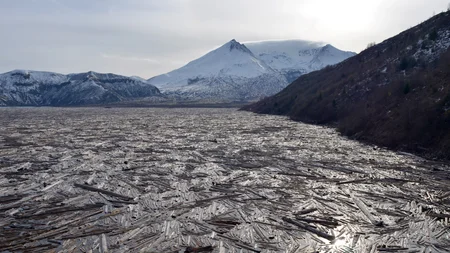
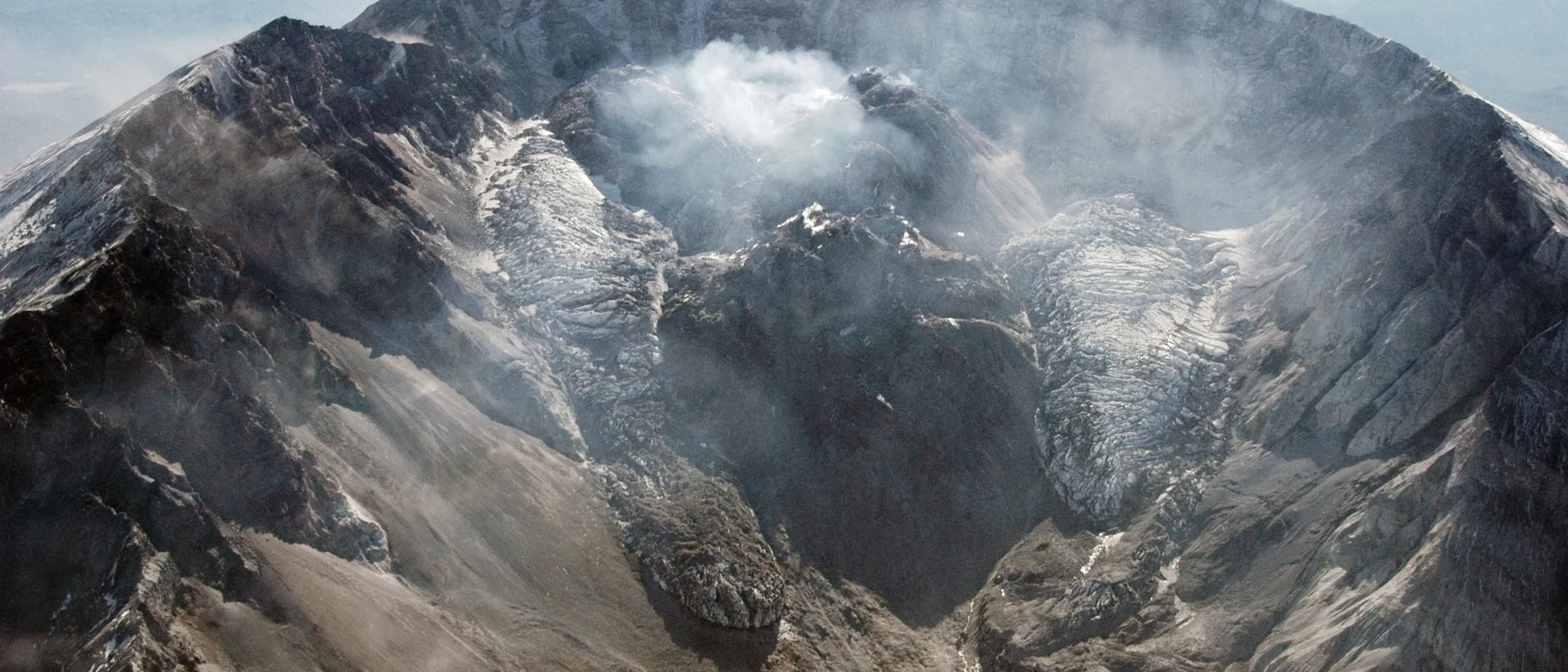
Mount St. Helens grew a brand-new glacier inside the crater its 1980 eruption left behind. Snow and rockfall piled up in the shade of the crater walls until the ice began to flow. In 2004 a new lava dome punched through it and cut it in half, but the two arms flowed around the dome and merged again by 2008. Crater Glacier is still creeping across the crater floor today.
The Glacier That Grew Inside a Volcano
When Mount St. Helens erupted on May 18, 1980, the blast tore away the north side of the mountain and left a huge crater open to the north. In the years that followed, a new glacier formed inside that crater, in a spot where most people would expect ice to be impossible.
Ice Where It Should Not Exist
The crater floor sits at about 2,000 meters (6,561 feet), where USGS says a glacier would not normally exist on a typical Cascade mountain. Rock avalanches kept dropping debris onto the floor, and snow slid down from the steep walls, collecting in the almost permanently shaded area between the growing lava dome and the south crater wall.
Photographs from September 1996 showed crevasses, the cracks that only appear when ice is flowing. By then the pile had become a real glacier. According to the U.S. Geological Survey (USGS), the combined thickness of rock debris and ice on the crater floor was more than 200 meters in places, with about one-third of that material being rock.
Because debris and ice are so mixed, scientists are careful about what counts as the glacier itself, which is why this article does not quote a single thickness for the ice.
A Lava Dome Punches Through
In October 2004, the volcano woke up again. A steam explosion punctured the glacier on October 1, and within about two weeks a spine of lava had pushed up through the ice.
In mid-November 2004, one spine ran into the south crater wall and cut the glacier in two. USGS scientists later wrote that this was the first time lava-dome growth through a glacier had ever been observed.
Squeezed, Not Destroyed
As the dome grew, it pushed each arm of the glacier against the crater walls. East Crater Glacier and west Crater Glacier were locally halved in width and doubled in thickness. No more than about 10 percent of the glacier mass was lost to melting.
The U.S. Board on Geographic Names gave the ice its official name, Crater Glacier, on June 6, 2006, when for practical purposes there were two glaciers in the crater.
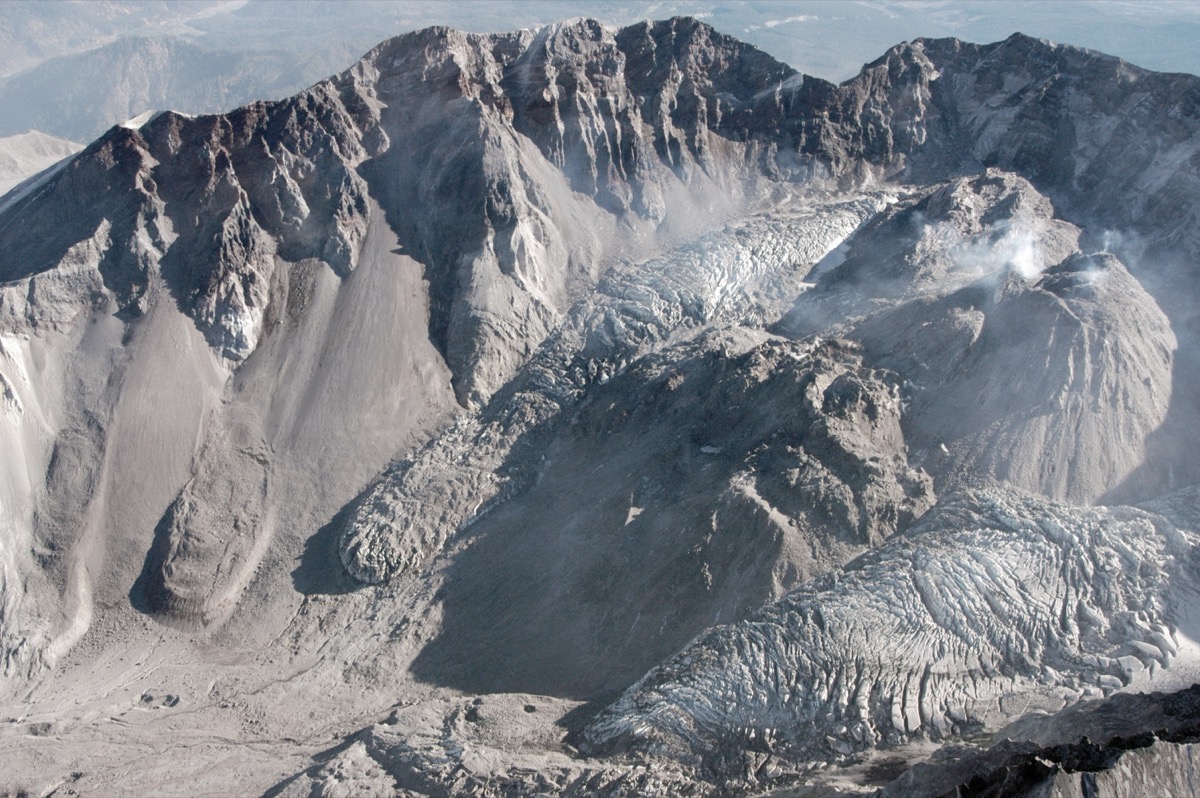
The two arms merged again on the north side of the 1980-86 lava dome in approximately late March 2008. USGS declared the eruption over on July 10, 2008, but the ice kept advancing.
Still on the Move
The USGS describes Crater Glacier as the newest and one of the few expanding glaciers in the Cascade Range. After the two arms merged in spring 2008, its advance slowed to an average of about 10 centimeters (4 inches) a day.
In June 2024, the USGS Cascades Volcano Observatory dismantled VALT, a seismic station it had operated on the crater floor since 2006. The team was anxious about damage to the station from the advancing Crater Glacier and about hazards to people working at the site. USGS says a replacement is planned farther from the ice and that no gaps in monitoring are expected.
More than four decades after the eruption, the glacier is still there, pushing slowly across the floor of one of the most famous volcanoes in the United States.
Source:U.S. Geological Survey
Enjoyed this fact?
Be the first to love this
Get a new fact every morning.
A fascinating fact in your inbox every morning. Free. Unsubscribe anytime.
Frequently Asked Questions
Is there a glacier inside Mount St. Helens?
Did the 2004 lava dome destroy Crater Glacier?
Is Crater Glacier still growing?
How did a glacier form in a volcano crater?
How thick is Crater Glacier?
Verified Fact
Verified Oct 17, 2026 · 4 sources checked
Source: U.S. Geological SurveyShow verification details
Claims checked
- A new glacier formed in the crater left by the 1980 eruption from snow and rockfall
- The 2004 lava dome split the glacier in two and the arms merged again in spring 2008
- Dome growth doubled the ice thickness in places and no more than about 10 percent melted
- USGS removed a seismic station in June 2024 because the glacier was advancing toward it
- Glacier described as still advancing
Sources: USGS Open-File Report 2010-1141, USGS Mount St. Helens glaciation page, USGS Cascades Volcano Observatory
Related Topics
More from Places & Culture
View all Places & Culture →