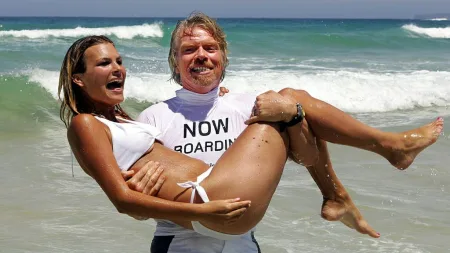
Richard Branson, founder of the Virgin Group, is dyslexic.
Richard Branson's Dyslexia Shaped Virgin's Empire
Richard Branson didn't just build Virgin Group despite being dyslexic—he credits his dyslexia as the reason for his success. The billionaire entrepreneur dropped out of school at 16 after teachers called him "stupid" and "lazy." The word dyslexia didn't even exist in common use when he was young. Today, he runs over 400 companies and champions dyslexia as a competitive advantage.
The School Dropout Who Built an Empire
Branson struggled through traditional education, unable to keep up with reading and writing tasks his classmates found simple. But what looked like failure in the classroom became an asset in the boardroom. His difficulty with complex written communication forced him to develop a direct, simple communication style that became Virgin's trademark.
That clarity extended beyond memos. Branson built Virgin's culture around family-like inclusivity rather than corporate hierarchy. When you can't process dense reports and lengthy proposals, you learn to cut through nonsense fast.
Dyslexia as a Business Superpower
Dyslexic thinkers often excel at big-picture thinking, creativity, and problem-solving—exactly the skills needed for entrepreneurship. Branson doesn't see details the same way neurotypical people do, which means he spots opportunities others miss.
He's turned this into Virgin's hiring strategy. "Virgin is definitely looking for dyslexic people to come and work for us," Branson stated, "because they are more resilient, they are more creative." The company actively recruits for cognitive diversity.
From Disability to Advocacy
Branson now describes dyslexia as "a blessing in disguise." He supports Made By Dyslexia, a global charity working to change how the condition is perceived. In 2024, he launched DyslexicU—the world's first free online university specifically for dyslexic thinkers.
The platform reflects his belief that education should adapt to different minds, not force different minds to adapt to education. It's a full-circle moment for someone once labeled unteachable.
Branson's prediction? Dyslexic thinkers will be critical in the AI age. While machines handle routine processing, humans will need exactly the kind of creative, lateral thinking that dyslexic brains excel at naturally. The "disability" of yesterday might be the competitive edge of tomorrow.
Frequently Asked Questions
Is Richard Branson really dyslexic?
How did dyslexia help Richard Branson build Virgin?
Does Virgin Group hire dyslexic people?
What is DyslexicU?
What famous entrepreneurs are dyslexic?
Verified Fact
This fact has been reviewed and verified against original sources.
Show verification details
Extensively documented. Branson has been open about his dyslexia throughout his career and recently launched DyslexicU, the first free online university for dyslexic thinkers.