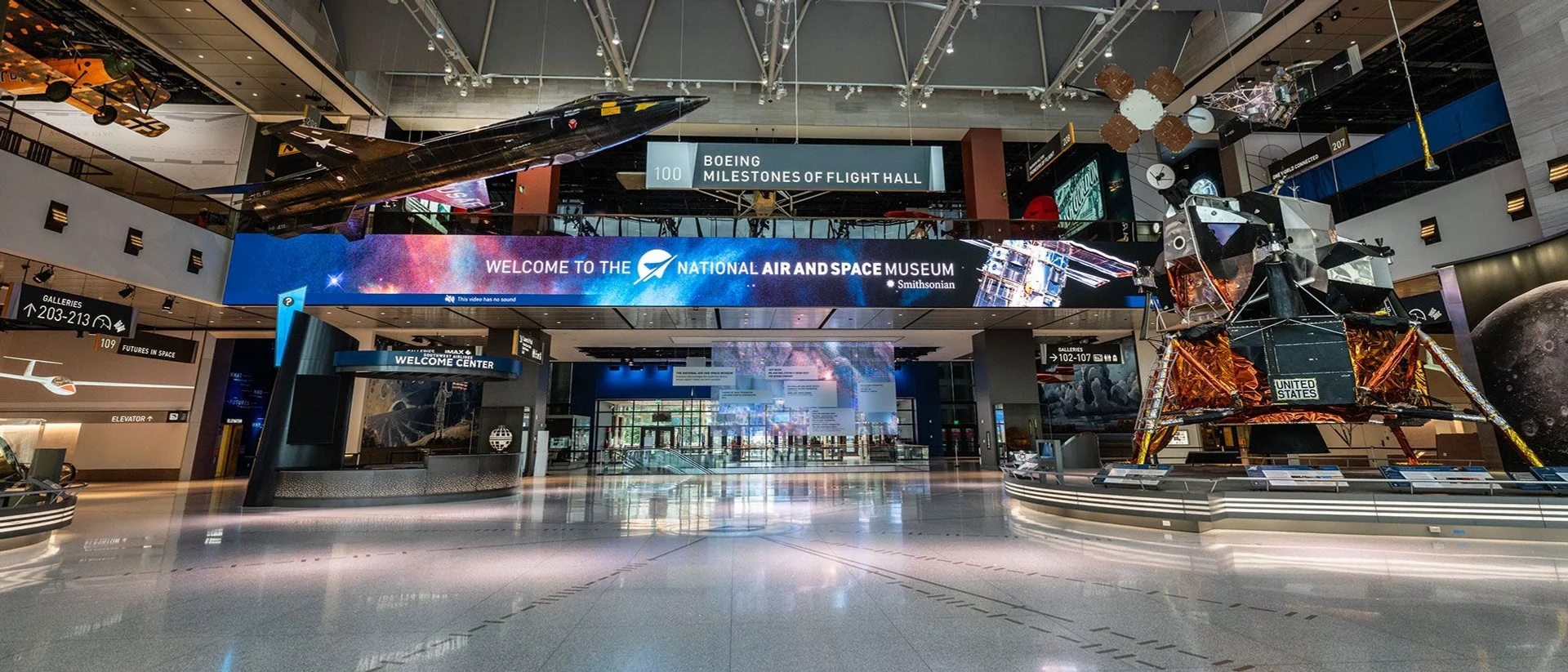
The Smithsonian National Air and Space Museum opened without scissors. On July 1, 1976, NASA beamed a signal from the Viking 1 spacecraft, already orbiting Mars but not yet landed. The signal crossed nearly 200 million miles of space and cut the ribbon instead. Fifty years later to the day, it reopened with 5 new galleries after an 8-year rebuild.
The Museum Opened by a Signal From Mars
When the National Air and Space Museum opened its doors on July 1, 1976, nobody in the crowd actually cut the ribbon. A spacecraft did it, from somewhere out past the orbit of Earth.
A Ribbon Cut From Deep Space
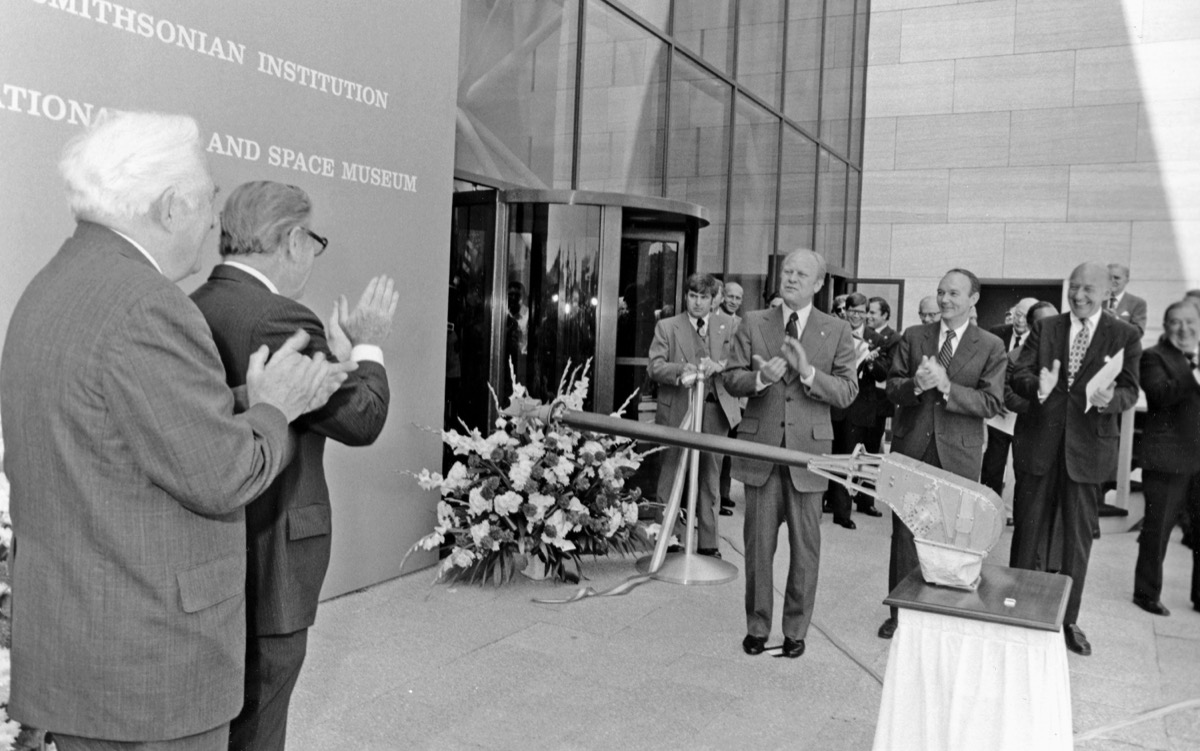
The Smithsonian's new museum on the National Mall in Washington, DC was timed to open during the height of the United States Bicentennial.
President Gerald Ford, Chief Justice Warren Burger, and Vice President Nelson Rockefeller all attended the ceremony.
So did the museum's first director, Michael Collins, the Apollo 11 astronaut who flew the command module while Neil Armstrong and Buzz Aldrin walked on the Moon.
Instead of scissors, engineers rigged the ceremony to a signal from NASA's Viking 1 spacecraft.
The signal traveled across space, was picked up by a NASA tracking station on Earth, and triggered the mechanism that severed the ribbon.
It Hadn't Even Landed Yet
Here's the part that makes it stranger: Viking 1 was not yet sitting on Mars when it "cut" that ribbon.
It had already reached Mars and settled into orbit, but its landing was delayed after NASA scouted the original site and found it too rocky to risk a touchdown.
Viking 1 did not actually reach the Martian surface until July 20, 1976, nearly three weeks after its signal traveled nearly 200 million miles to help open a museum on the other side of the solar system.
50 Years and $1 Billion Later
On July 1, 2026, exactly fifty years to the day after that first ribbon, the museum reopened five more of its newly rebuilt galleries.
The unveiling is part of an 8-year renovation touching all 20 of the museum's galleries at a cost of roughly $1 billion in combined public and private funding; two final galleries, Modern Military Aviation and At Home in Space, are set to reopen later in fall 2026.
Five newly built or rebuilt galleries opened that day: RTX Living in the Space Age Hall, Jay I. Kislak World War II in the Air, Textron: How Things Fly, the U.S. National Science Foundation's Discovering Our Universe, and the Flight and the Arts Center.
The How Things Fly gallery alone packs in nearly 50 hands-on stations, including a visitor-operated wind tunnel that demonstrates the forces of lift.
"It became clear a decade ago that significant work was needed to bring this museum into the 21st century," museum director Christopher Browne said of the project.
What's Still There
The renovation didn't touch the reasons people have been visiting for half a century.
The Apollo 11 command module Columbia, the aircraft that carried the astronauts to and from the Moon, is still on display.
So is a piece of the Moon itself, a rock visitors are allowed to reach out and touch.
Charles Lindbergh's Spirit of St. Louis and the original 1903 Wright Flyer, the first powered aircraft to ever leave the ground, both still hang from the ceiling exactly where generations of visitors have found them.
The building looks new.
The story behind its very first ribbon still sounds like it was made up.
Frequently Asked Questions
How was the National Air and Space Museum's ribbon actually cut in 1976?
Had Viking 1 landed on Mars when it opened the museum?
When did the National Air and Space Museum reopen after its renovation?
What new galleries opened at the museum in 2026?
What can you still see at the National Air and Space Museum?
Verified Fact
Verified Aug 1, 2026 · 4 sources checked
Source: NASAShow verification details
Claims checked
- Viking 1 cut the ribbon at the museum's 1976 opening via signal from Mars orbit, before landing
- Signal traveled nearly 200 million miles
- Five galleries opened July 1, 2026, after an eight-year renovation
- Two galleries still to come in fall 2026 (earlier version said all reopened)
Sources: NASA, Wikipedia, Smithsonian National Air and Space Museum