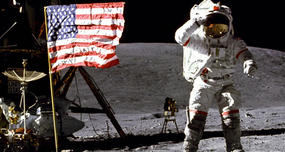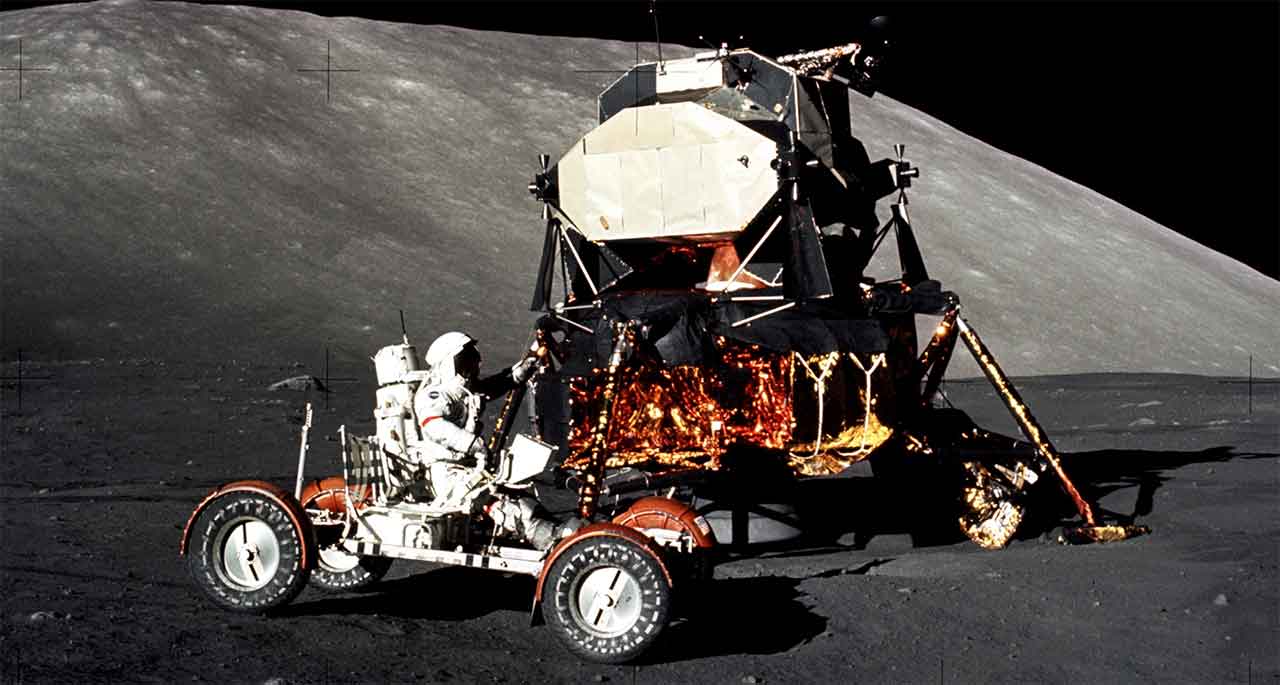
Apollo 17 astronaut Gene Cernan, the last man to walk on the Moon, wrote his daughter's initials there. They’ll last at least 50,000 years.
The Moon's Most Touching Graffiti Will Outlast Civilizations
In December 1972, as Apollo 17 commander Gene Cernan prepared to leave the lunar surface for the last time, he knelt down and traced three letters into the gray dust: TDC. His daughter Tracy's initials.
It was a simple gesture. A father's love, written on another world. And barring a catastrophic asteroid impact or deliberate human interference, those letters will outlast entire civilizations.
Why Moon Dust Is Forever
The Moon has no atmosphere. No wind to scatter the dust. No rain to wash it away. No seasons, no weather systems, no erosion beyond the occasional micrometeorite impact that adds more dust rather than removing patterns.
Earth's chalk drawings vanish in a rainstorm. Beach messages disappear with the tide. But the Moon is geologically dead—a time capsule where footprints and tire tracks from the Apollo missions remain as crisp today as they were five decades ago.
The 50,000-Year Promise
Scientists base their preservation estimates on the Moon's micrometeorite bombardment rate. These tiny space rocks constantly pulverize the lunar surface at a microscopic level, slowly filling in shallow features.
The math works like this:
- Cernan's finger carved those letters roughly 1-2 centimeters deep
- Lunar regolith accumulates at approximately 1 millimeter per million years
- At that rate, TDC won't be fully obscured for at least 50,000 years
- Some researchers suggest the timeline could extend to 100,000 years or more
For context, 50,000 years ago humans were still painting caves in Europe. Cernan's message will outlast most of recorded human history.
A Deliberate Goodbye
Cernan knew he was the last. NASA had already canceled Apollo 18, 19, and 20. As he climbed the ladder for the final time, he radioed: "We leave as we came and, God willing, as we shall return, with peace and hope for all mankind."
Writing Tracy's initials wasn't in the mission plan. It was personal—a way to leave part of his family on the frontier of human achievement. Nine-year-old Tracy didn't even know about it until her father returned to Earth.
Other Messages on the Moon
Cernan wasn't alone in leaving marks. The Apollo sites contain plaques, flags, family photos, and even a small sculpture (Fallen Astronaut) honoring deceased space explorers. But the handwritten initials carry unique intimacy—proof that even at humanity's most technical, we remain sentimental creatures.
The footprints around them tell the story too: the last human boot prints, frozen mid-step, waiting for someone to return and pick up where we left off.
Will We See Them Again?
When astronauts finally return to the Moon—whether through NASA's Artemis program or international missions—the Apollo 17 landing site at Taurus-Littrow valley will likely become a heritage site. Those three letters, still sharp and clear, will serve as a reminder.
That we were there. That we reached across the void. That Gene Cernan, 240,000 miles from home, thought of his daughter and wrote her name in dust that refuses to forget.
Frequently Asked Questions
Did Gene Cernan write on the Moon?
How long will writings on the Moon last?
Who was the last person to walk on the Moon?
Why did Gene Cernan write his daughter's initials on the Moon?
When did Apollo 17 land on the Moon?
Verified Fact
This fact has been reviewed and verified against original sources.
Show verification details
Gene Cernan did write his daughter Tracy's initials (TDC) in the lunar dust during Apollo 17 in December 1972. The 50,000+ year preservation estimate is scientifically sound given the Moon's lack of atmosphere and weather.