Lee Berger found 1,550 fossils of an unknown human species in South Africa's Rising Star cave. The only way in was an 18-cm gap. He couldn't fit. He posted on Facebook for scientists slim enough to squeeze through. Six women answered. They crawled in and pulled out Homo naledi - a lost branch of humanity. Eight years later, Berger lost 25 kg and finally made it in himself.
He Couldn't Fit Through the 18-cm Gap. So Six Women Found a Lost Branch of Humanity.
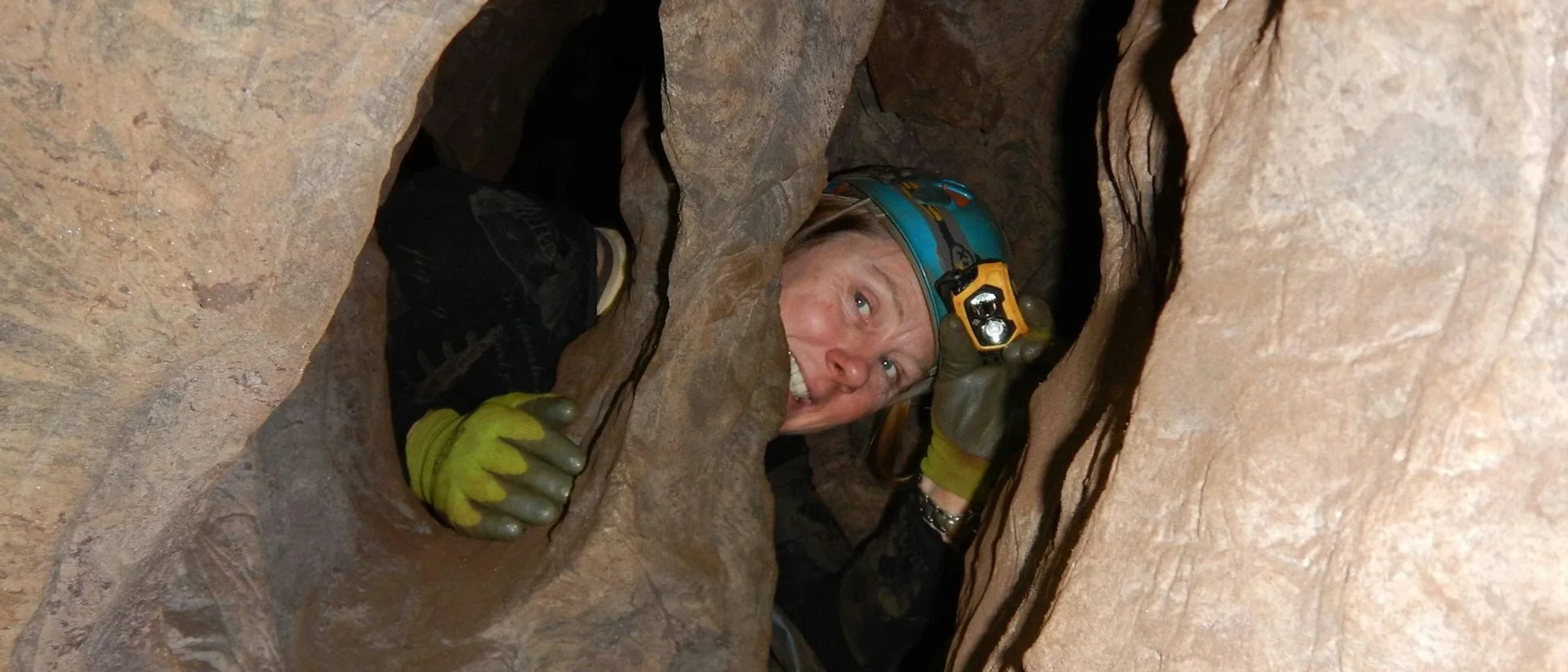
In 2013, paleoanthropologist Lee Berger got word that two recreational cavers had found something extraordinary deep inside South Africa's Rising Star cave system: a hidden chamber covered in ancient bones. There was one problem. The only way to reach it required sliding through a vertical chute just 18 cm wide - roughly the width of a sheet of paper.
The Impossible Access
Berger, a large-framed man, physically could not fit. He stood outside while the evidence of a potential major discovery sat hundreds of metres below. Sending a robot was not viable - the passage twisted and dropped in ways no machine could navigate. He needed people who were both trained scientists and small enough to squeeze through.
The Facebook Recruitment
Berger posted an unusual job ad on Facebook: he needed qualified researchers with skills in paleontology, archaeology, or cave science - and they had to be slender. Six women answered and were selected: Marina Elliott, Becca Peixotto, Alia Gurtov, Elen Feuerriegel, Hannah Morris, and Lindsay Hunter. They became known as the "Underground Astronauts." In November 2013, they squeezed through the chute and began excavating in near-total darkness, guided by helmet cameras and radio contact with Berger and the surface team above.
A Lost Branch of Humanity
Over two weeks, the team pulled up more than 1,550 fossils belonging to at least 15 individuals. In September 2015, scientists announced the find as a new species: Homo naledi. Named for the Sotho word for "star," it was a remarkable and entirely unexpected branch of the human family tree - one that had never before been documented.
Eight Years Waiting
For years, Berger watched the excavation through live camera feeds from the surface. He had directed every aspect of a dig he had never entered. Then, after losing roughly 25 kg, he finally squeezed through the chute himself. He later described the experience as the toughest physical challenge of his career - and one he expected would be his last time inside. "I knew this was probably the first - and last - time I would ever be in this space," he said.
Frequently Asked Questions
What is Homo naledi?
Who were the Underground Astronauts?
How many Homo naledi fossils were found?
Did Lee Berger ever enter the Rising Star cave himself?
Where is Rising Star cave located?
Verified Fact
Verified Jun 6, 2026 · 6 sources checked
Source: National GeographicShow verification details
Claims checked
- 1,550+ Homo naledi fossils found in Rising Star cave
- Passage narrowest point was 18 cm; Berger recruited six women via Facebook
- Six women (Underground Astronauts) retrieved the fossils
- Berger lost 25 kg and entered the cave himself about eight years later
Sources: National Geographic, Werklund Centre, Wikipedia, UGA Today
Related Topics
More from Science & Space
View all Science & Space →