The inventor of the lithium-ion battery gave away his patent for free, refusing to profit from a technology that could help the planet.
The Power of a Gift: The Man Who Gave Away the Battery
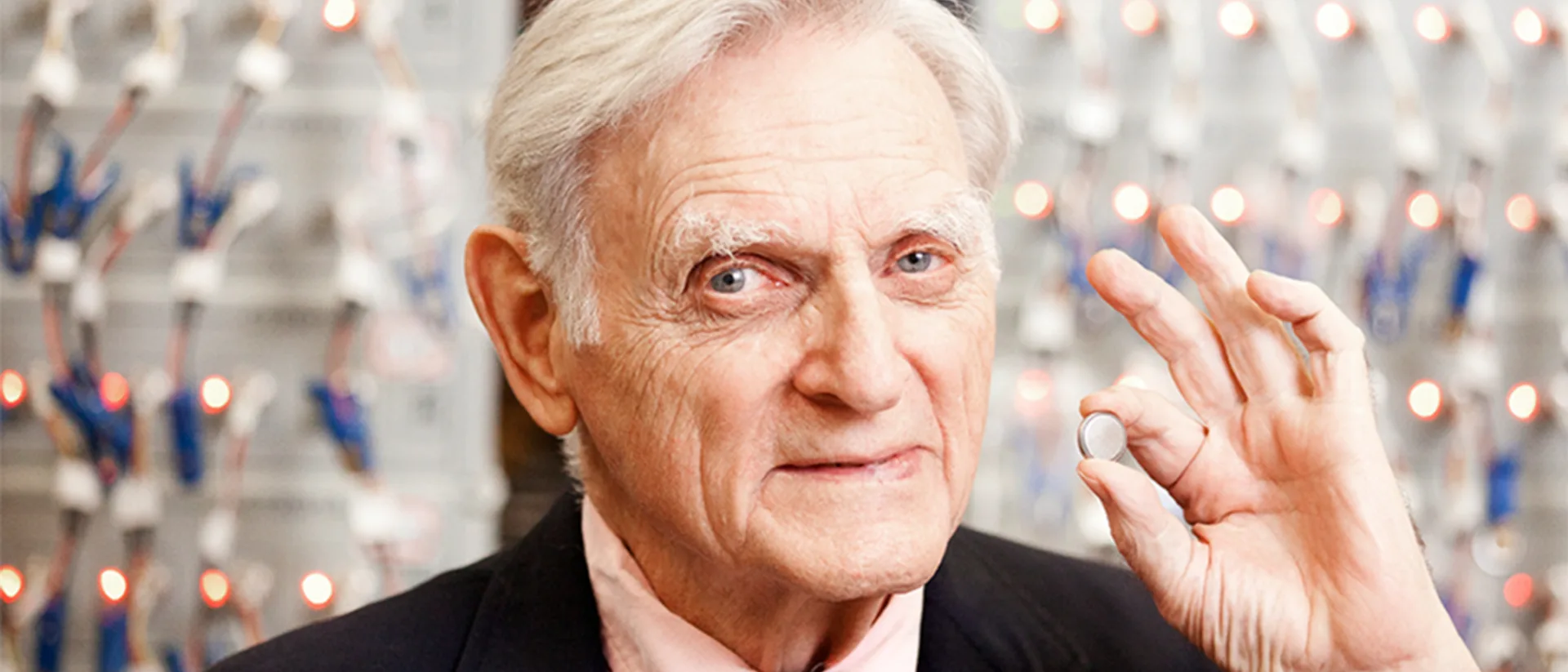
The inventor of the lithium-ion battery gave away his patent for free, refusing to profit from a technology that could help the planet. His name was John B. Goodenough, and he was 57 years old when the breakthrough came.
A Late Bloomer's World-Changing Idea
In 1980, in an Oxford University lab, John B. Goodenough and his team cracked a code that had stumped scientists for years. They identified a stable cathode material—lithium cobalt oxide—that could store and release energy efficiently and safely. This wasn't a eureka moment from a young Silicon Valley prodigy. Goodenough was a late-career physicist who had survived a difficult childhood and served in World War II as a meteorologist. His work was driven by a profound belief in science as a public good, not a path to personal wealth. When the university, which owned the patent, licensed it to Sony for a song, Goodenough didn't see a penny. He didn't seem to mind.
The Choice That Powered a Revolution
Goodenough could have fought for royalties or leveraged his discovery into a fortune. Instead, he watched as his invention, freed from restrictive licensing, sparked a global revolution. Companies around the world began refining the technology, driving down costs and improving performance. This open pathway is a key reason lithium-ion batteries became affordable enough to go into everything. Your laptop, your smartphone, and eventually electric vehicles and grid storage all trace their lineage back to that Oxford lab. Goodenough often said his goal was to see fossil fuels replaced. He understood that hoarding the patent would have slowed that transition to a crawl.
More Than a Battery: A Legacy of Service
The story doesn't end with one act of generosity. Goodenough kept working well into his 90s, chasing an even better, safer solid-state battery. He became the oldest person ever to win a Nobel Prize, receiving it in 2019 at age 97. Colleagues describe a man of immense humility who rode the bus to work and whose office was famously cluttered with journals and papers. For him, the battery was never an end product to be sold. It was a tool for solving a human problem—a stepping stone toward cleaner energy independence. His life reframes success not as personal enrichment, but as contribution.
The Charge We Carry Forward
Today, as you check your phone or see an electric car glide silently by, you're witnessing the legacy of a conscious choice. John B. Goodenough’s decision to forgo a fortune helped electrify our world and is now central to the fight against climate change. The most powerful charge in his battery wasn't lithium ions; it was integrity. He proved that the greatest inventions aren't just those that change how we live, but also remind us why we innovate in the first place.
Frequently Asked Questions
Who invented the lithium-ion battery?
Why did John Goodenough give away the patent?
Did John Goodenough profit from lithium-ion batteries at all?
How old was John Goodenough when he won the Nobel Prize?
Verified Fact
This fact has been reviewed and verified against original sources.
Source: View sourceShow verification details
John B. Goodenough's role as co-inventor of the lithium-ion battery and his lack of personal royalties from the key patent are well-documented in Nobel Prize materials, biographies, and major news reports.