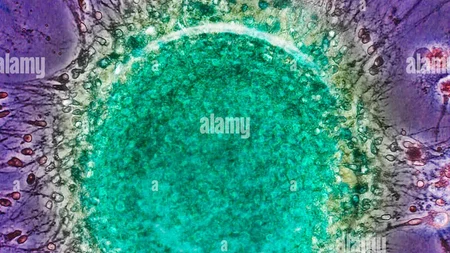
Your body is creating and killing 2 million red blood cells per second.
Your Body Creates 2 Million Blood Cells Every Second
Right now, as you read this sentence, your body just manufactured roughly 4 million red blood cells. In that same moment, it destroyed an equal number. This isn't a malfunction—it's one of the most precise biological processes in nature.
Every second, your bone marrow produces 2 million fresh red blood cells while your spleen and liver dismantle 2 million worn-out ones. It's a perfectly balanced cellular conveyor belt that never stops, never sleeps, and rarely makes mistakes.
The 120-Day Lifespan
Red blood cells live hard and die young. After squeezing through thousands of miles of capillaries—some narrower than the cells themselves—they wear out after about 120 days. These microscopic oxygen carriers lose their flexibility, become fragile, and eventually get flagged for destruction by patrolling immune cells called macrophages.
Your spleen acts as a quality control checkpoint, filtering out roughly 5 million dying red blood cells every second. The components get recycled: iron returns to the bone marrow for new cells, and the rest breaks down into bile pigments that give your waste its characteristic color.
Space Changes Everything
This finely-tuned process goes haywire in microgravity. NASA researchers discovered that astronauts on six-month missions destroy 3 million red blood cells per second—54% more than on Earth. Without gravity pulling blood downward, the body interprets the fluid redistribution as having too much blood and compensates by ramping up destruction.
This "space anemia" persists throughout the mission and takes months to normalize after returning to Earth. It's one reason why astronauts often feel lightheaded after landing.
The Numbers Are Staggering
To maintain this 2-million-per-second replacement rate, your bone marrow must:
- Produce 173 billion new red blood cells every day
- Replace your entire supply of 25-30 trillion red blood cells roughly every four months
- Sustain this production from birth until death, adjusting output based on oxygen needs
The precision is remarkable. If production slightly exceeds destruction, you develop polycythemia (too many cells, thick blood). If destruction outpaces production, you become anemic. Your body walks this tightrope flawlessly, second after second, for decades.
This cellular recycling program represents one of evolution's most elegant solutions: a self-renewing oxygen delivery system that operates entirely on autopilot, turning over millions of components every heartbeat without you ever noticing.
Frequently Asked Questions
How many red blood cells does your body make per second?
How long do red blood cells live?
What happens to destroyed red blood cells?
Do astronauts lose red blood cells in space?
How many red blood cells are in the human body?
Verified Fact
This fact has been reviewed and verified against original sources.
Show verification details
Corrected the number from 15 million to 2 million red blood cells per second, which is the accurate figure supported by scientific sources.