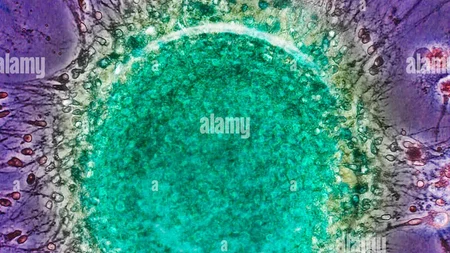
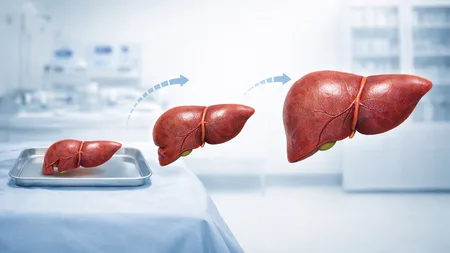
Every year your body replaces 98% of your atoms.
Your Body Replaces 98% of Its Atoms Every Year
You're literally not the same person you were a year ago—at least not at the atomic level. In the 1950s, nuclear physicist Dr. Paul C. Aebersold made a startling discovery: approximately 98% of all the atoms in your body get replaced every single year. The "you" reading this contains almost entirely different atoms than the "you" from last year.
Aebersold's research at Oak Ridge National Laboratory involved feeding volunteers radioactive isotopes, then using radiation detectors to track where those atoms traveled. The atoms didn't just settle in one place—they moved throughout the entire body, and more surprisingly, they eventually left. New atoms from food, water, and air constantly replaced the old ones.
The Great Atomic Swap Meet
Your body orchestrates this atomic turnover at wildly different rates depending on the tissue. About half of the water molecules (which make up roughly 70% of your body) are replaced every eight days. Carbon atoms, the backbone of all organic molecules, swap out even faster—half are gone within one to two months.
The cells lining your stomach and intestines take the most punishment from digestive acids and rough food, so they're completely replaced every five days. Your skin sheds and regenerates every two to four weeks. Even your liver—that workhorse of detoxification—builds itself entirely new cells every 150 to 500 days.
The 2% That Sticks Around
Not everything gets the refresh treatment. That remaining 2% contains some surprisingly stubborn atoms, particularly in places where longevity matters. Most neurons in your cerebral cortex—the thinking part of your brain—stay with you from birth until death, retaining many of their original atoms.
Your skeleton replaces itself about once per decade through a process called bone remodeling, making it one of the slower-turnover tissues. Some atoms in your tooth enamel, heart muscle, and eye lenses can persist for your entire lifetime.
Iron atoms are particularly clingy. Unlike carbon or oxygen that cycle through your system rapidly, iron tends to get recycled within your body rather than expelled and replaced. Your body hoards iron because it's precious—essential for hemoglobin but difficult to absorb from food.
Ship of Theseus: Biological Edition
This atomic turnover raises a philosophical puzzle that's troubled thinkers since ancient Greece: if nearly every physical piece of you gets replaced, are you still the same person? The question mirrors the Ship of Theseus paradox—if you replace every plank on a ship one by one, is it still the same ship?
The answer seems to be that "you" aren't defined by your atoms but by their organization. Your body maintains the same patterns, the same structure, the same DNA blueprint—just with fresh building materials. It's like a river: the water molecules are constantly different, but the river itself remains.
This constant renewal is why we stay alive. Static systems decay; dynamic ones can repair damage, fight disease, and adapt. You're not a fixed structure but an ongoing process—a pattern of atoms that persists even as the atoms themselves flow through you like water through a fountain.
Frequently Asked Questions
How often does your body replace its atoms?
Are you the same person if all your atoms are replaced?
Which body parts never replace their atoms?
Why does the body replace atoms?
What atoms stay in your body the longest?
Verified Fact
This fact has been reviewed and verified against original sources.
Show verification details
The 98% figure comes from legitimate 1950s research by Dr. Paul C. Aebersold at Oak Ridge National Laboratory using radioactive tracers.