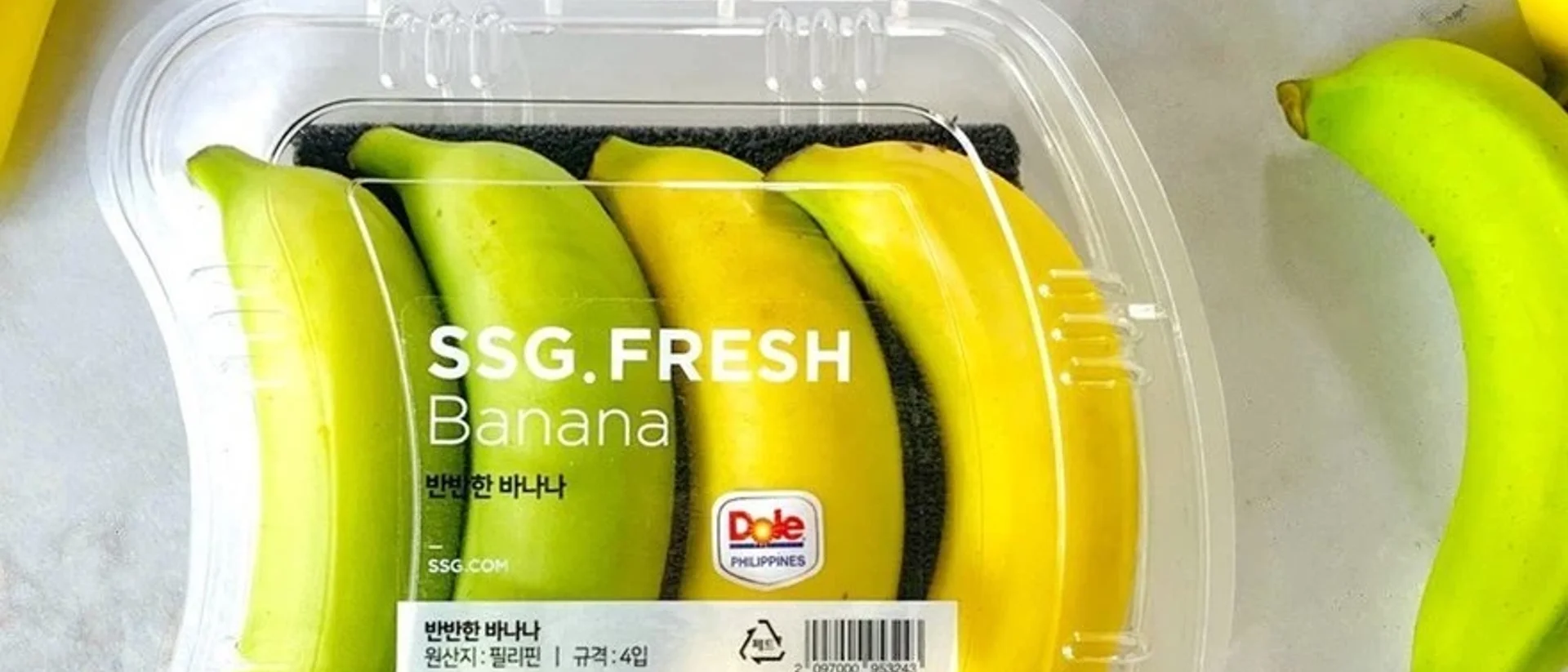
A South Korean supermarket solved the "they all go brown at once" problem with one design change: packing bananas at staggered ripeness stages so one is ready today, one tomorrow, the rest progressively later in the week. The product is called Haru Hana Banana - "one a day banana." It sells for about $2.70.
South Korea Solved the Banana Problem
Every banana buyer knows the problem: you bring home a bunch, they all ripen within a day or two of each other, and you end up throwing half of them away. South Korean supermarket chain E-Mart came up with a fix so simple it feels obvious in hindsight.
One Banana a Day
E-Mart launched a product called Haru Hana Banana - which translates from Korean as "one a day banana" - in 2018. The pack arranges its bananas at deliberately staggered ripeness levels. The brightest yellow banana is ready to eat today. The next is slightly greener, ready tomorrow. Each banana in the pack is a stage behind the last, so the whole pack spaces out across the week.
A pack sells for about 2,980 South Korean won - roughly $2.70 USD - available at E-Mart stores across South Korea.
Why Bananas Ripen Together
The reason an entire bunch goes from perfect to overripe almost simultaneously is biological. Bananas release ethylene gas as they mature, which triggers the same ripening process in nearby fruit. A bunch harvested at the same time will all produce ethylene together, hitting peak ripeness within the same narrow window. E-Mart sidesteps this by selecting bananas from different harvest stages and packaging them together - each at a distinct point in its ripening timeline.
The Trade-Off Nobody Mentions
The concept is not without its critics. Getting bananas at distinctly different ripeness stages requires separating each one individually and wrapping them in plastic - an ironic outcome for a fruit that already comes with its own natural biodegradable peel. Food waste advocates have noted the trade-off: fewer bananas in the bin, more plastic in the recycling.
A Design Idea That Spread
When the product went viral in 2018, food and design publications from BuzzFeed to Grocery Dive covered it widely. The concept has since been adopted by other Korean retailers and regularly surfaces in international discussions about reducing household food waste through packaging design - the idea being that you can change consumer behavior without actually asking consumers to change anything.
Frequently Asked Questions
What is Haru Hana Banana?
Why do bananas all ripen at the same time?
Where is the E-Mart graduated ripeness banana pack sold?
How much does the Haru Hana Banana pack cost?
Does selling bananas at different ripeness stages actually reduce food waste?
Verified Fact
Verified Jun 2, 2026 · 6 sources checked
Source: Core77Show verification details
Claims checked
- E-Mart sells Haru Hana Banana, a “one a day banana” pack
- Bananas are packed at staggered ripeness stages
- Price is about $2.70 (2,980 KRW)
- Launched in August 2018
- Pack contains roughly 5-6 bananas (sources vary)
Sources: Core77, ZME Science, Haps Korea, Chowhound, Grocery Dive, Upworthy