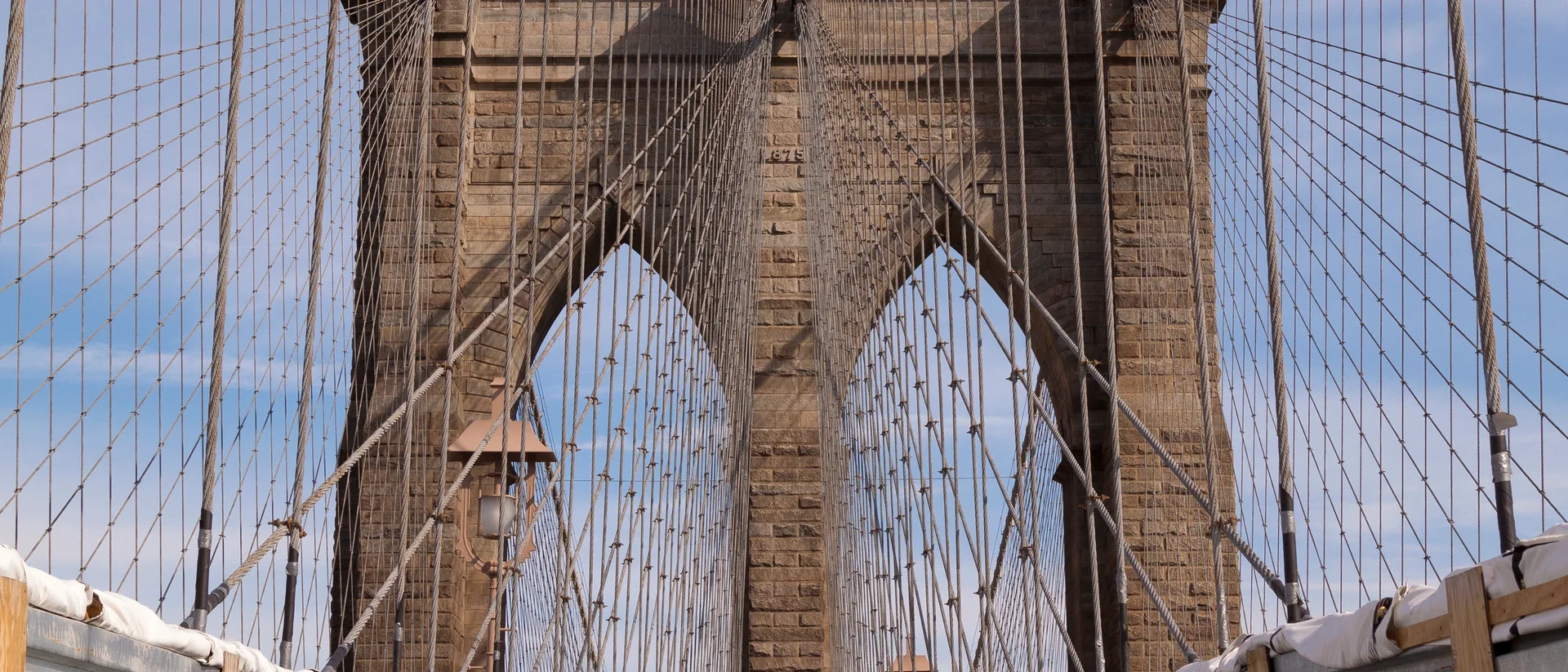
The Brooklyn Bridge's Manhattan tower never reached bedrock. In 1872 workers digging inside a pressurized caisson got 78.5 feet below high water, and three died of the bends. Washington Roebling judged the packed sand and gravel as strong as rock, stopped there, and filled the chamber with concrete. The bridge above now carries an estimated 120,000 vehicles a day, and the tower has held ever since.
The Brooklyn Bridge Tower That Never Hit Bedrock
The Manhattan tower of the Brooklyn Bridge never reached bedrock. In 1872, workers digging inside a compressed-air caisson on the New York side had gone 78.5 feet below high water when chief engineer Washington Roebling told them to stop. He judged the packed sand and gravel beneath them to be as strong as rock.
Digging Under Pressure
A caisson is a huge timber chamber, open at the bottom, that is sunk into a riverbed. Compressed air keeps the water out while men dig the ground away from beneath its edges, and the whole box settles downward as they work. The bridge's two towers were built on top of two of them.
On the Brooklyn side the caisson stopped at 44.5 feet below high water on dense, rocky ground, after months of delay from boulders and a fire. On the New York side the descent was faster, but it went considerably deeper.
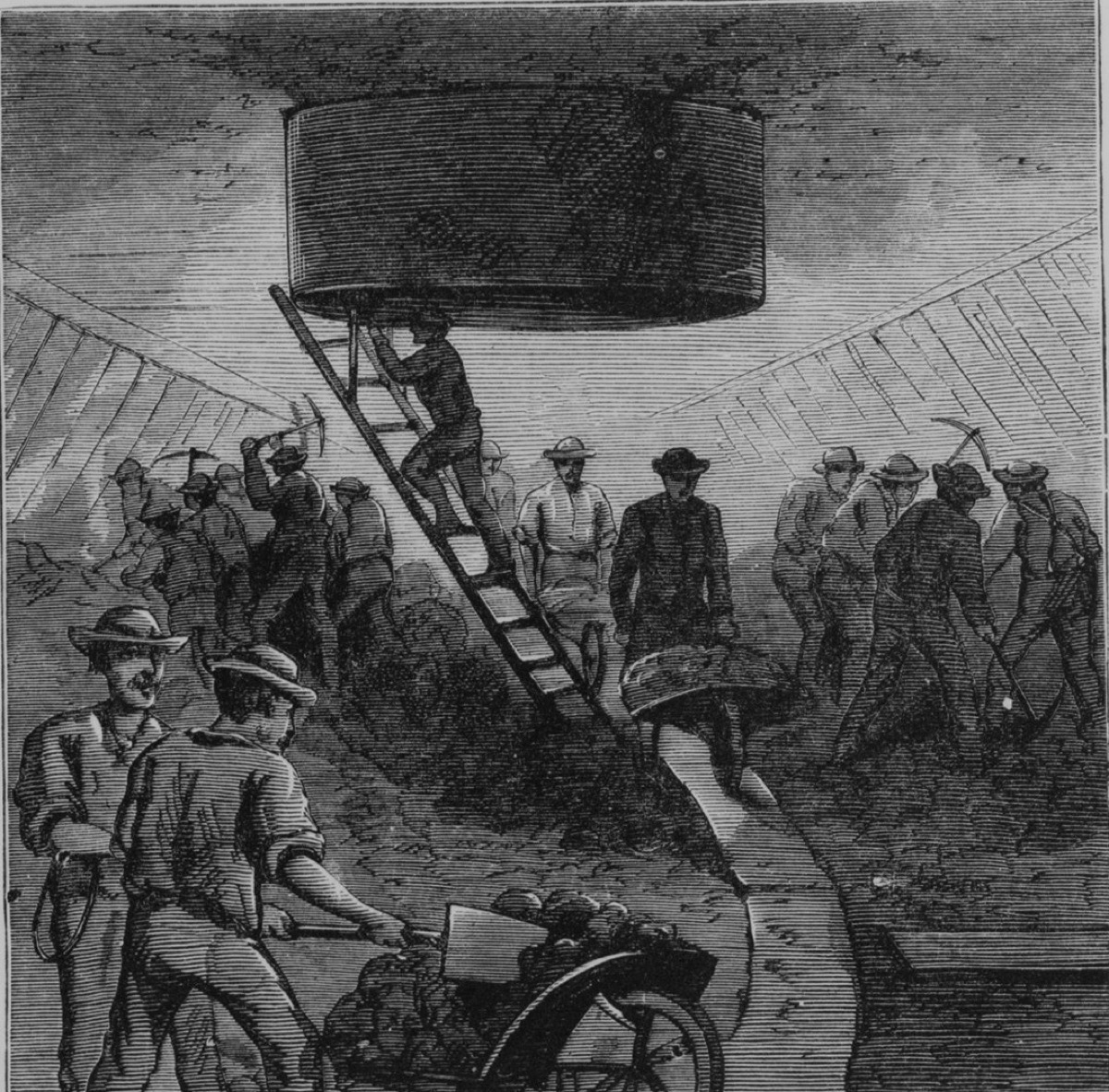
Deeper meant more time under pressure, and that brought on caisson disease, known to the workers as the bends. Between January 25 and May 31, 1872, the project's official physician, Dr. Andrew H. Smith, reported 110 cases. The National Register nomination for the bridge notes that a great number more probably escaped his attention.
The Day the Dig Stopped
On May 18, after a third worker died, Roebling halted the digging inside the Manhattan caisson. It rested 78 feet 6 inches below high water on sand and gravel so tightly packed, he believed, that bedrock itself could not give a stronger foundation.
Bedrock lay farther down, and men were being carried out sick. Instead of digging on, the caisson was filled with stone, earth, sand and concrete. The job was finished on July 12.
What the Tower Stands On Now
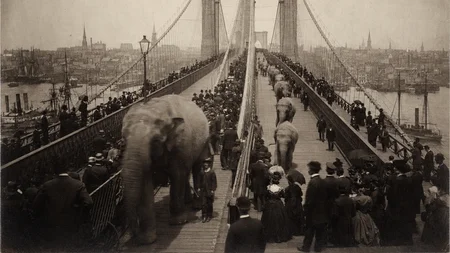
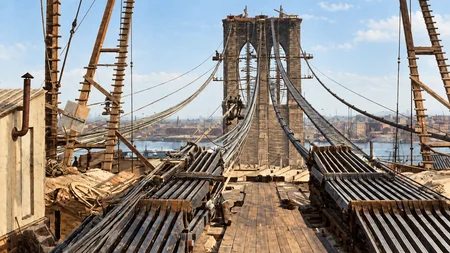
The two towers went up on those foundations, built of limestone and granite from quarries as far away as Maine, and rise about 277 feet above high water. The bridge opened in 1883.
The Manhattan tower has carried the bridge ever since. New York City's Department of Transportation estimated in January 2024 that about 120,000 vehicles, 30,000 pedestrians and 4,000 cyclists use the bridge every day.
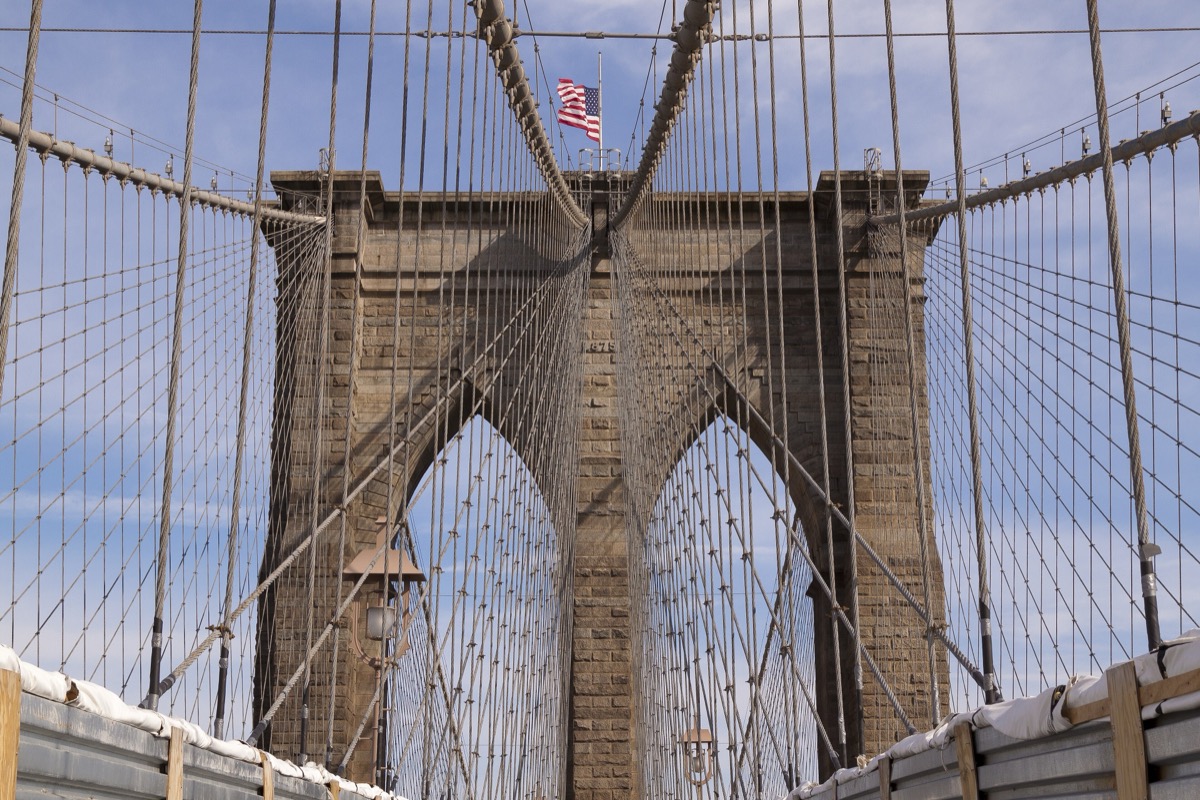
Roebling's call was a judgment about ground that nobody could see. It has held for well over a century, under the weight of a roadway, a central promenade and a river of traffic.
Enjoyed this fact?
Be the first to love this
Get a new fact every morning.
A fascinating fact in your inbox every morning. Free. Unsubscribe anytime.
Frequently Asked Questions
Is the Brooklyn Bridge built on bedrock?
Why did Washington Roebling stop digging the Manhattan caisson?
How deep is the Brooklyn Bridge's Manhattan tower foundation?
How many vehicles cross the Brooklyn Bridge every day?
Verified Fact
Verified Oct 17, 2026 · 5 sources checked
Source: National Park Service (NRHP nomination)Show verification details
Claims checked
- Manhattan-side caisson stopped 78.5 feet below high water in packed sand and gravel, above bedrock
- Three workers had died of the bends when Roebling halted the dig on May 18, 1872
- The chamber was filled with stone, earth, sand and concrete, finished July 12
- Brooklyn-side caisson stopped at 44.5 feet below high water
- About 120,000 vehicles a day use the bridge (city estimate, January 2024)
Sources: National Park Service NHL nomination, Library of Congress HAER, NYC DOT, STRUCTURE magazine
Related Topics
More from History & Culture
View all History & Culture →