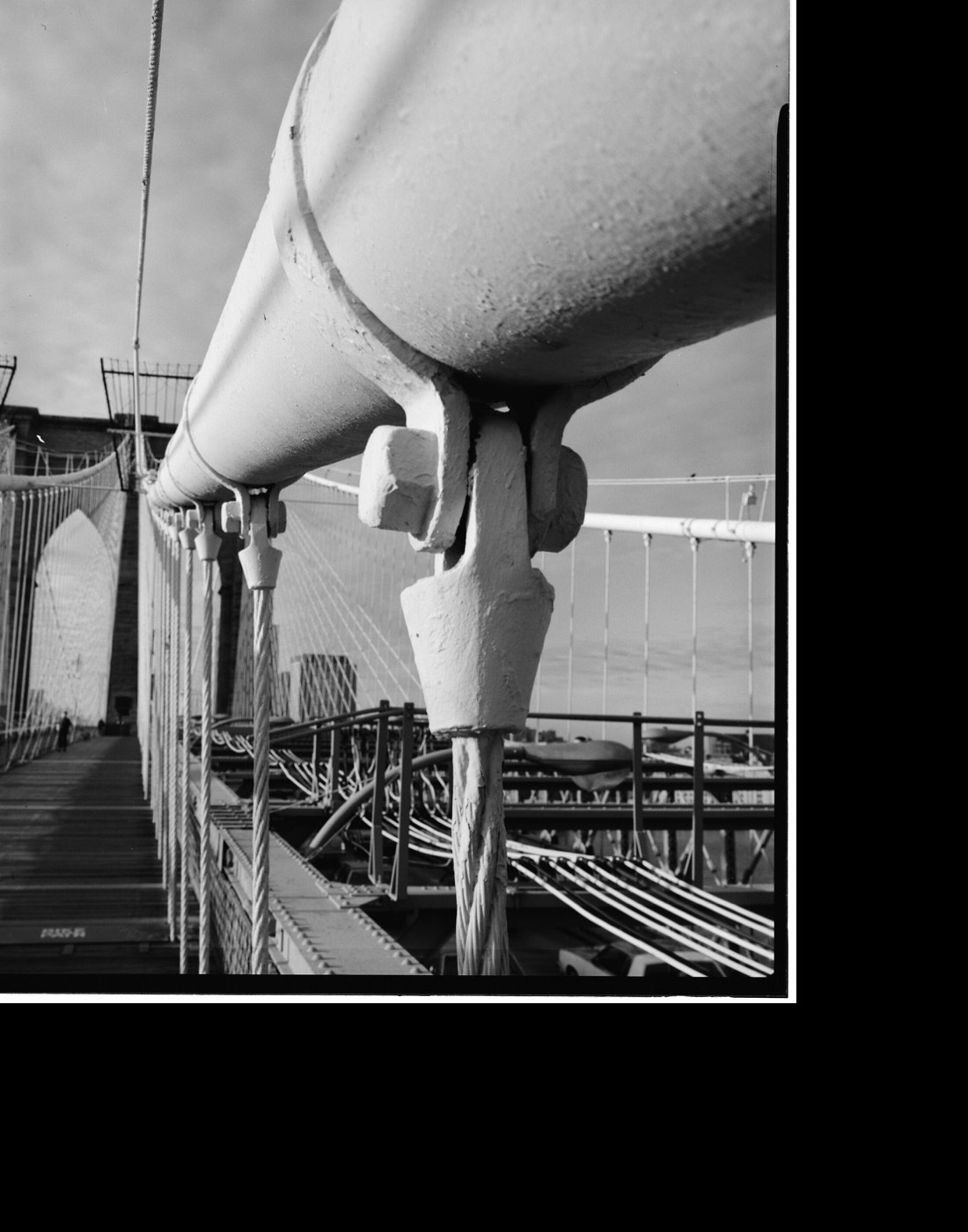
The Brooklyn Bridge has hung on bad wire since 1883. A contractor slipped wire that had failed inspection into its four main cables, and it was spun in before engineers caught it. Washington Roebling could not pull it out, so he added about 150 extra wires to every cable. More than 200 tons of the bad wire are still up there.
The Fake Wire Still Inside the Brooklyn Bridge
Somewhere inside the four main cables of the Brooklyn Bridge, more than 200 tons of steel wire are not what the engineers ordered. A contractor cheated, the cheating was proved too late, and the wire was never removed. The bridge has carried traffic over the East River for well over a century anyway.
The Lowest Bidder
The contract for the cable wire went to J. Lloyd Haigh, a Brooklyn manufacturer, in January 1877. Washington Roebling, the bridge's chief engineer, distrusted him and ordered every coil of wire tested, not just a sample.
The testing was done at Haigh's brick mill in Red Hook. Only wire that passed was to be used.
The Swap
Haigh found a way around the test. According to David McCullough's history The Great Bridge, wire that had passed inspection and sat at the mill overnight was secretly replaced with wire that had been rejected. Engineers also found that a wagonload was switched on the way to the bridge.
The giveaway was a pile that should have been growing. The pile of rejected wire kept getting smaller. When engineers set a watch, they saw a loaded wagon driven to another building, unloaded, and refilled with rejected wire.
When a batch of rings from the switched wagons reached the bridge and was tested, only five of eighty met the standard. Haigh was estimated to have made about $300,000 from the deception.
Too Late to Pull It Out
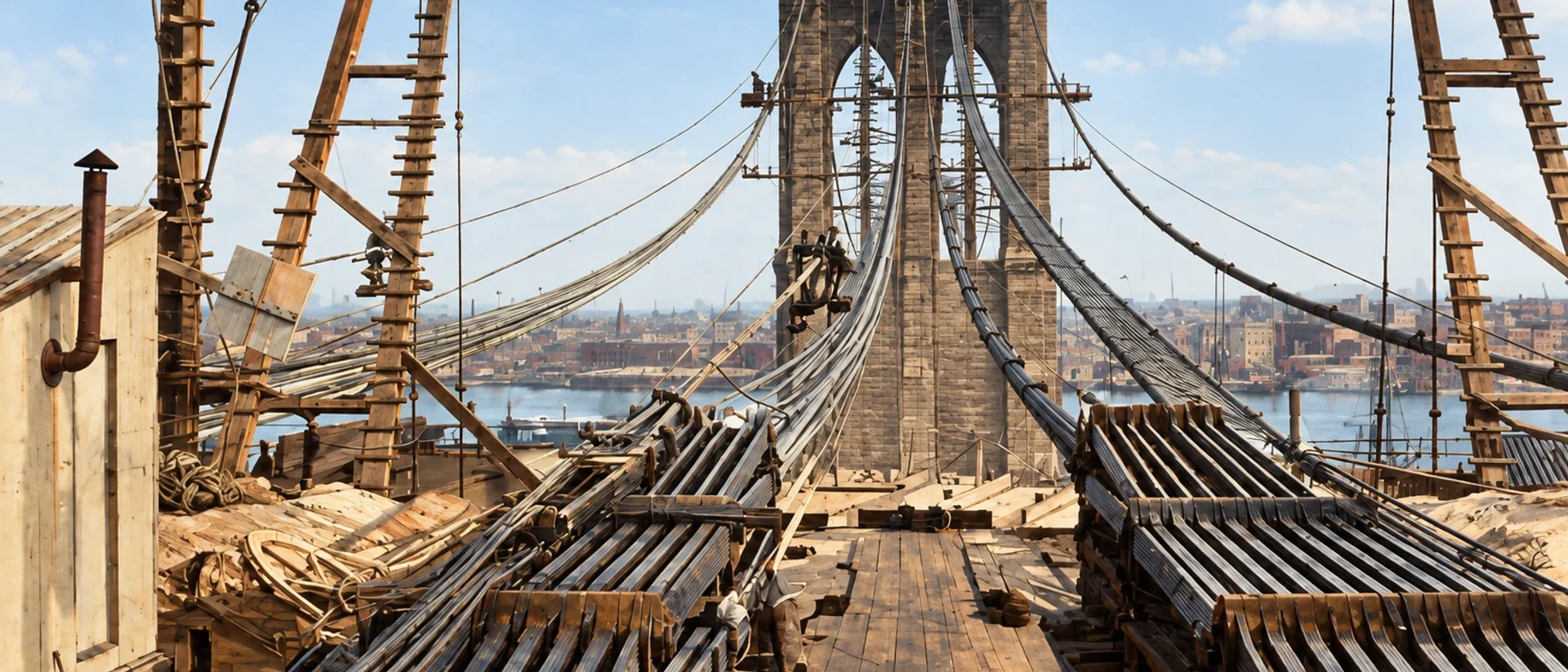
By the time the fraud was proved, the cables were being spun, one wire at a time, across the river. Roebling wrote that the rejected wire which had come to the bridge "has been worked into the cables, and cannot be removed."
McCullough reports that Roebling assumed some 221 tons of rejected wire had been laid up.
150 Wires to Make It Right
Roebling did the arithmetic instead. He required Haigh to supply extra good wire at his own expense to make up the shortfall, and each cable ended up with about 150 more wires than originally planned. Roebling had designed the bridge to be about six times stronger than it needed to be. Accounts differ on how much margin the bad wire left, with McCullough giving a factor of at least five and later engineering histories four, but all agree the bridge stayed far stronger than its traffic required.
Roebling urged the trustees to make the fraud known publicly. They chose not to, and decided to keep Haigh on for the rest of the cable wire. The last cable wire went over the river on October 5, 1878.
The bridge opened in 1883. The rejected wire was never taken out. A trade-press history of the bridge's cables says all of the deficient wire is still there today, and that no one knows which cable holds which part of it.
Sources: Wikipedia, Brooklyn Bridge; Wire Rope News, The Brooklyn Bridge Experiment; David McCullough, The Great Bridge (1972).
Enjoyed this fact?
Be the first to love this
Get a new fact every morning.
A fascinating fact in your inbox every morning. Free. Unsubscribe anytime.
Frequently Asked Questions
Is there really bad wire inside the Brooklyn Bridge?
How did Haigh swap the wire?
How did Washington Roebling fix the problem?
Is the Brooklyn Bridge safe?
Verified Fact
Verified Oct 15, 2026 · 4 sources checked
Source: The Great Bridge by David McCullough (Wire Fraud chapter)Show verification details
Claims checked
- Contractor J. Lloyd Haigh swapped inspected wire for rejected wire
- Of eighty rings tested, five met the standard
- Rejected wire was worked into the cables and could not be removed
- About 150 extra wires were added to each cable
- Roebling's estimate of rejected wire laid up (221 tons, stated as more than 200)
Sources: The Great Bridge by David McCullough, Wikipedia, Wire Rope News
Related Topics
More from History & Culture
View all History & Culture →