
The Washington Monument stood unfinished for over 20 years on a foundation too weak to carry the rest of it. In 1879, Army engineers dug out 70 percent of the earth under its base and poured concrete beneath it while the stump stood right above them. Then they built it to 555 feet. The color line where work restarted still shows today, about a third of the way up.
They Dug Under the Washington Monument While It Stood
The Washington Monument stood unfinished on the National Mall for more than 20 years, and the ground under it was the problem. In 1879, Army engineers did what many of their peers called too dangerous: they dug out the earth beneath the base while the shaft stood on top of it.
A Stump on a Weak Foundation
Work stopped in 1854 when funding collapsed, with the shaft at about 156 feet (the Park Service's administrative history gives 176 feet by 1876). For more than two decades it stood only partly finished beside the Potomac.
When the job passed to the Army Corps of Engineers, reviews in 1877 found the old foundation "of insufficient spread and depth to sustain the weight of the completed structure." Finishing the tower to its planned height meant fixing what lay under it first.
"Extremely Hazardous"
The plan was to dig out the soil beneath the old foundation and put a new one in its place. The engineers consulted were nearly unanimous that this would be "extremely hazardous."
Lt. Col. Thomas Lincoln Casey, the engineer in charge, did not share that belief. Excavation began on January 28, 1879 and was finished on May 29, 1880.
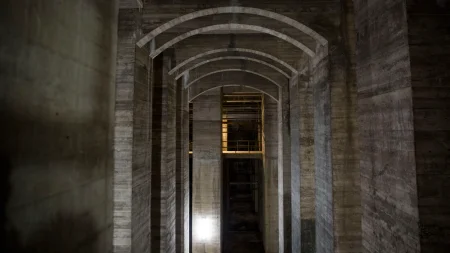
Crews worked in sections, cutting away earth around and beneath the outer parts of the old base and replacing it with Portland cement concrete. By Casey's own summary, they removed 70 percent of the earth under the old foundation, down to 13 feet 6 inches beneath it.
About 3,489 cubic yards of concrete went in. The old and new foundations together covered 16,000 square feet and reached 36 feet 10 inches deep.
A 2009 geotechnical case history of the monument's foundation concluded that the 1879 underpinning "likely saved the Monument from serious trouble."
Then They Built It Higher
With the base secured, the Corps raised the shaft to 555 feet, a revision of the original 600-foot plan. The capstone was set on December 6, 1884, and the monument was dedicated on February 21, 1885.
The Line That Still Shows
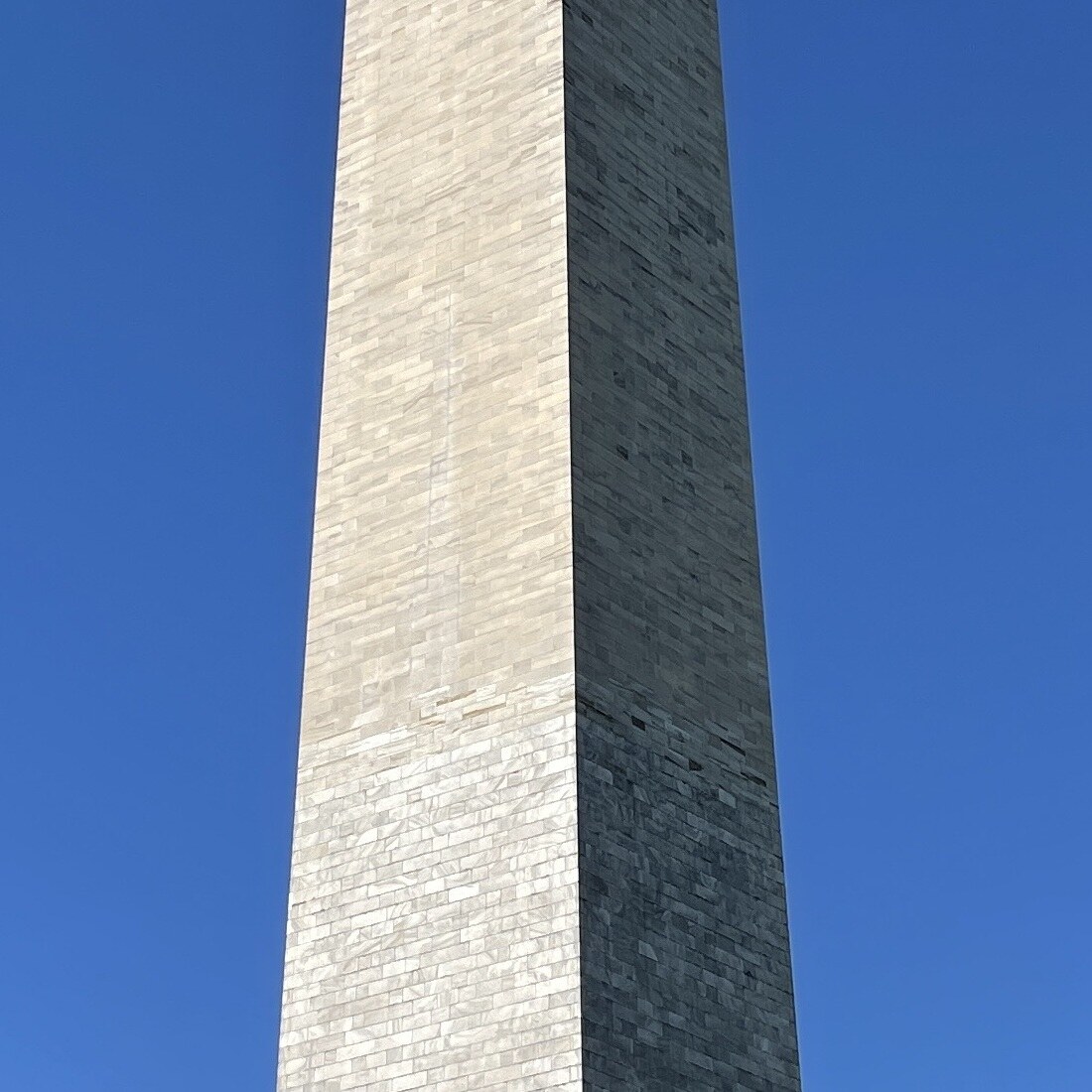
Where work restarted, the marble changed. The National Park Service describes a brown-streaked beltline about one-third of the way up the monument, left by stone from a different quarry that did not match the original.
The band sits near the spot where the stump left off, the same stump the Army had just spent more than a year holding up from below.
Enjoyed this fact?
Be the first to love this
Get a new fact every morning.
A fascinating fact in your inbox every morning. Free. Unsubscribe anytime.
Frequently Asked Questions
Did engineers really dig under the Washington Monument?
Why was the Washington Monument foundation weak?
Why did the Washington Monument stop being built?
Where is the color line on the Washington Monument?
How tall is the Washington Monument?
Verified Fact
Verified Oct 16, 2026 · 3 sources checked
Source: National Park Service (Washington Monument administrative history)Show verification details
Claims checked
- The unfinished stump stood for more than two decades before work resumed
- Army engineers removed 70 percent of the earth under the old foundation, down 13 feet 6 inches, in 1879-80
- Engineers consulted were nearly unanimous that the plan was extremely hazardous
- A color change sits about one-third of the way up the monument
- Stump height removed because sources differ (156 or 176 feet)
Sources: National Park Service, NPS administrative history, Geotechnical case histories journal
Related Topics
More from History & Culture
View all History & Culture →