Crews in Richmond, California launched a 441-foot cargo ship 4 days and 15 hours after laying its keel. They built the SS Robert E. Peary around the clock in November 1942, during World War II. They lifted in giant sections built ahead of time, about 250,000 parts in all. No ship that size has ever been built faster.
The Cargo Ship Built in 4 Days and 15 Hours
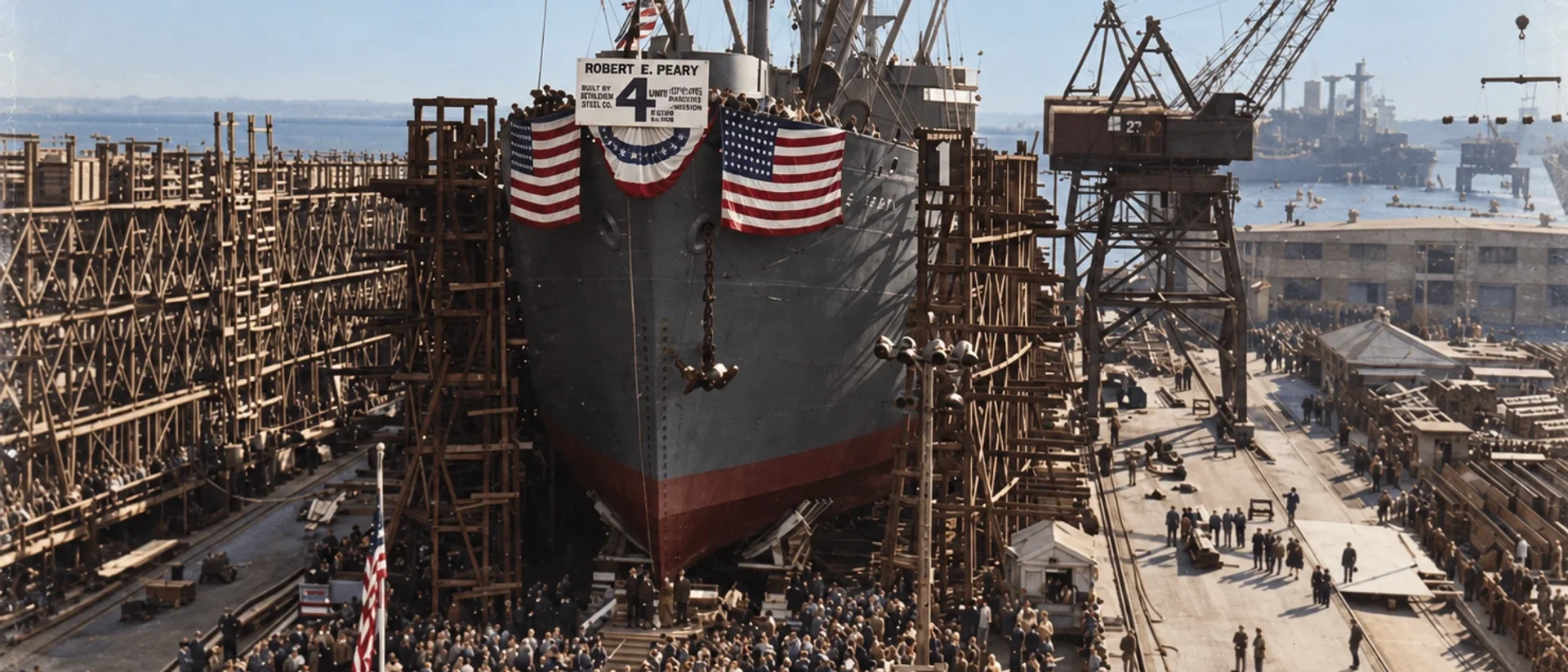
Just after midnight on November 8, 1942, shipyard crews in Richmond, California laid the keel of a Liberty cargo ship. On the afternoon of November 12, the finished hull slid into San Francisco Bay. The SS Robert E. Peary had gone from keel to launch in 4 days, 15 hours and 29 minutes, a record no ship of her size has beaten since.
Ships Sinking Faster Than They Could Be Built
The Liberty ship was the plain, slow cargo workhorse of World War II. The United States built 2,710 of them in 18 shipyards.
They were needed badly. In 1941 and 1942, German U-boats and surface raiders sank 2,963 Allied ships, while American yards built 863 to replace them.
The first Liberty ships took months. Across the program, build times fell from about 355 days at the start to an average of 41 days by 1943.
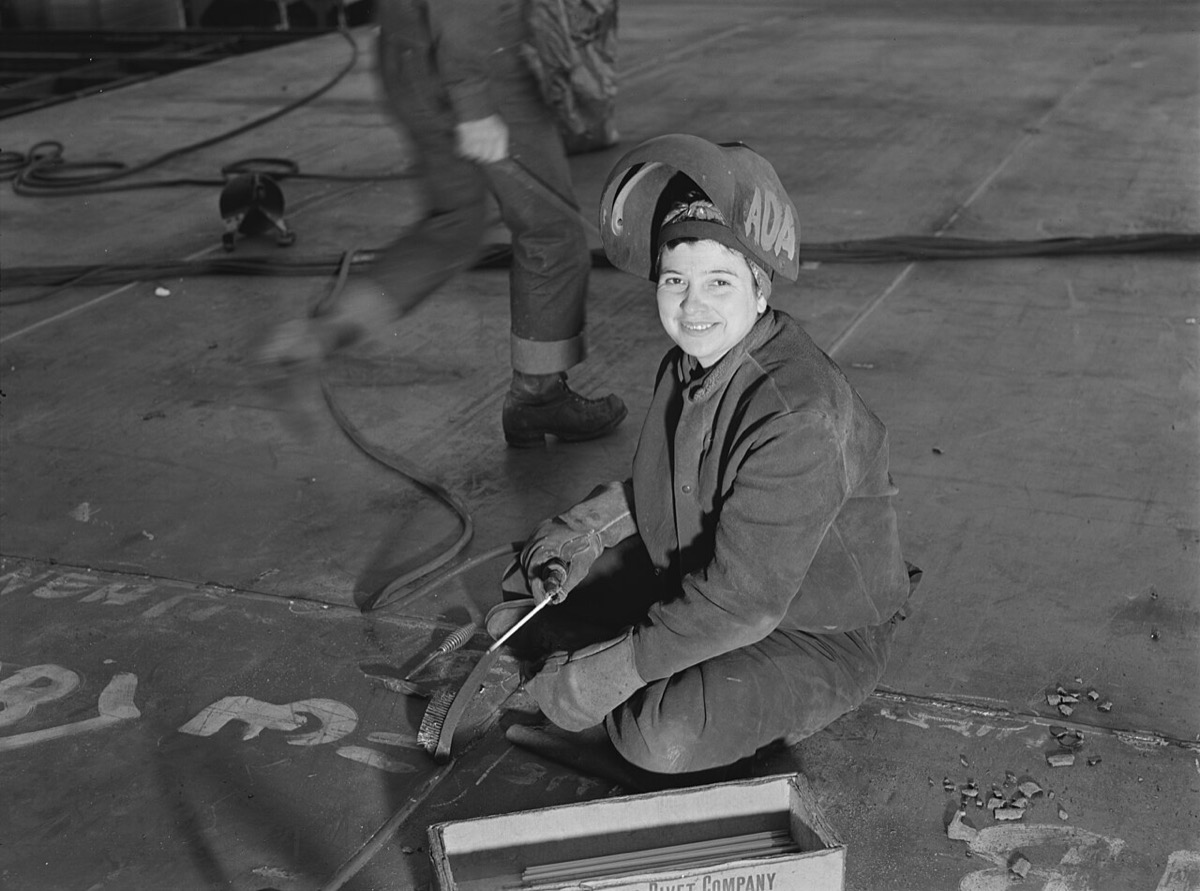
Henry Kaiser's Permanente Metals yards in Richmond borrowed from Henry Ford. Prefabricated sections were put together the way Ford assembled cars, and the yards began racing each other for speed.
Four Days at Yard No. 2
Permanente's Yard No. 2 usually needed about 50 days to finish a Liberty ship. In November 1942, it set out to win the race outright.
The keel went down at 12:01 a.m. on November 8. Much of the ship had already been prefabricated in the yard and staged, ready for assembly.
The rest went together from giant 250-ton sections built in advance, some with the engine already in place. Crews worked around the clock and assembled about 250,000 parts weighing roughly 14 million pounds.
The result was a ship 441 feet 6 inches long, the 47th built at Yard No. 2.
Launch Day
On November 12, after about 26 minutes of speeches, the SS Robert E. Peary was launched.
Guinness World Records still lists her under "Fastest ship building", the quickest time a complete ship of more than 10,000 tonnes deadweight has ever been built. Different sources put the figure between 4 days 15 hours and 4 days 15.5 hours.
Launch was not the finish line. She was delivered on November 15, 7 days, 14 hours and 32 minutes after the keel went down.
A Stunt That Went to War
The record build was partly a propaganda effort, a way of showing the world that America could build ships faster than they could be sunk. Some called her a "stunt ship".
Kaiser called her an "incentive ship" instead, because the race lifted the morale of his workers.
She sailed on her first voyage on November 22, 1942, carrying supplies into the Pacific. On June 7, 1944, the day after D-Day, she carried men and equipment from Cardiff, Wales to Omaha Beach, and kept shuttling to Normandy until September 18.
The Peary was scrapped in Baltimore in 1963. The shipyard story lives on in Richmond, where the Rosie the Riveter WWII Home Front National Historical Park now preserves the home front of the yards that launched 747 ships in four years.
Source:Wikipedia
Enjoyed this fact?
Be the first to love this
Get a new fact every morning.
A fascinating fact in your inbox every morning. Free. Unsubscribe anytime.
Frequently Asked Questions
How fast was the SS Robert E. Peary built?
Where was the SS Robert E. Peary built?
How could a Liberty ship be built in four days?
Is the SS Robert E. Peary still the fastest ship ever built?
What happened to the SS Robert E. Peary?
Verified Fact
Verified Oct 14, 2026 · 5 sources checked
Source: WikipediaShow verification details
Claims checked
- Keel laid November 8, 1942, ship launched November 12, about 4 days and 15 hours later
- The 441-foot ship had about 250,000 parts, much of it in 250-ton sections built in advance
- Built at Kaiser's Yard No. 2 in Richmond, California, with crews working day and night
- Guinness lists it as the fastest build of a complete ship over 10,000 tonnes deadweight
- She carried men and equipment to Omaha Beach the day after D-Day
Sources: Wikipedia, American Merchant Marine at War, Guinness World Records, History Collection, Chapman University
Related Topics
More from History & Culture
View all History & Culture →