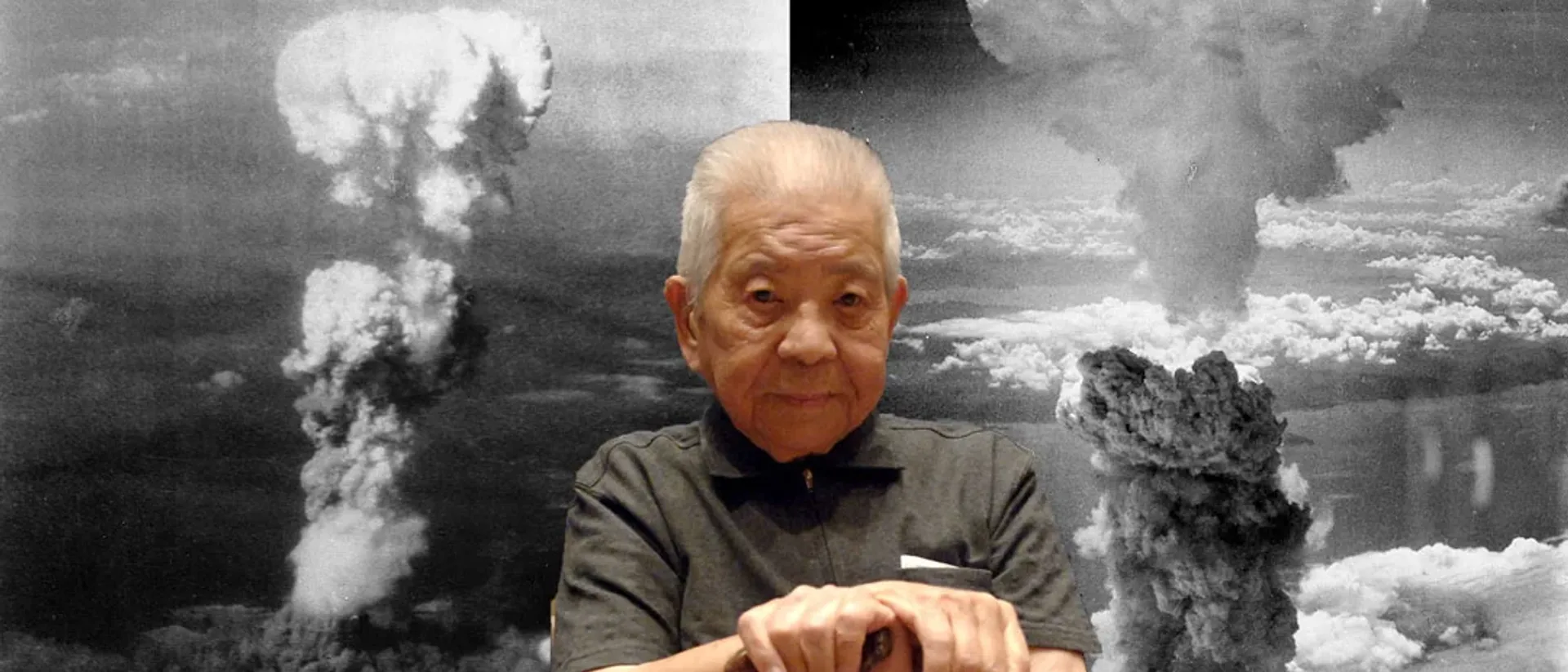
Tsutomu Yamaguchi was on a business trip in Hiroshima on August 6, 1945, when the first atomic bomb detonated three kilometers away. He was burned, blinded, and his eardrums ruptured. He spent the night in a shelter and caught the morning train home so he could get to work on time. His office was in Nagasaki. Three days later, he survived the second atomic blast.
The Man Who Survived Both Atomic Bombs
On the morning of August 6, 1945, Tsutomu Yamaguchi was walking to the docks in Hiroshima, Japan, preparing to return home after a business trip for Mitsubishi Heavy Industries. At 8:15 a.m., the sky erupted. The American B-29 bomber Enola Gay had just dropped Little Boy, the first atomic bomb used in warfare, just 3 kilometers away.
The blast ruptured Yamaguchi's eardrums, temporarily blinded him, and left serious burns across the left side of his upper body. Somehow, he survived.
After dragging himself to an air-raid shelter with colleagues, Yamaguchi spent the night among the chaos and destruction. The next morning, despite his injuries, he caught a train back to his home city. He had a job to do, after all. That city was Nagasaki.
Three Days Later
On August 9, 1945, heavily bandaged and in pain, Yamaguchi reported for work. While describing the Hiroshima explosion to his supervisor—trying to explain the unprecedented weapon he'd witnessed—a familiar flash lit up the sky. At 11:02 a.m., the Bockscar bomber dropped Fat Man over Nagasaki.
Yamaguchi survived. Again.
The Only Official Double Survivor
While at least 160 people are known to have been in both cities during the bombings, Yamaguchi is the only person officially recognized by the Japanese government as a survivor of both atomic blasts. He received recognition as a hibakusha (atomic bomb survivor) for Nagasaki in 1957, but wasn't officially recognized for surviving Hiroshima until March 24, 2009—64 years later.
The dual exposure to radiation had lasting effects. Yamaguchi's wife and young son were also exposed in Nagasaki, though not in Hiroshima. He went on to work as a translator for the U.S. occupation forces, later becoming a vocal advocate for nuclear disarmament.
A Long Life, Despite Everything
Yamaguchi lived until January 4, 2010, dying of stomach cancer at age 93. His longevity is remarkable considering the devastating radiation exposure from two atomic weapons. In his later years, he gave testimony about his experiences, hoping his story would demonstrate the horrific human cost of nuclear warfare.
When asked about his survival, Yamaguchi said he felt deeply conflicted—grateful to be alive, but haunted by the memories of those who weren't as fortunate. His resilience, both physical and mental, stands as one of history's most extraordinary survival stories.
Enjoyed this? Get a new fact every morning.
A fascinating fact in your inbox every morning. Free. Unsubscribe anytime.
Frequently Asked Questions
Who was the man who survived both atomic bombs?
How did Tsutomu Yamaguchi survive both Hiroshima and Nagasaki?
How long did Tsutomu Yamaguchi live after the atomic bombs?
How many people survived both atomic bombings in Japan?
What did Tsutomu Yamaguchi do after surviving the atomic bombs?
Verified Fact
This fact has been reviewed and verified against original sources.
Show verification details
This fact is accurate. Tsutomu Yamaguchi was on a business trip to Hiroshima for Mitsubishi Heavy Industries when the first atomic bomb was dropped on August 6, 1945.