On July 9, 1991, a Navy KA-6D jet was doing more than 200 mph over the Indian Ocean when its ejection seat fired halfway. Lt. Keith Gallagher went through the canopy and was left sitting on top of the jet, with only his legs inside. Pilot Lt. Mark Baden slowed down, flew back to the USS Abraham Lincoln and landed on the deck about six minutes later. Gallagher was flying again in six months.
The Navy Pilot Who Landed With His Crewmate on Top of the Jet
On July 9, 1991, a Navy tanker jet was flying over the Indian Ocean when its ejection seat fired only partway. Lt. Keith Gallagher ended up outside the cockpit, sitting on top of the aircraft with just his legs still inside. His pilot, Lt. Mark Baden, flew it back to the carrier.
A Routine Refueling Hop
The jet was a KA-6D "Green Lizard," the aerial tanker version of the A-6 Intruder, flying from the USS Abraham Lincoln. The carrier was about four days out of Singapore, heading for patrol duty in the Persian Gulf.
Baden and Gallagher, both junior officers, were at about 8,000 feet, seven miles off the ship. A drop tank had stopped transferring fuel, and the crew thought it was a stuck float valve, so Baden pulled the stick back, then pushed it forward, to try to free it with positive and negative G. They were doing about 230 knots.
The Bang
Baden heard a sharp bang as the cockpit lost pressure. Gallagher's helmet and oxygen mask were torn away and his upper body was out in the airstream.
"Only his legs are still inside the cockpit," Baden reported.
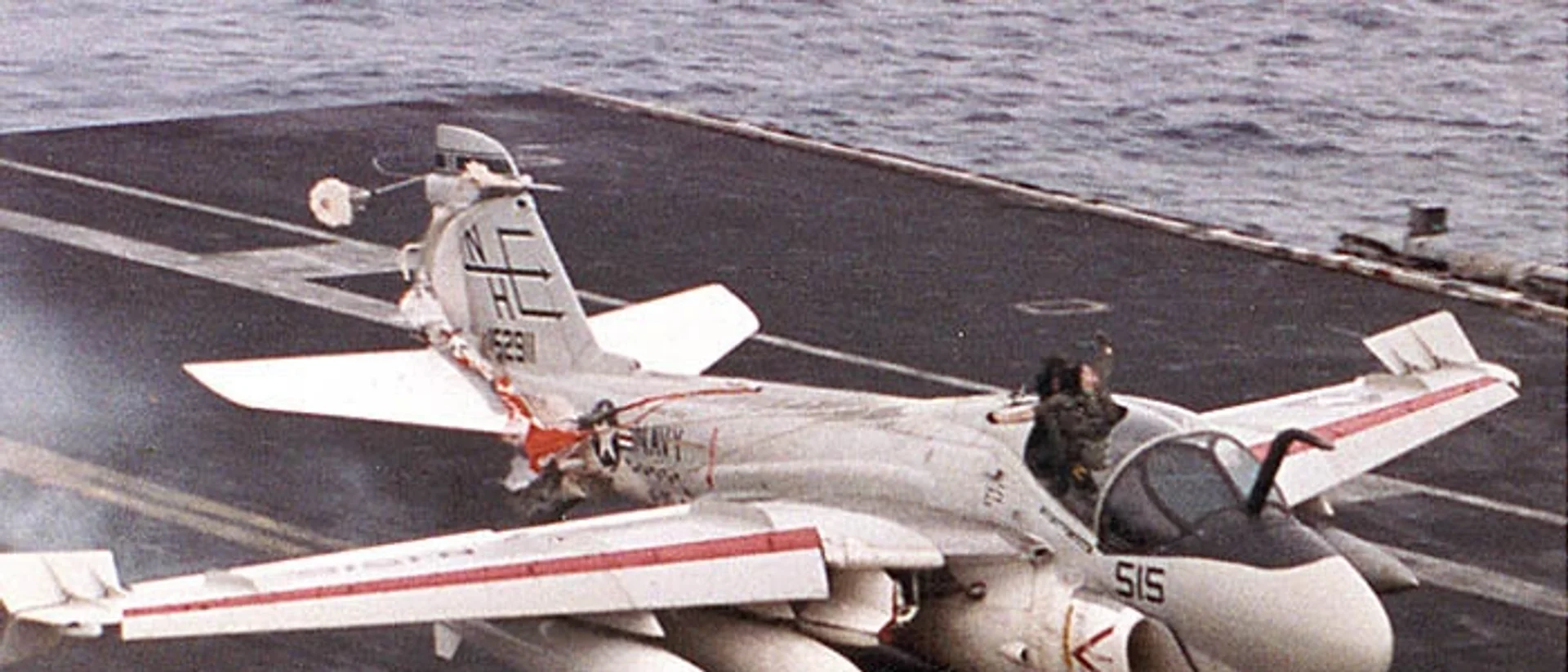
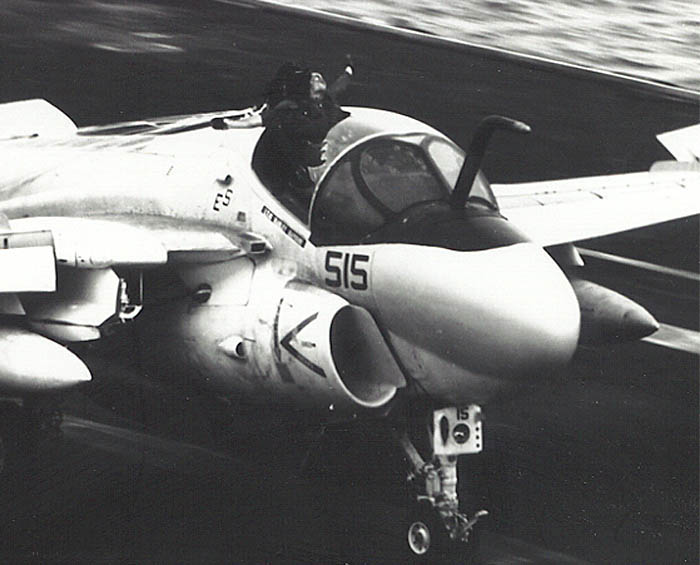
Gallagher's parachute had deployed and wrapped around the jet's horizontal stabilizer. Its risers held him against the aircraft, and later acted like a shoulder harness during the landing.
Six Minutes to the Deck
Baden declared an emergency, slowed the jet through 200 knots and settled near 160 knots on a straight-in approach. The landing signal officer, Lt. Cdr. Mike Manazir, talked him down.
Baden touched down just short of the first arresting wire, then felt the hook catch a wire. The editor's note on Baden's account puts the jet on deck about six minutes after the emergency began.
A Navy photo caught the touchdown, with Gallagher visible above the broken canopy.
Back in the Air
Baden held Gallagher's arm until the medics came, and knew he was alive when Gallagher asked, "Am I on the flight deck?" The crash crew then pulled him out of the seat. He had a stretched nerve in his shoulder and was badly beaten up, and he recovered over about six months.
It was also his 26th birthday. He flew again six months to the day after the accident. Baden was awarded the Air Medal and later flew for United Airlines.
Both men's accounts first ran in the Navy's Approach magazine in November 1991, and Gallagher's cousin still keeps them online.
Enjoyed this fact?
Be the first to love this
Get a new fact every morning.
A fascinating fact in your inbox every morning. Free. Unsubscribe anytime.
Frequently Asked Questions
What happened to Keith Gallagher in 1991?
Did the pilot land the plane with Gallagher outside the cockpit?
Did Keith Gallagher fly again after the partial ejection?
What is a KA-6D?
Verified Fact
Verified Nov 10, 2026 · 3 sources checked
Source: Approach magazine accounts (gallagherstory.com)Show verification details
Claims checked
- Ejection seat fired partway on a Navy KA-6D on July 9, 1991, over the Indian Ocean
- Gallagher sat on top of the jet with only his legs inside while Baden landed on the USS Abraham Lincoln about six minutes after the emergency began
- Speed of more than 200 mph applies to the moment of the bang (about 230 knots); Baden then slowed to about 160 knots
- Gallagher flew again six months to the day after the accident, and Baden received the Air Medal
Sources: republished by Gallagher's cousin), The Aviationist
Related Topics
More from History & Culture
View all History & Culture →