During World War II, the Navy turned two old paddle-wheel passenger steamers into aircraft carriers and ran them out of Chicago on Lake Michigan. More than 17,000 pilots qualified for carrier landings on their flight decks, and over 100 planes ended up on the lake bottom. One of them, a Wildcat fighter raised in 1992, is on display in Terminal 2 at O'Hare.
The Paddle-Wheel Aircraft Carriers of Lake Michigan
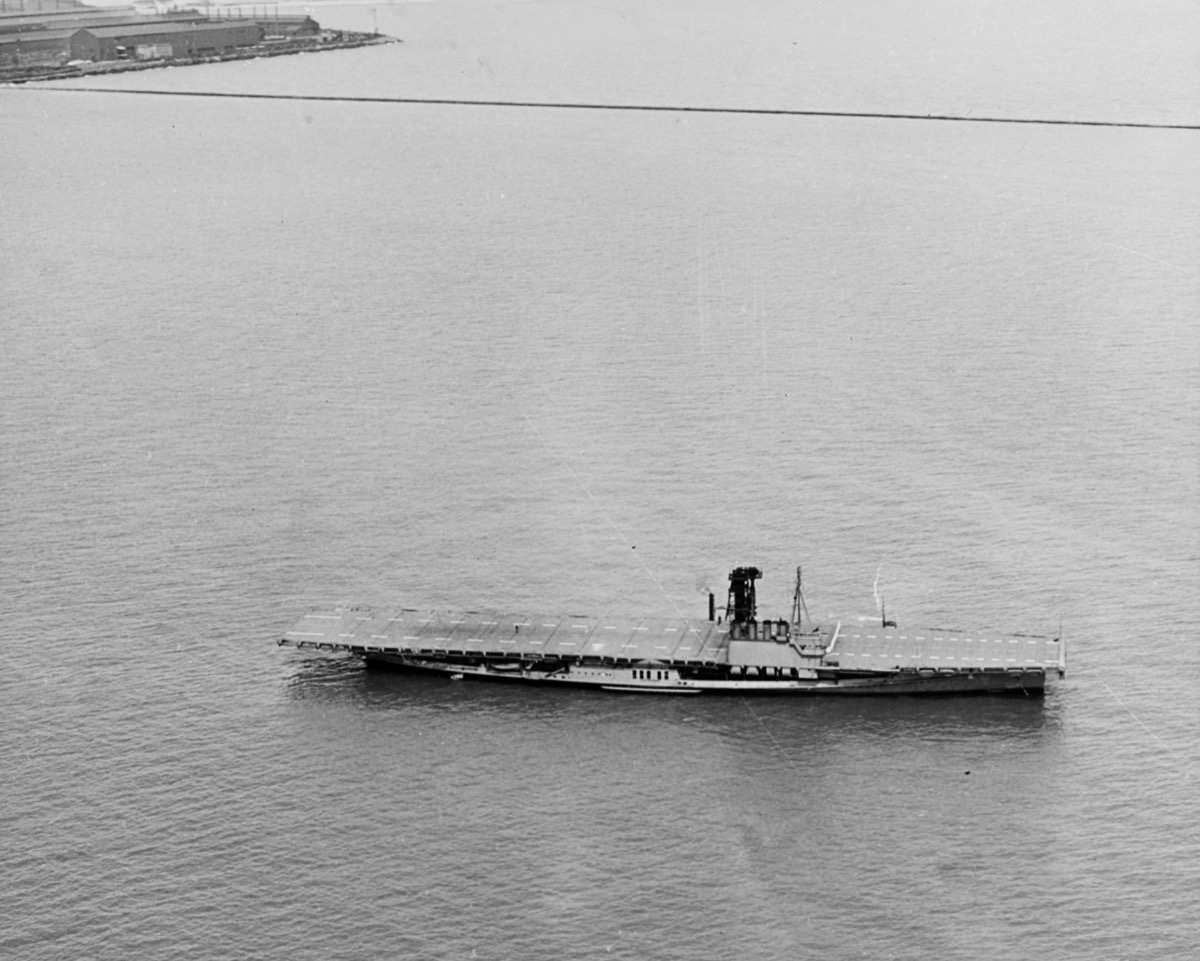
During World War II, the U.S. Navy needed thousands of pilots who could land on a carrier, and it found a training ground almost nobody expected: Lake Michigan. Two converted paddle-wheel passenger steamers, USS Wolverine and USS Sable, spent the war launching and recovering student pilots off the Chicago shoreline.
Two Excursion Steamers Become Warships
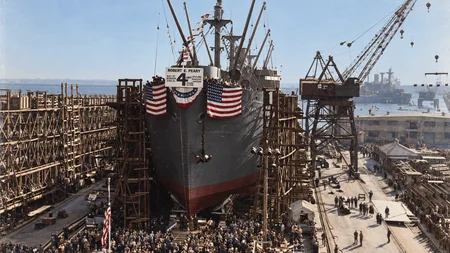
Wolverine began life as the Great Lakes liner Seeandbee, and Sable as the Greater Buffalo. Both were sidewheel paddle steamers built to carry vacationers, not fighter planes.
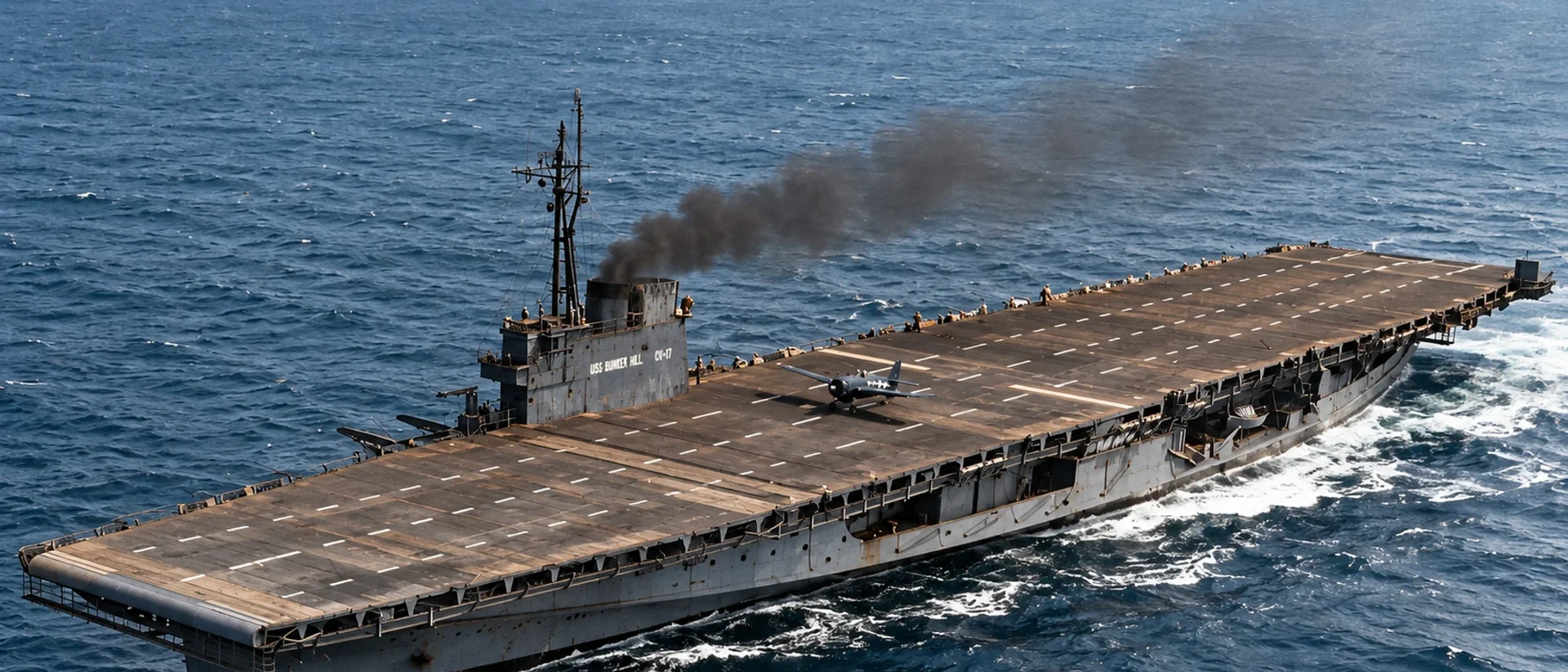
The Navy stripped off their passenger superstructures and built flight decks in their place. Neither ship had a hangar below deck or a catapult.
They were based at Chicago's Navy Pier. Training on the Great Lakes kept student pilots away from enemy submarines and kept real warships free for the war at sea.
A Short Deck and a Lot of Landings
Wolverine's flight deck ran about 550 feet, roughly two-thirds the length of the Navy's other carriers. Pilots still had to put their planes down on it, one after another.
By early May 1943, Wolverine alone had logged its 7,000th successful landing. Over the war, the Pritzker Military Museum counts about 120,000 successful landings on the two ships and 17,800 pilots qualified for carrier operations. Sources put the total between 17,000 and 17,820 (NOAA).
What the Lake Kept
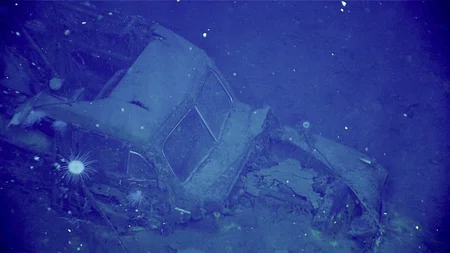
Some planes never made it back aboard. The Pritzker Military Museum counts 128 aircraft lost during training, and NOAA says more than 100 are still on the bottom.
The cold, fresh water at depths of more than 300 feet has kept many of them in good condition. Several have been recovered, restored and placed on display, including finds by the Chicago recovery firm A&T Recovery.
The Wildcat at O'Hare
One of them sits in plain sight of travelers. The Chicago Department of Aviation says the Wildcat fighter at O'Hare International Airport was recovered from Lake Michigan in 1992 and restored by the Air Classics Museum. The city re-dedicated it in Terminal 2 in 2014.
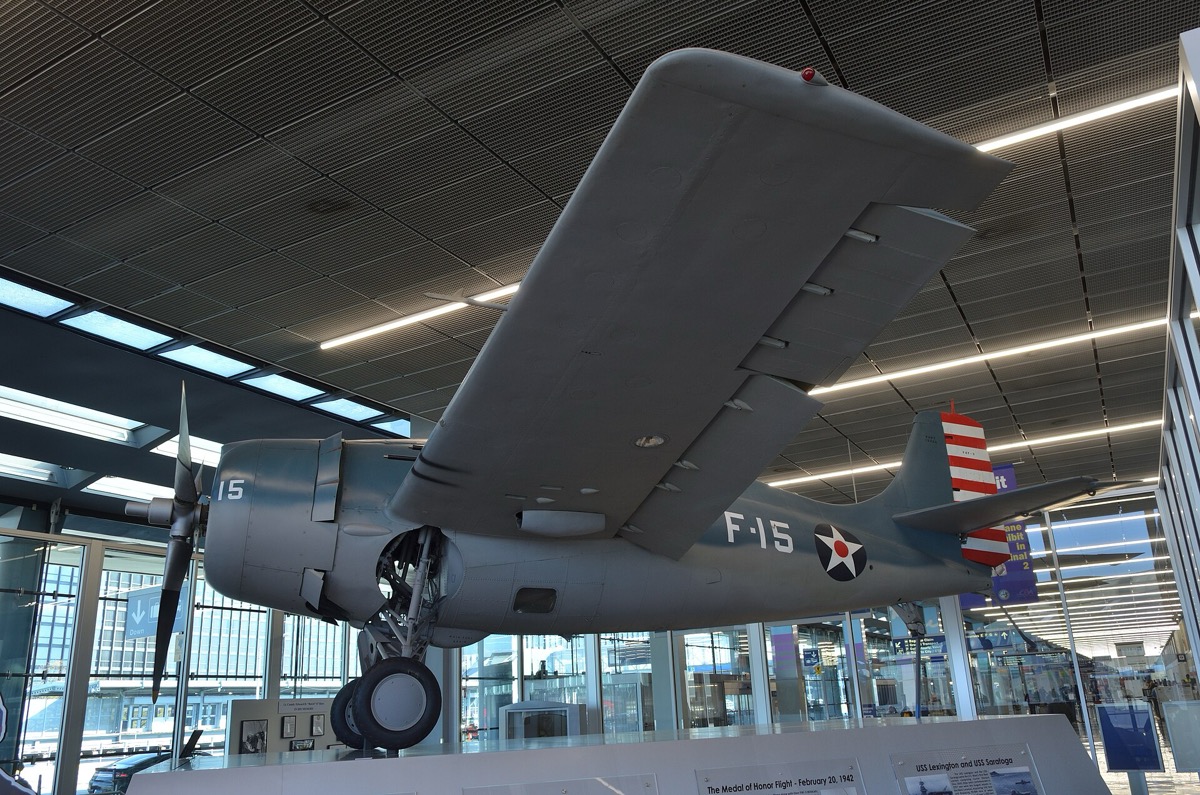
It wears the markings of the Wildcat Navy ace Edward "Butch" O'Hare flew in 1942, the pilot the airport is named for. It is a tribute paint scheme, not the plane O'Hare flew. Warbird records list the airframe as Bureau Number 12320, assigned to Sable, which ditched in the lake on March 31, 1944.
It is on display in Terminal 2 today, a fighter that went into Lake Michigan during training and came back out.
Source:NOAA Office of Coast Survey
Enjoyed this fact?
Be the first to love this
Get a new fact every morning.
A fascinating fact in your inbox every morning. Free. Unsubscribe anytime.
Frequently Asked Questions
Did the US Navy really have aircraft carriers on Lake Michigan?
How many pilots trained on the Lake Michigan carriers?
How many planes are still at the bottom of Lake Michigan?
Where can you see a plane recovered from Lake Michigan?
Verified Fact
Verified Oct 15, 2026 · 6 sources checked
Source: NOAA Office of Coast SurveyShow verification details
Claims checked
- The Navy converted two paddle-wheel passenger steamers into training carriers (Wolverine and Sable) based at Chicago
- More than 17,000 pilots qualified for carrier landings (sources give 17,000 to 17,820)
- More than 100 planes remain on the lake bottom (128 lost in training)
- A Wildcat recovered from Lake Michigan in 1992 is displayed in Terminal 2 at O'Hare
Sources: NOAA, Pritzker Military Museum, Chicago Department of Aviation, Warbird Registry, Wikipedia
Related Topics
More from History & Culture
View all History & Culture →