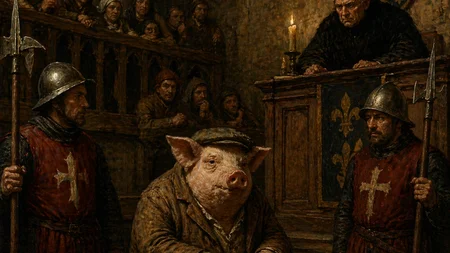
A “butt” was a Medieval unit of measure for wine. Technically, a 'buttload' of wine is about 475 liters, or 126 gallons.
A Buttload of Wine Is Actually 126 Gallons
If you've ever used the phrase "a buttload" to mean "a lot," you might be surprised to learn you're referencing an actual medieval measurement. A butt was a legitimate unit for measuring wine, and technically, a buttload equals about 126 US gallons or 475 liters of liquid. That's roughly 630 bottles of wine—definitely a lot, but surprisingly precise.
The word comes from the medieval French and Italian botte, meaning barrel or cask. In England's wine trade, a butt was standardized at 105 imperial gallons for wine (108 for ale), making it half of an even larger unit called a tun. These measurements weren't arbitrary—they were crucial for taxation, trade, and quality control in an era when wine was often safer to drink than water.
The Dark Side of Barrels
Perhaps the most macabre footnote in butt history involves George, Duke of Clarence, brother of King Edward IV of England. According to historical tradition, George was executed on February 18, 1478, by being drowned in a butt of malmsey—a sweet fortified wine. Whether this actually happened or was embellished over time remains debated, but it's certainly the most memorable use of 126 gallons of wine in recorded history.
The story has endured for centuries, immortalized in Shakespeare's Richard III and becoming one of those historical details too bizarre to forget. Even if apocryphal, it speaks to just how large these containers were—big enough to submerge a full-grown man.
Other Ridiculous Wine Measurements
The butt wasn't the only oddly-named wine measurement in medieval England. The hierarchy of barrel sizes included:
- Tun: 252 gallons (two butts)
- Pipe/Butt: 126 gallons
- Puncheon: 84 gallons
- Hogshead: 63 gallons
- Barrel: 31.5 gallons
- Rundlet: 18 gallons
Each size served different purposes in storage, shipping, and aging. Larger casks were more economical for long-term storage and ocean transport, while smaller ones were practical for taverns and households.
So the next time someone says they have "a buttload" of something, you can pedantically inform them they're claiming to have exactly 126 gallons of it. Whether they appreciate this correction is another matter entirely—possibly best discussed over a much smaller quantity of wine.
Frequently Asked Questions
How much is a buttload of wine?
Where does the word buttload come from?
Did someone really drown in a barrel of wine?
What were other medieval wine measurements?
Is a butt still used as a measurement today?
Verified Fact
This fact has been reviewed and verified against original sources.
Show verification details
The fact is accurate. A butt was indeed a medieval unit of measure for wine, containing approximately 475-477 liters or 126 US gallons (105 imperial gallons). The term derives from the medieval French/Italian word 'botte.'
Related Topics
More from History & Culture
View all History & Culture →