Neil Armstrong was about 200 feet up in a lunar landing trainer when it went out of control, and he ejected. The machine crashed and burned on impact, and he parachuted to the ground. He was back at his desk later that day. Fourteen months later he flew the real lander down to the Moon, partly by hand.
Neil Armstrong Ejected 200 Feet Up, Then Flew to the Moon
On May 6, 1968, astronaut Neil Armstrong was flying a practice moon landing over Ellington Air Force Base in Houston when his craft went out of control. About 200 feet up, he gave up on saving it and ejected. Fourteen months later he put the real lunar lander down on the Moon.
The Trainer That Bit Back
The craft was Lunar Landing Research Vehicle No. 1, a flying machine, which NASA calls the first all-fly-by-wire aircraft to fly in Earth's atmosphere, built so pilots could rehearse the final minutes of a moon landing here on Earth. NASA says Armstrong took off that day on a simulated lunar landing mission.
The trouble started with the gas that steers it. According to NASA, a loss of helium pressure caused the hydrogen peroxide for the reserve attitude thrusters to run out, and the vehicle's instruments did not give adequate warning.
Two Hundred Feet
With the craft losing control, Armstrong fought to regain it. About 200 feet above the ground, NASA says, he chose to eject.
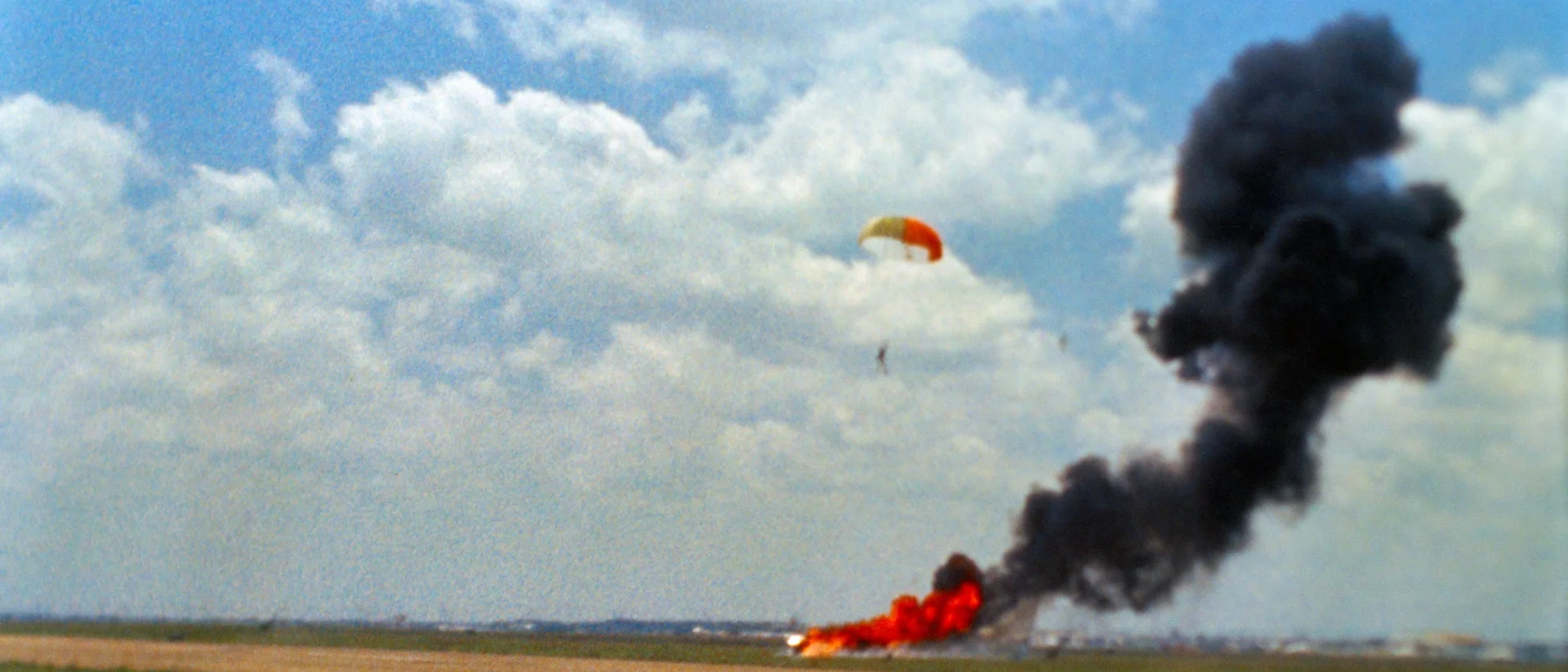
The vehicle crashed and burned on impact. Armstrong parachuted to the ground and suffered no injuries, according to NASA, which says he ejected mere seconds before the crash. A NASA photo sequence shows him parachuting to safety.
Back at His Desk
The Smithsonian's National Air and Space Museum puts it this way: the astronaut, having just ejected next to a fiery wreck, went back to his desk to finish out the day. NASA likewise says he was reportedly back in his office later that day.
Robert Gilruth appointed an accident investigation board, chaired by Joseph Algranti, to look into the crash.
Fourteen Months Later
Armstrong did not walk away from the training. By his own count he made 50 to 60 landings in the trainers, and he called the later version "a contrary machine, and a risky machine, but a very useful one."
On July 20, 1969, he took the lunar module Eagle down to the Sea of Tranquility. NASA's Apollo 11 overview says the landing was partially piloted manually by Armstrong, who made maneuvers to avoid a crater and ran the descent about 40 seconds beyond plan.
Afterward he credited the practice. "Eagle flew very much like the Lunar Landing Training Vehicle which I had flown more than 30 times," Armstrong said.
What Is Left of the Trainers
The crashed vehicle was a loss, but NASA flew later versions after an investigation, and some survive. NASA says LLRV-2 is on display at the Air Force Flight Test Museum at Edwards Air Force Base, on loan from NASA's Armstrong Flight Research Center, and another trainer, LLTV-3, hangs over the lobby of Teague Auditorium at NASA's Johnson Space Center in Houston.
Source:NASA History
Enjoyed this fact?
Be the first to love this
Get a new fact every morning.
A fascinating fact in your inbox every morning. Free. Unsubscribe anytime.
Frequently Asked Questions
Why did Neil Armstrong eject from the lunar landing trainer?
Was Neil Armstrong hurt in the 1968 LLRV crash?
Did Neil Armstrong land the Apollo 11 lunar module by hand?
Where can you see a lunar landing trainer today?
Verified Fact
Verified Nov 13, 2026 · 4 sources checked
Source: NASA HistoryShow verification details
Claims checked
- Armstrong ejected about 200 feet above the ground from the lunar landing trainer on May 6, 1968
- The vehicle crashed and burned while Armstrong parachuted down, with no injuries reported by NASA
- He was back at his desk later that day (Smithsonian; NASA says reportedly)
- Eagle was partially piloted manually by Armstrong on July 20, 1969
- Surviving trainer vehicles and accident board details corrected to NASA wording
Sources: NASA History, Smithsonian National Air and Space Museum
Related Topics
More from History & Culture
View all History & Culture →