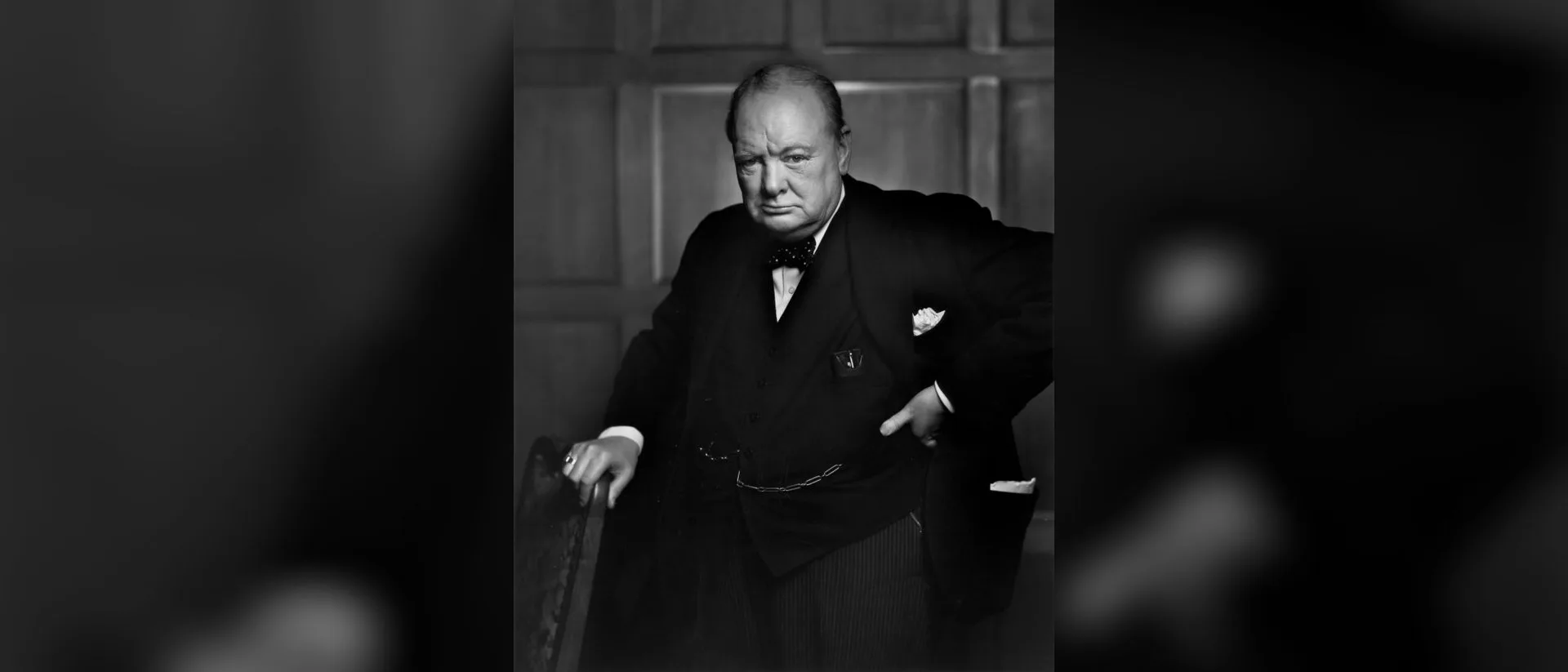
Before escaping prison, Winston Churchill left a letter of apology on his bed. The letter began: "I have the honour to inform you that as I do not consider that your Government have any right to detain me as a military prisoner, I have decided to escape from your custody."
Churchill's Polite Prison Break Letter to His Captors
Picture this: You're a prisoner of war, plotting a daring escape under cover of darkness. Most people would simply vanish into the night. But Winston Churchill? He left a formal letter of apology.
On December 12, 1899, the 25-year-old war correspondent scaled the fence of a Pretoria prison camp and disappeared into the South African night. On his pillow, he left a message for Louis de Souza, the Boer Minister of War, that began with characteristic formality: "I have the honour to inform you that as I do not consider that your Government have any right to detain me as a military prisoner, I have decided to escape from your custody."
The letter ended just as politely: "Regretting that I am unable to bid you a more ceremonious or a personal farewell, I have the honour to be, Sir, your most obedient servant, Winston Churchill."
How Churchill Became a POW
Churchill wasn't supposed to be a prisoner at all. He was in South Africa as a correspondent for The Morning Post, covering the Second Boer War. On November 15, 1899, Boer forces ambushed a British armoured train, and Churchill—who couldn't resist getting involved in the action—helped clear the tracks under fire.
His heroics made him a target. The Boers captured him along with British soldiers, and despite his protests that he was a non-combatant journalist, they imprisoned him in the States Model School in Pretoria.
The Great Escape
Churchill originally planned to escape with Captain Aylmer Haldane and a British sergeant through a latrine window. But when his companions couldn't follow due to patrolling sentries, Churchill went solo—simply walking out the gate when no one was looking.
He spent the next nine days on the run, hiding in coal trucks, relying on the help of British mine workers, and eventually being smuggled across the border to Portuguese East Africa concealed in a shipment of cotton bales. He reached Durban on December 23 to a hero's welcome.
The Letter That Launched a Legend
That polite-yet-defiant note became part of Churchill's legend. It perfectly captured his personality: bold enough to escape, proper enough to apologize for it. The Boers were reportedly less amused—they put a £25 reward on his head and issued wanted posters describing him as a dangerous fugitive.
The escape made Churchill internationally famous overnight. He parlayed that fame into a political career, eventually becoming Britain's Prime Minister during World War II. But it all started with a prison break and a very British apology note.
Only Churchill could turn a jailbreak into an etiquette lesson.
Frequently Asked Questions
Why was Winston Churchill imprisoned during the Boer War?
How did Winston Churchill escape from Boer prison?
What did Churchill's escape letter say?
Did Churchill's prison escape make him famous?
What was the reward for capturing Churchill after his escape?
Verified Fact
This fact has been reviewed and verified against original sources.
Show verification details
The fact is accurate. Churchill did leave a formal letter when he escaped from Boer captivity on December 12, 1899. The quoted text matches historical records.